









The Future of Shopping May No Longer Be Search-Driven
Retail is entering a new AI era – one where customers may no longer need to endlessly search, compare, click, and manually complete every step of their shopping journey. Instead, intelligent AI systems could soon handle large parts of that process autonomously.
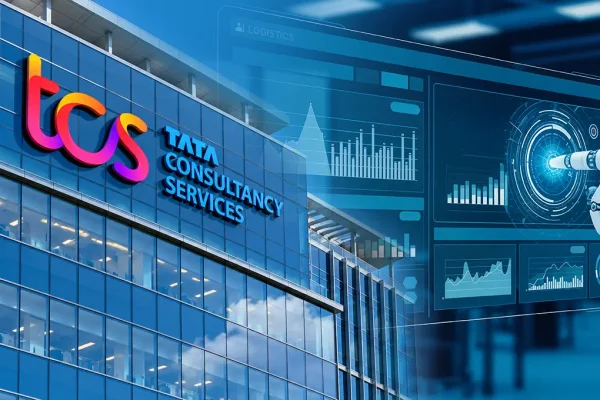
In a major development for the global retail and AI ecosystem, Tata Consultancy Services (TCS) has announced a global strategic partnership with Rezolve AI to help enterprise retailers deploy agentic commerce solutions at scale. The collaboration combines Rezolve AI’s Brainpowa platform with TCS’s deep retail expertise, systems integration capabilities, and global implementation network.
The move comes at a time when retailers worldwide are looking beyond basic chatbots and experimenting with AI systems that can independently assist customers, coordinate actions, and execute workflows with minimal human intervention.
Rather than simply answering questions, these new agentic AI systems are designed to understand customer intent, make decisions, and carry out multi-step commerce actions in real time.
What Is Agentic Commerce and Why Is It Important?
Agentic commerce represents the next evolution of AI-powered retail experiences. Unlike traditional conversational AI tools that respond to prompts one step at a time, agentic systems can plan and execute entire workflows based on customer goals.
For example, instead of a shopper manually browsing products, comparing options, applying offers, and completing payments, an AI agent can independently manage the process from start to finish. It can recommend products, suggest alternatives, apply discounts, coordinate payments, and even arrange fulfillment or returns.
Rezolve AI’s Brainpowa platform is specifically designed for these intelligent retail experiences. The platform can integrate with catalog systems, payment gateways, loyalty platforms, inventory systems, and order management systems to create connected, real-time customer journeys.
The AI continuously learns from interactions and outcomes, improving recommendations and workflows over time while still operating within merchant-defined policies and compliance boundaries.
According to Daniel M. Wagner, the partnership with TCS marks a significant commercial milestone because of TCS’s ability to scale enterprise deployments globally while maintaining operational trust and governance.
Three Core Areas Where TCS and Rezolve AI Will Focus
The collaboration between TCS and Rezolve AI will initially focus on three major retail transformation areas.
The first is conversational commerce, where AI-powered assistants engage customers through voice, chat, apps, or in-store interfaces. These systems are designed to create human-like shopping conversations that feel personalized and goal-driven rather than scripted.
The second area is intelligent product discovery, where AI agents use contextual understanding, semantic search, and visual search to recommend products. Customers can upload images, describe preferences naturally, or search conversationally while the AI identifies suitable matches and alternatives.
The third area is automated checkout and fulfillment orchestration. Here, AI agents can help complete transactions, verify fraud signals, optimize payment flows, and coordinate delivery or return processes seamlessly.
Together, these capabilities are designed to reduce shopping friction while improving conversion rates and customer satisfaction.
TCS Pace Ports Could Accelerate AI Adoption in Retail
One of the most strategic parts of the partnership is the use of TCS’s global Pace Port innovation centres.
Retailers will be able to test Brainpowa’s capabilities through these innovation hubs before committing to large-scale deployment. This approach allows enterprises to experiment with AI safely, validate business outcomes, and move more quickly from proof-of-concept stages into real production environments.
This matters because many enterprise AI projects fail to scale due to challenges around integration, compliance, governance, and operational readiness.
TCS’s role will include systems integration, enterprise governance, compliance mapping, backend infrastructure connectivity, and rollout management across global retail organizations.
Governance and Trust Remain Central to Agentic AI
As AI systems become more autonomous, concerns around governance and trust are becoming increasingly important.
Retail AI systems interact with sensitive customer information, payment workflows, pricing rules, inventory systems, and promotional engines. Without proper safeguards, autonomous AI actions could create risks such as unauthorized discounts, policy violations, or operational disruptions.
To address this, TCS plans to implement strong governance frameworks, including policy enforcement layers, audit trails, human review mechanisms, and escalation workflows for high-risk decisions.
This reflects a broader shift across enterprise AI, where companies are prioritizing controlled, trustworthy AI deployment rather than unrestricted automation.
Why This Partnership Signals a Bigger Retail Shift
The TCS-Rezolve AI partnership highlights how quickly the retail industry is moving toward workflow-driven AI systems.
Retailers are no longer satisfied with experimental AI pilots or simple chatbot integrations. They are now looking for AI systems capable of delivering measurable business outcomes across customer engagement, operations, payments, and fulfillment.
As agentic AI continues expanding across industries like finance, engineering, supply chain, and healthcare, retail is becoming one of the most visible frontiers for autonomous enterprise AI.
For TCS, the partnership strengthens its position in the growing enterprise AI transformation market. For retailers, it offers a pathway toward more intelligent, efficient, and customer-centric commerce experiences.
The shift from chat-based AI to autonomous shopping assistants may still be in its early stages, but partnerships like this suggest the future of retail could soon become far more AI-driven than consumers ever imagined.