









Whether it is an early warning of crop stress, assistance for a teacher in lesson planning or improved credit access for a small business, Google is widening the scope of its AI work in some of India’s key sectors.
The October 15, 2026 announcement covers practical uses of artificial intelligence in agriculture, education, scientific research and entrepreneurship. For those in these fields the advantage is not merely having new technology at hand but being able to make quicker, better informed decisions, cut down on routine tasks and overcome the kind of obstacles that have put a lid on growth in the past.
AI-Powered Agricultural Insights Could Help Farmers Act Earlier
In farming, timing is everything. A farmer’s income and productivity can be affected by how quickly one can spot crop stress, keep tabs on field conditions or deal with pests and weather.
AnthroKrishi has put together agricultural intelligence models for Google to give a more granular view of the landscape. The Agricultural Landscape Understanding (ALU) and the Agricultural Monitoring & Event Detection (AMED) are capable of discerning land use, water sources, crop health and diversity. While they were first made for India, the models are now in public preview via an API for 11 countries, from Japan and Malaysia to several in Africa.
How the insights are put to use is what gives them value. Put into an agricultural platform, the AI output can underpin more pertinent advisories and sounder crop management choices. Take the case of Amnex, which has built Google’s APIs into the Krushi Pragati platform for the Government of Gujarat. In the last year alone it has sent over 900 million SMS messages to 600,000-plus farmers across 14 million hectares on matters of soil, weather and disease. It is a move towards support that is specific rather than generalised.
Sorghum Genetic Atlas Could Accelerate Crop Research
Then there is the matter of climate resilience in Indian agriculture. To get varieties that will stand up to change and put out a reliable yield takes a lot of testing.
Through the AI Collaborative for Food Security, Google DeepMind and Google.org are backing an open-access sorghum genetic atlas. ICRISAT in Hyderabad is working on it with the HudsonAlpha Institute for Biotechnology and the University of Washington’s Department of Genome Sciences. The focus is on jowar, or indigenous sorghum, to give researchers a clearer picture of its genetics. That should lead to more efficient research and in time to hardier and more productive strains. In India, where sorghum is food, fodder and a biofuel prospect, the project may well aid the long term strengthening of food security. What matters is whether the findings can be turned into something of use to the farmer.
Google’s AI Training Could Give Teachers More Time for Students
AI in the classroom is about more than just new gadgets. Done right it can allow a teacher to spend less time preparing and more time with students.
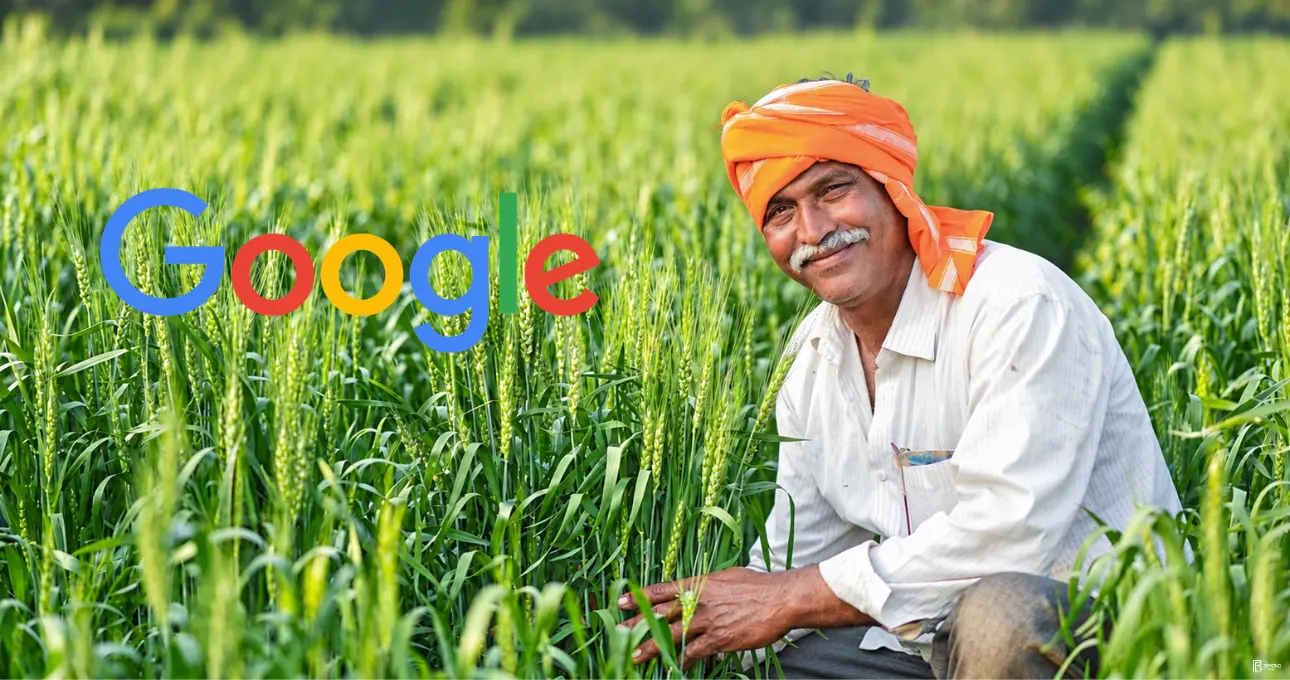
Since May 2026 the AI Educator Series from Google has put on free modules in a number of regional languages for over 80,000 educators, with the programme now making headway in Sikkim, Bihar and Madhya Pradesh. The idea is to let teachers use AI in their lesson plans and activities so they can prepare resources and cover concepts in different ways while still having time for mentoring. The school’s part is to see AI as a way to back up the teacher’s professional judgement, not supplant it, provided there is adequate training and digital resources in place.
Google.org’s $15 Million Initiative Targets Small Business Barriers
A small business in India needs as much access to credit and regulatory know-how as it does a good product, yet dealing with such requirements can be a drain on time.
To that end Google.org is putting $15 million behind The/Nudge, a nonprofit concerned with poverty and livelihoods, to put together AI tools for MSMEs. An open call for proposals will be made to find solutions to the need for formal credit, market discovery and compliance. If the tools are affordable and usable they could remove some of the friction in finding finance and opportunity for smaller operations.
What Google’s AI Push Means for India
These are indicative of a wider trend in how Google is applying AI in India. The emphasis is no longer just on the technical side of new models but on the problems of livelihood and business growth.
For the researcher it is about getting to the bottom of crop genetics faster; for the farmer, having information that can be acted on; for the educator, efficiency in the classroom; and for the small business, fewer hurdles to the market. Execution is the test ahead. In the end the measure of AI will be not in how sophisticated it is but in how well it is used to resolve actual issues.