









In the FY26 Annual Report from Tata Sons Limited, the conglomerate has made its intentions plain: it is putting its weight behind artificial intelligence and semiconductors as the two pillars for long-term growth. With these technologies fast becoming the bedrock of the global digital economy, Tata Group is not leaving any doubt about where it sees the future.
The report characterises AI in no uncertain terms as a “profound, civilizational shift” and puts semiconductor manufacturing at the centre of India’s push for technological self-reliance. For investors and technology leaders, this is a telling sign that chip making and AI have moved beyond being mere opportunities to become strategic national imperatives. It is a clear indication of how one of the country’s premier business groups intends to steer India’s next wave of industrial and digital expansion.
A Full-Stack Approach to AI
Tata does not see AI as something to be offered in isolation. The plan is to put together an ecosystem that covers everything from the physical infrastructure required for heavy AI workloads to enterprise software, data centres and the design and manufacture of semiconductors.
Tata Consultancy Services (TCS) is the linchpin of this effort. In Q1 FY27 alone, TCS posted $2.6 billion in annualised AI revenue. The firm is also putting $1 billion into HyperVault, a 1 GW AI data centre project meant to give enterprises the means to deploy their own sovereign AI. To keep pace with the latest applications, TCS has deepened ties with such global names as OpenAI, Microsoft, AWS and Anthropic.
Semiconductors as the New Steel
- Chandrasekaran,chairmanof Tata Sons, has called semiconductors “the new steel,” a fitting description of their role in the digital economy ahead.
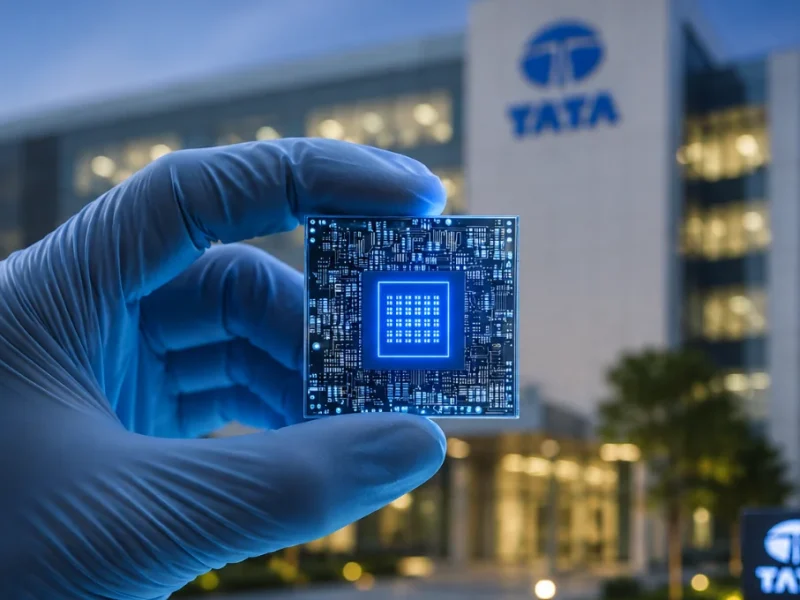
To back up that view, Tata Electronics is under way with plans for Dholera in Gujarat, where it will build the nation’s first high-volume fabrication plant. Backed by 50% fiscal support on a pari-passu basis from the government’s India Semiconductor Mission, commercial production is slated for the second half of 2026, with the first chips coming off the line by December. These will be power management ICs, microcontrollers, display drivers and logic for high-performance computing, serving sectors from automotive to wireless and AI.
The undertaking is set to create in excess of 20,000 skilled jobs, direct and indirect, and fortify the local ecosystem through research and supplier networks. There are also investments in indigenous technologies and advanced packaging with an eye to establishing a complete value chain within India.
Looking Ahead
The numbers in the FY26 report tell part of the story. Consolidated revenue was ₹6,61,399.21 crore, up 17% on the year, but profit after tax fell 35.1% to ₹26,615.72 crore. That drop is down to the kind of capital-intensive spending the Group is undertaking in aviation, advanced and semiconductor manufacturing and AI.
The message from the annual report is that Tata’s strategy is not confined to software. From defence and energy to electronics and digital infrastructure, the Group is building out the capabilities India needs. With TCS and HyperVault driving enterprise AI and Tata Electronics at the helm of the country’s semiconductor goals, Tata is setting the stage for a defining role in what is to come – an industrial revolution in which AI and the chips that run it are the engines of sustainable growth.