










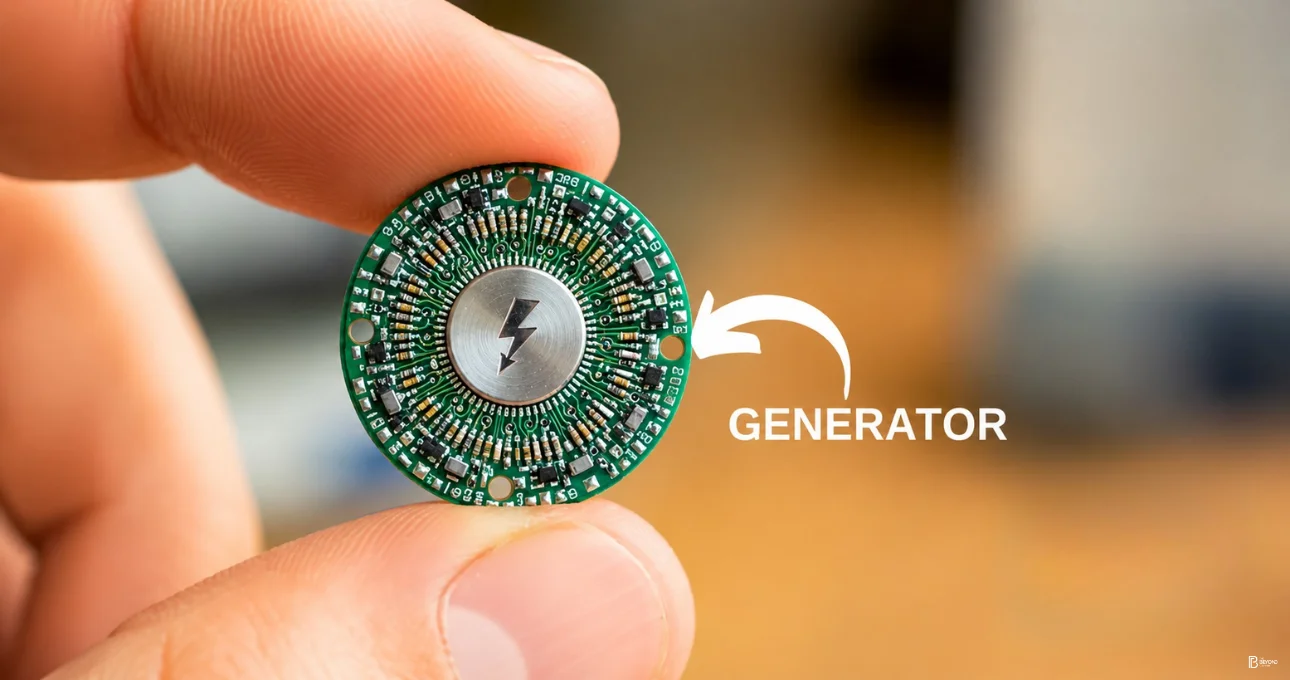
What if the air around you could help power the devices you use every day?
That idea may sound futuristic, but researchers at Kyoto University have reportedly developed a coin-sized generator that can produce electricity from moisture in the air. Using a specially designed layered nanofilm, the device converts water vapor into a steady electrical current, creating a potential new source of clean, off-grid energy that works without sunlight, wind, or moving parts.
While the technology is still being viewed as an emerging innovation rather than a replacement for traditional power systems, it is attracting attention because it addresses a growing challenge: how to provide reliable electricity to small devices in remote locations where conventional power sources are difficult to maintain.
For readers interested in renewable energy, sustainability, and breakthrough technologies, this development offers an exciting glimpse into how the future of energy could become more decentralized, efficient, and accessible.
How the Humidity-Powered Generator Works
According to available reports, the device functions as a miniature hydro generator that harvests ambient humidity from the surrounding environment.
At the heart of the innovation is a layered nanofilm designed to absorb water vapor from the air and convert it into electrical energy. Unlike solar panels that depend on sunlight or wind turbines that require airflow, this generator relies solely on moisture present in the atmosphere.
One of the most remarkable aspects of the design is its simplicity. The device reportedly contains no moving parts, which could improve durability and reduce maintenance requirements over time.
Because humidity exists both indoors and outdoors in many regions, the generator has the potential to operate continuously regardless of the time of day or weather conditions. This feature makes it particularly appealing for applications where consistent low-power energy is required.
Why This Technology Is Important
The real significance of this innovation is not that it can power homes or replace large-scale renewable energy systems. Instead, its value lies in its ability to provide reliable electricity for low-power devices operating in remote or hard-to-reach locations.
Across the world, sensors, monitoring equipment, transmitters, and connected devices often rely on batteries that need regular replacement. In remote environments, maintaining these systems can be expensive, time-consuming, and logistically challenging.
A device capable of generating electricity directly from atmospheric moisture could help solve that problem.
Unlike solar-powered systems that stop generating energy at night or wind-powered systems that depend on weather conditions, a humidity-powered generator may continue operating as long as moisture remains present in the air. This continuous energy production could make it especially useful in humid climates where environmental conditions remain favorable throughout the year.

Promising Results From Real-World Testing
The reported field tests are one reason the technology has generated interest beyond the laboratory.
According to reports, the generator was tested in Southeast Asian rice paddies, where it reportedly powered sensors for months under real-world conditions. While the electrical output was modest, the ability to operate continuously for extended periods suggests the technology may have practical applications outside controlled research environments.
For agriculture, such a development could be particularly valuable.
Modern farms increasingly depend on sensors that monitor soil moisture, crop health, irrigation systems, and environmental conditions. Keeping these devices powered across large agricultural areas can be challenging, especially in regions with limited infrastructure.
A compact generator that produces electricity from naturally occurring humidity could offer farmers a more reliable and lower-maintenance solution.
Potential Uses Across Multiple Industries
Beyond agriculture, the technology could support a wide range of industries and applications.
Environmental monitoring stations often operate in isolated areas where battery replacement is costly and inconvenient. A humidity-powered energy source could help support long-term monitoring of weather patterns, air quality, water resources, and ecosystems.
The technology could also prove useful in disaster-prone regions, where maintaining communication and monitoring systems is essential. Small generators capable of producing electricity independently of the power grid may help improve resilience during emergencies.
Additionally, the rise of the Internet of Things (IoT) is creating demand for millions of connected devices that require small but continuous amounts of energy. A reliable, maintenance-friendly power source could help support the growing network of smart sensors and monitoring systems used in cities, industries, and infrastructure projects.
A Step Forward for Clean Energy Innovation
As exciting as the development sounds, it is important to understand its current limitations.
The reported power output remains relatively small, meaning the technology is not intended to compete with traditional electricity generation systems. It is best viewed as a specialized energy-harvesting solution designed for low-power applications rather than a breakthrough capable of powering entire homes or businesses.
Researchers have been exploring humidity-based electricity generation for years, and the Kyoto University project is part of a broader scientific effort to discover new ways of capturing energy from the environment.
What makes this development noteworthy is the reported ability to operate continuously and successfully in real-world conditions while relying on a simple design with no moving parts.
What This Means for the Future
The Kyoto University generator highlights a growing trend in clean-energy innovation: finding practical ways to harvest energy from resources that already exist around us.
As demand for connected devices, environmental monitoring systems, and remote technologies continues to increase, the need for reliable off-grid power solutions will grow alongside it.
Humidity-powered generators may not replace traditional renewable energy sources, but they could become valuable tools for powering small electronics where batteries are difficult to replace and infrastructure is limited.
For now, the technology remains an emerging innovation, but it demonstrates how scientific research continues to uncover creative solutions to modern energy challenges. If future development successfully improves scalability and performance, the simple act of drawing power from the moisture in the air could become a meaningful part of tomorrow’s energy landscape.