









With the new AI-native builder for Fusion Agentic Applications, Oracle is making enterprise AI development a simpler proposition.
The company has released an updated experience for Oracle AI Agent Studio for Fusion Applications that allows customers and partners to build, put their own stamp on, and deploy these applications from within Oracle Fusion Cloud without incurring any extra cost. It is another significant move by Oracle as artificial intelligence makes its transition from a mere productivity tool to an autonomous collaborator in the business world, one that can speed up decision-making and take over complicated workflows.
A New Kind of Builder Experience
This launch is a key part of Oracle’s enterprise AI strategy. The firm is not content to offer only pre-packaged AI agents; instead, it is putting forward a full-fledged development platform that caters to everyone from the seasoned software engineer to the everyday business user.
Flexibility is the hallmark of the update. There is no longer a need for deep coding knowledge to put together an AI-driven application. A business user can rely on natural language to tell an agent what to do and have a workflow created with no code at all.
Those who require more nuance will find that low-code developers can make use of visual builders to expand on Oracle’s agent templates. Professional developers are free to work in the environments they know, be it Visual Studio Code or CLI tools, and can even call on AI coding assistants like Codex, Claude Code or Gemini. Oracle has made the approach agnostic, permitting developers to load the Fusion AI Studio skill into compatible assistants so that artifacts can be tested and validated automatically before going live.
Systems of Outcomes
At Oracle, the view is that enterprise software should be doing more than just holding data; it should be driving the work. That is the thinking behind Fusion Agentic Applications, which are meant to turn “systems of record” into “systems of outcomes.”
Specialised AI agents will now shoulder the burden of repetitive tasks and whole business processes, adapting to the roles of users and leaving humans to deal with approvals and strategy. Because the agents run on Oracle Fusion’s established rules and data model, their actions are informed by enterprise logic, not some isolated form of AI reasoning.
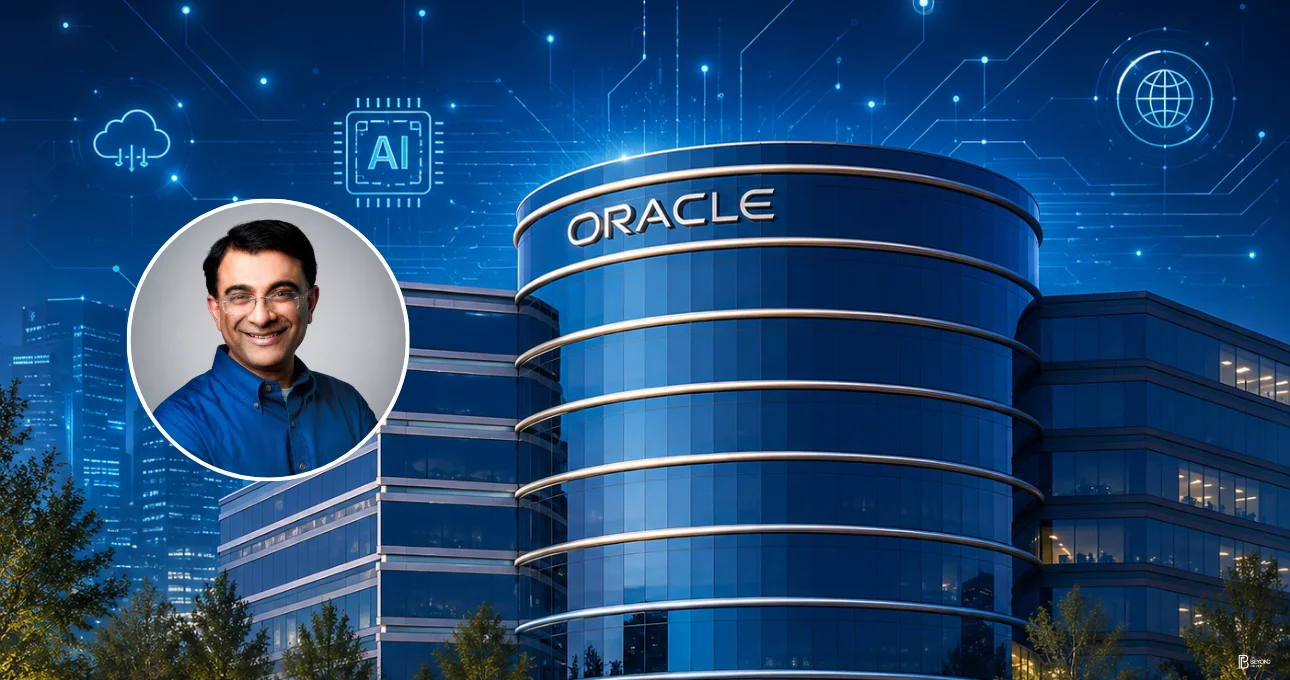
“We want to put in place proactive AI systems that can monitor and execute on their own, and bring only the critical decisions to the employee’s attention,” says Kaushal Kurapati, Group Vice President of Applications Development at Oracle.
Growing the Ecosystem
To see this kind of adoption, Oracle is making substantial investments in the surrounding ecosystem. The Oracle AI Agent Marketplace is set to give businesses in various sectors quicker access to industry-specific solutions. On the training front, the company has put more than 80,000 certified professionals through AI Agent Studio and the Marketplace. In India alone, Oracle runs a three-day partner programme for Fusion Agents each quarter to ensure the expertise is there for deployment in the field.
Why This Matters
The applications are built to fit into the fabric of most business functions. In Finance and ERP, an agent might handle collections and month-end closing. HCM teams can use them for workforce operations and to guide employees on career paths. Supply chain managers have agents to watch for risks and talk to logistics partners, while CX departments can put them to work on sales and marketing personalisation.
What it comes down to is automating the routine while keeping people in the loop where strategic judgment is called for.
For those already on Oracle Fusion Cloud Applications, the new builder is a more direct route to automation. As enterprises demand AI that offers tangible operational value, Oracle is establishing itself as the end-to-end platform to get from idea to execution.