









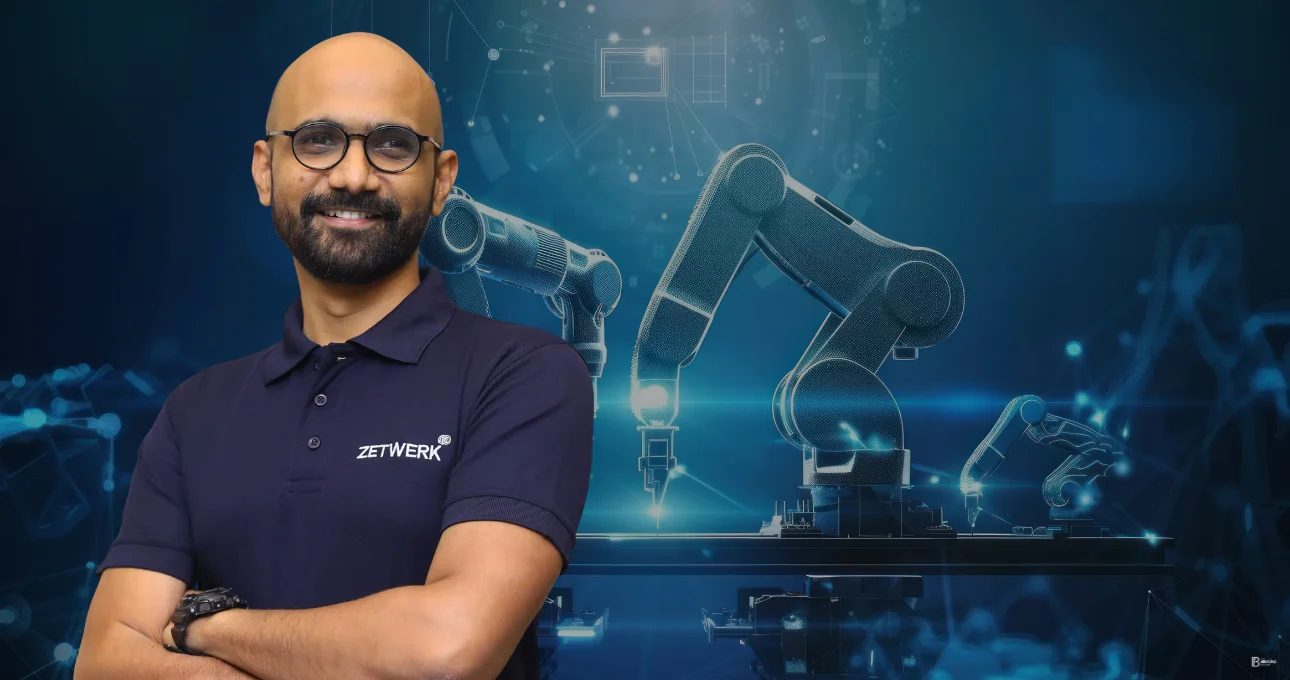
With the deep-tech scene in India picking up steam, another well-known founder is ready to turn the page. Rahul Sharma of Zetwerk is about to make his next entrepreneurial foray with an AI robotics startup, a move that comes as the manufacturing unicorn he co-founded makes its way toward a much-watched public listing.
The launch is noteworthy on more than one level. It is not just Sharma making his mark as a founder once again; it is also indicative of the kind of openings that are appearing where artificial intelligence and industrial automation meet. To those in the investment and startup community, it is a case in point of how seasoned entrepreneurs are putting their weight behind the technologies set to change the face of manufacturing.
A New Chapter at Zetwerk and Beyond
In order to give his full attention to the new AI robotics endeavour, Sharma will be moving into a non-executive capacity at Zetwerk, leaving the running of day-to-day affairs to others. He will still be part of the company in a strategic sense, but this arrangement provides him the room to innovate in what is one of the most dynamic technology fields while ensuring there is no break in leadership at Zetwerk as it enters a new growth phase.
Zetwerk has put its money where its mouth is by coming on board as an equity partner in the new venture, a clear endorsement of the long-term promise of AI-driven robotics. The startup will also be looking to outside investors for the capital needed to put together an engineering team, develop its products and gain a foothold in the market.
While specifics on the product or the industries to be targeted have yet to be made public, one can expect the enterprise to draw on Sharma’s considerable background in tech-led manufacturing. His grasp of industrial operations, plus the access to Zetwerk’s network of factories and enterprise clients, should make for a solid base from which to build.
Timing and the IPO
It is a well-timed announcement for Zetwerk, having only recently been given the nod by SEBI for its Initial Public Offering. With the operational side of the house occupied with the demands of going public, Sharma’s step back is a sensible way of handling succession. It keeps things stable at Zetwerk even as he sets off on an innovation-led path of his own.
A Trend in the Making
What we are seeing with Sharma is part of a wider pattern in India. Founders who have already had success are now turning to second-generation startups in the realm of deep-tech and robotics instead of the usual internet-first model. They are using their hard-won experience to tackle the kinds of problems that require advanced technology.
For the investor, it is a sign of faith in the local AI ecosystem; for the enterprise, a hint of the sort of automation that will drive efficiency. And for the would-be entrepreneur, Sharma’s example is a reminder that the work is in always being on the lookout for the next way to make an impact. As Zetwerk gets set for its life as a public company, this new venture may well stand as a further marker of India’s innovation story, marrying old-school manufacturing know-how with the power of artificial intelligence.