









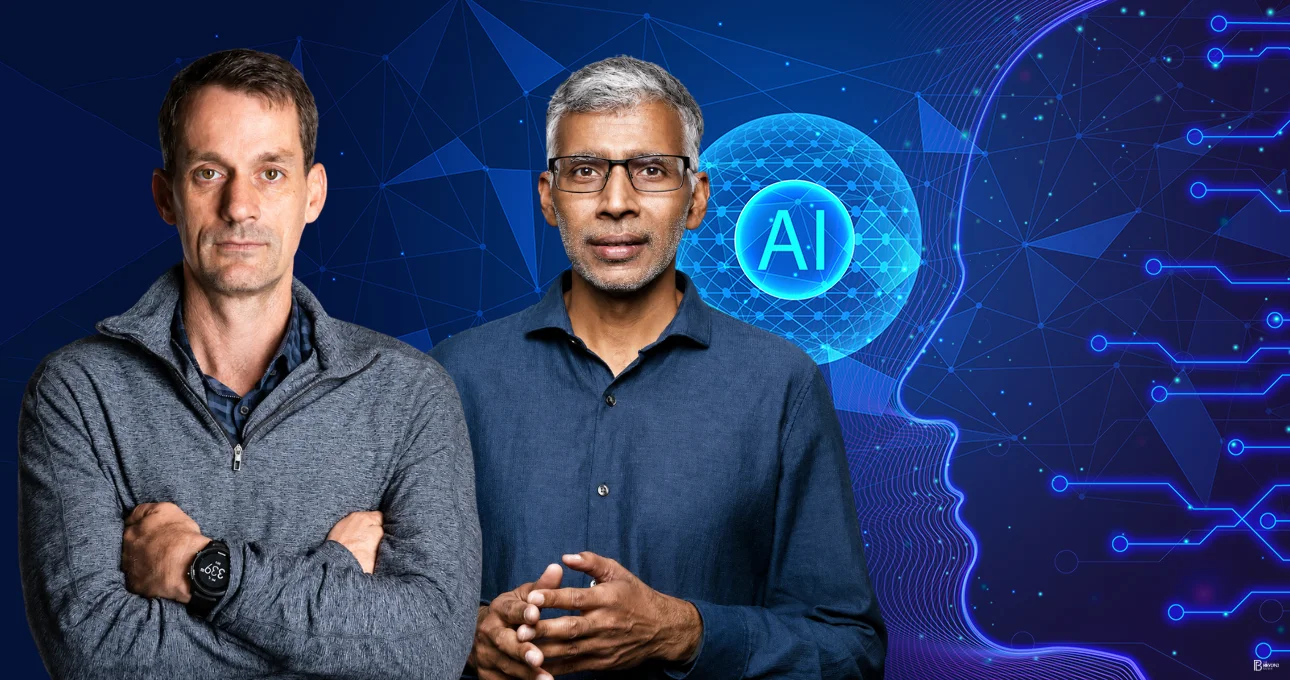
With the founding of DiscoveryLoop, Jeff Dean and Sanjay Ghemawat have made the move to leave Google and put their stamp on a new kind of AI-driven scientific discovery.
Artificial intelligence has in no small way altered the way we analyse data, write code or conduct a search. Yet there is an argument that AI should do more than just be at the researcher’s side; it should be an active participant in the science itself. That is the premise for DiscoveryLoop, a public benefit corporation set up by the two Google veterans with the intention of redefining the field.
The plan is to automate research in engineering and the sciences through AI. Where machine learning will be the starting point, the scope is meant to widen into industrial and other scientific domains. For the global AI community and enterprises alike, it is a departure from the old way of making breakthroughs in isolation and a step toward letting AI systems speed up the whole research cycle.
Dean and Ghemawat are not alone in this endeavour. They are joined by ex-Google AI heads Quoc V. Le and Oriol Vinyals to form what can be called one of the most formidable teams in modern AI. Their background in everything from large-scale infrastructure and distributed computing to advanced research gives the company solid ground on which to build its long-term plans.
DiscoveryLoop Aims to Automate the Entire Scientific Research Cycle
The “experimental loop” is central to how DiscoveryLoop operates. As Dean puts it, the objective is to use frontier AI models and the necessary computational muscle to run this loop on autopilot. The platform does not merely generate code or process information; it will propose and design experiments, see them through to execution, assess the results and decide what comes next. In doing so, the company expects to put thousands of research iterations in motion at once, hastening the arrival of new algorithms and engineering solutions. It is a far cry from the passive role of today’s AI assistants.

From Machine Learning to Drug Discovery: DiscoveryLoop’s Long-Term Vision
In the near term, the focus will be on machine learning and engineering, where AI can quickly put model architectures, training strategies and optimisation techniques to the test. But over time the technology is intended to make inroads into drug discovery, materials science, chip design, clean energy and biology. Done right, it could allow researchers to put more ideas to the test and find in months what might have taken years.
Alphabet Backs DiscoveryLoop as AI Leaders Chart an Independent Path
There is still a tie to Google. While Dean, Ghemawat, Vinyals and Le have gone their separate ways from the company, Alphabet is a founding investor and will serve as the cloud partner. Backing has also been put in place by Doerr Capital, Kleiner Perkins, Radical Ventures, Khosla Ventures and Lightspeed Venture Partners. This ensures the startup has the resources for its work and shows Google’s readiness to support independent AI ventures even as it pursues its own with DeepMind.
Why DiscoveryLoop Signals the Next Evolution of AI Innovation
After 27 years at Google, Dean’s exit is among the most high-profile in the industry. He and his colleagues have built much of what underpins Google Search and modern AI. Now they are part of a wider shift in the industry away from simply building bigger models and toward automating innovation.
As a public benefit corporation, DiscoveryLoop is driven by more than commercial ends. The goal is to put AI to work as a true discovery engine, one that can tackle some of the world’s more intractable problems with an impact on both technology and society.