









AI Company Expands Into Life Sciences with a New Research Platform and an Internal Drug Discovery Program Focused on Neglected Diseases
Artificial intelligence is rapidly transforming industries, and healthcare is emerging as one of its most promising frontiers. From accelerating medical research to identifying potential drug candidates in a fraction of the usual time, AI is beginning to reshape how life-saving treatments are developed. Taking a significant step in this direction, Anthropic has officially entered the life sciences sector with the launch of Claude Science, a specialised AI workbench for scientific research, alongside an internal drug discovery program focused on rare and neglected diseases.
Announced on June 30, 2026, the move positions Anthropic in an increasingly competitive race alongside OpenAI and Google to redefine AI-driven drug discovery. More importantly, it signals a broader shift in the healthcare industry, where artificial intelligence is evolving from a productivity tool into a scientific research partner capable of supporting real-world biomedical innovation.
Claude Science Brings Research Tools Together in One AI Workspace
At the heart of Anthropic’s expansion is Claude Science, an AI-powered research environment designed specifically for scientists, researchers, and pharmaceutical companies. Unlike traditional workflows that require switching between multiple software platforms and databases, Claude Science creates a unified workspace where researchers can manage experiments, analyse data, and collaborate more efficiently.
The platform integrates more than 60 preconfigured scientific tools and databases, including PubMed, Jupyter, R, and structural biology resources, allowing researchers to work from a single environment instead of juggling multiple disconnected systems. This integrated approach not only simplifies research workflows but also helps scientists spend more time on discovery and less time navigating different technologies.
Claude Science also supports access to local, remote, and high-performance computing resources, making it easier to perform complex scientific analyses at scale. As research projects become increasingly data-intensive, having flexible computing capabilities within one platform can significantly improve productivity and reduce operational complexity.
One of the platform’s standout features is its focus on reliability and transparency. Scientific research demands reproducible results, particularly in highly regulated industries such as pharmaceuticals and biotechnology. To address this need, Claude Science generates auditable AI outputs that support reproducibility and regulatory compliance. It also includes reviewer agents and multiple validation layers designed to reduce hallucination risks—one of the biggest concerns surrounding AI-generated scientific content.
To strengthen its biological modelling capabilities, Claude Science integrates with leading research platforms, including NVIDIA BioNeMo, Boltz-2, and Basecamp Research’s Eden, giving researchers access to advanced computational biology tools within the same workflow.
Currently available in beta, Claude Science can be accessed by Claude Pro, Max, Team, and Enterprise users on macOS and Linux. To encourage scientific innovation, Anthropic has also introduced its AI for Science initiative, offering up to $30,000 in compute credits for 50 selected research projects, enabling researchers to explore ambitious scientific ideas with greater computational support.
Anthropic Is Using AI to Research Neglected Diseases
Beyond launching a new AI platform, Anthropic is taking an unusual step by conducting its own internal drug discovery program using Claude Science.
The company’s research will focus on rare genetic disorders, tropical diseases, and other neglected illnesses that often receive limited attention from traditional pharmaceutical companies due to lower commercial returns. By prioritising patient benefit over market size, Anthropic hopes to demonstrate how AI can accelerate research in areas where medical needs remain high despite limited investment.
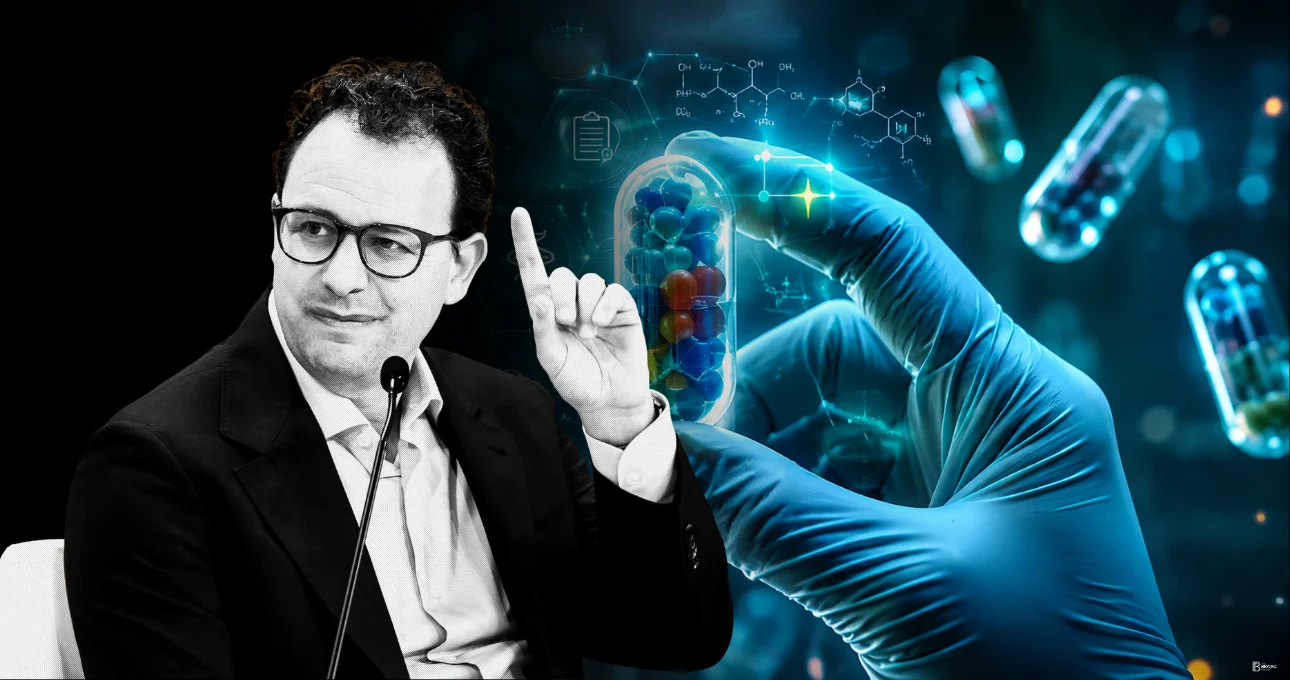
According to Eric Kauderer-Abrams, Anthropic’s Head of Life Sciences, the company intends to select research programs based on their potential impact on patients rather than their commercial value. While the initiative remains in its early discovery phase, it represents an important effort to explore diseases that are frequently overlooked within conventional drug development pipelines.
At present, Anthropic has not confirmed whether it plans to conduct clinical trials independently or collaborate with pharmaceutical partners to advance promising drug candidates. A company spokesperson noted that the program is still in its early stages and that more details will be shared as research progresses.
Learning by Doing to Build Better AI
Anthropic’s decision to conduct scientific research internally is driven by more than healthcare innovation. The company believes that actively participating in drug discovery will help it build more effective AI tools by understanding scientists’ day-to-day challenges firsthand.
Rather than relying solely on customer feedback, Anthropic wants to refine Claude Science using practical experience gained through real research workflows. This “learn-by-doing” approach enables the company to identify opportunities for improvement while demonstrating the platform’s capabilities to enterprise customers operating in highly regulated environments.
Jonah Cool, Anthropic’s Head of Life Sciences Partnerships, explained that the initiative allows the company to focus on neglected diseases while simultaneously improving the AI tools it provides to life sciences organisations. This strategy also addresses one of the industry’s biggest concerns—trust. By producing transparent, auditable, and reproducible research outputs, Anthropic aims to establish Claude Science as a reliable platform for pharmaceutical and biotechnology research.
Competition in AI-Powered Drug Discovery Is Intensifying
Anthropic’s announcement comes as leading AI companies increasingly compete to transform pharmaceutical research.
OpenAI is developing GPT Rosalind, a domain-specific AI model designed for scientific research, while Google DeepMind continues advancing biological research through AlphaFold and Isomorphic Labs. Together, these initiatives highlight the growing importance of specialised AI models capable of supporting scientific discovery rather than simply generating text.
The market opportunity is substantial. Industry analysts estimate that the global AI drug discovery market will grow from approximately $6 billion in 2026 to more than $25 billion by 2030, driven by rising research and development costs, patent expirations, and increasing demand for faster, more efficient drug development.
Anthropic’s strategy reflects a broader shift toward workflow-first AI platforms that integrate deeply into laboratory environments instead of functioning as standalone AI assistants.
Early Partnerships Demonstrate Real-World Potential
Anthropic has already begun establishing its presence in the pharmaceutical sector through strategic collaborations.
In May 2026, the company partnered with Bristol Myers Squibb (BMS) to deploy Claude across more than 30,000 employees, marking one of the first large-scale enterprise implementations of its AI technology within biopharma.
Early beta users have also reported encouraging results. Researchers at UCSF identified viral contamination within minutes after it had reportedly gone unnoticed for nearly a year. Another research team analysed 100 rare genetic diseases in under an hour, uncovering 32 promising candidates for further investigation.
These early outcomes demonstrate how AI has the potential to significantly accelerate research across genomics, proteomics, and single-cell biology while enabling scientists to focus more on breakthrough discoveries than repetitive analytical tasks.
What This Means for the Future of Healthcare Innovation
Anthropic’s expansion into life sciences represents far more than the launch of another AI product. It reflects the growing convergence of artificial intelligence and biomedical research at a time when healthcare systems are searching for faster, more cost-effective ways to develop new treatments.
By combining Claude Science with its own internal drug discovery program, Anthropic is pursuing a strategy that allows it to build, test, refine, and improve AI tools through direct scientific experience. The company is not simply providing software– it is embedding AI into the research process itself.
For pharmaceutical companies, researchers, biotech innovators, and healthcare leaders, this approach could help accelerate drug discovery while improving research quality and collaboration. As AI continues to evolve, platforms like Claude Science may play a central role in helping scientists make faster decisions, uncover new medical insights, and bring life-changing treatments closer to patients who need them most.