









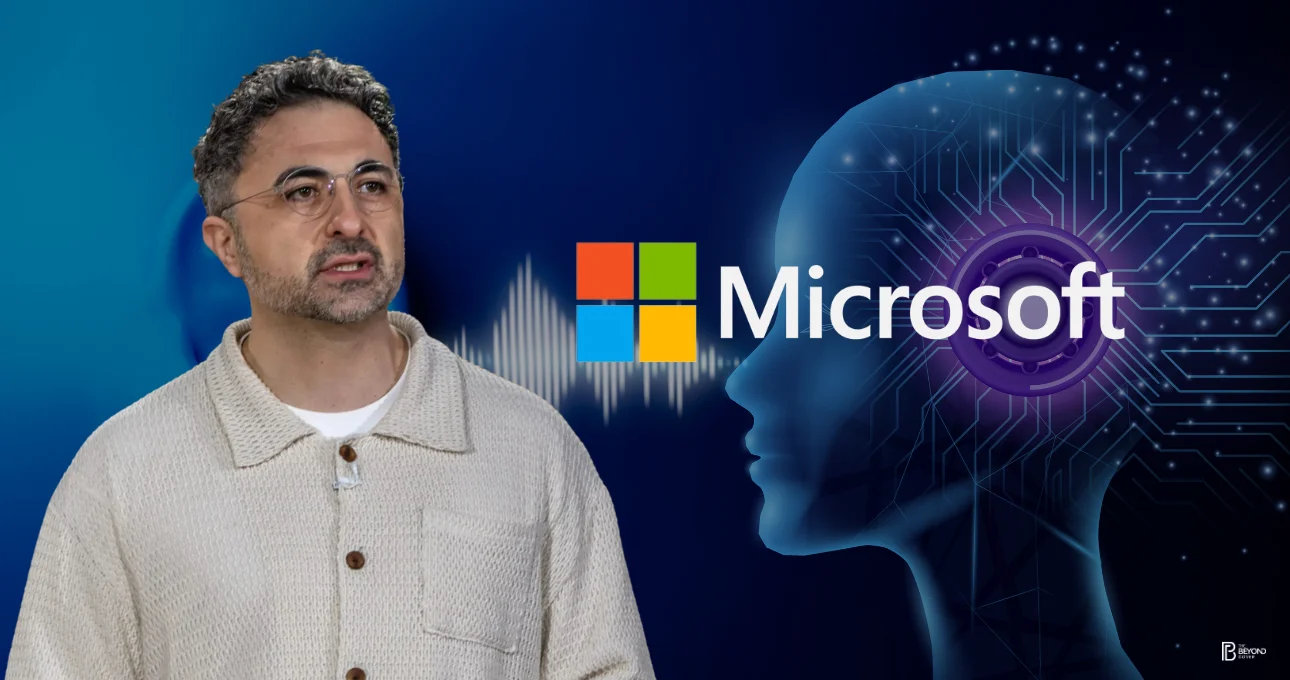
In a decisive effort to reshape the AI landscape, Microsoft has rolled out its fresh MAI (Microsoft AI) model trio– MAI-Transcribe-1, MAI-Voice-1, and MAI-Image-2– presenting a significant challenge to competitors such as OpenAI. Under the leadership of Mustafa Suleyman, this debut is not solely focused on performance– it aims to redefine the role of AI in practical, enterprise-level applications.
And the underlying message is distinct: Microsoft seeks to lead the entire technological framework, moving beyond simply being an AI collaborator.
A New Phase of “Humanist AI”
Suleyman terms this approach “Humanist AI”– a concept prioritizing how individuals genuinely converse, conduct business, and innovate. Rather than striving for scale merely for benchmark gains, Microsoft is concentrating on utility, responsiveness, and dependability.
This translates to creating AI utilities that excel not only in demonstrations but also deliver results in live operations.
Covering everything from multilingual voice capture to instant voice synthesis and rapid visual creation, the MAI collection is engineered for a single purpose: effective deployment at scale.
Beneath the MAI Trio: Agility Meets Real-World Value
Each component in the MAI offering addresses a distinct layer of the artificial intelligence experience– collectively forming a potent multimodal framework.
MAI-Transcribe-1
Engineered for global interaction, this mechanism for converting speech to text supports 25 languages and operates substantially quicker than prior Azure solutions. Whether for customer service centers, formal documentation, or corporate conferences, it produces highly accurate transcripts– even amidst background noise.
MAI-Voice-1
This version expands the possibilities of vocal AI. It can generate up to a minute of natural-sounding speech in just a single second– requiring minimal vocal input. The consequence? Extremely lifelike voice narration for assistants, audio literature, and client communications that are nearly indistinguishable from human output.
MAI-Image-2
Rapid creation is the key advantage here. Featuring image generation that is at least twice as fast, it is already integrated into platforms like Copilot and PowerPoint, allowing teams to instantly craft quality visuals without impeding ongoing tasks.
Designed for Corporations, Beyond Just Trials
What truly distinguishes MAI is its core focus on enterprise requirements.
These models incorporate inherent management safeguards:
- Content screening
- Detection of inherent bias
- Traceability logs for regulatory adherence
This makes them particularly suitable for sectors like finance, medicine, and law where the adoption of AI hinges on security, clarity, and meeting regulatory standards.
Indeed, initial corporate applications are already yielding tangible outcomes. Through processes like automating compliance oversight and improving client support, organizations are noting considerable improvements in output.
Pricing Structured to Encourage Uptake
Microsoft is also adopting an aggressive stance on cost, making advanced AI more widely available:
- Transcription services at highly favorable per-hour rates
- Vocal generation priced per segment of text
- Visual creation optimized for both text prompts and visual data units
This strategy lowers the hurdle for smaller and growing businesses, not just established corporations– speeding up AI integration across the board.
A Strategic Pivot Away from OpenAI?
This rollout also suggests a deeper realignment.
Although Microsoft has long been linked with OpenAI, the MAI models reveal a movement toward greater self-sufficiency. As OpenAI solidifies alliances with other cloud platforms, Microsoft is constructing its own internal capacities utilizing Azure to contend directly within the AI model arena.
This is not a separation– it’s a redistribution of influence.
And it positions Microsoft to govern not just the underlying infrastructure, but also the models, development tools, and the community of creators.
Developers at the Forefront
To hasten widespread use, Microsoft is offering the MAI Playground– a configuration-free space where developers can rapidly prototype, construct, and scale applications.
Paired with Azure integration, this establishes a smooth path from early testing to full deployment– a hurdle that rivals frequently face.
Why This Announcement is Significant
This is more than a routine AI update– it’s a statement of strategy.
Microsoft is placing its stake on:
- Superiority in multimodal AI
- Systems ready for immediate business use
- A design centered on responsibility and human interaction
By doing this, it is cementing its position as a major competitor in the vast AI market.
As AI transitions from early buzz to core infrastructure, success will belong to those who can balance raw power with real-world applicability.
With the MAI trio, Microsoft is making one point absolutely clear:
It isn’t just creating AI. It’s designing the manner in which the world will utilize it.