









How Real-Time Voice Intelligence Is Quietly Transforming Global Communication
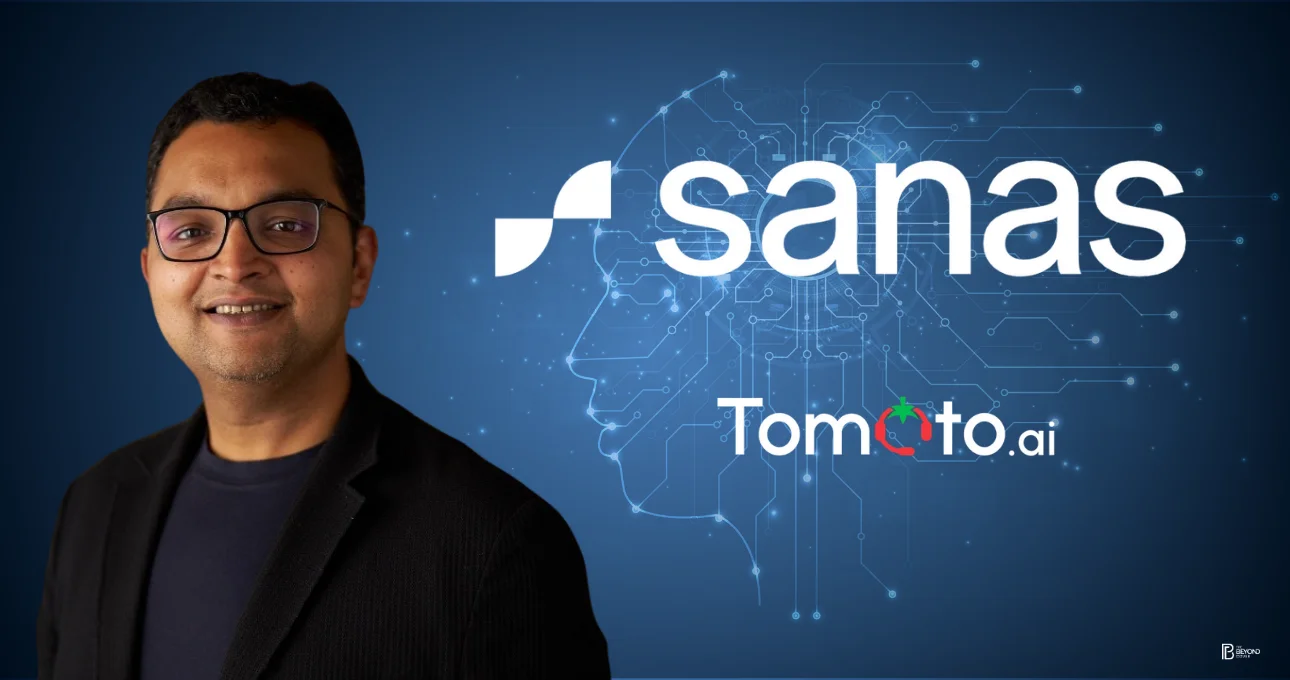
In a move that signals where the future of communication is heading, Sanas has acquired Tomato.ai, accelerating its mission to embed speech AI directly into the fabric of global communication systems. This marks Sanas’s third acquisition in under two years– each step bringing it closer to a world where voice intelligence operates seamlessly in the background.
With $62 million in ARR, 21 Fortune 500 customers, and 176% net revenue retention, Sanas is not just growing– it is scaling rapidly with strong enterprise validation. Its standout capability, sub-200ms latency, allows real-time speech transformations that feel completely natural, enabling conversations to flow without interruption.
From Standalone Tools to Invisible Infrastructure
What makes this acquisition particularly compelling is the shift in strategy it represents. Sanas is not building another app that users need to install or learn. Instead, it is positioning speech AI as infrastructure– a layer that operates quietly inside telecom networks, enterprise platforms, and communication systems.
CEO Sharath Keshava Narayana described this vision clearly: the most valuable technology is often the one users never notice. By embedding AI directly into communication pipelines, Sanas is making voice enhancement, translation, and intelligence feel invisible yet indispensable.
Why Tomato.ai Strengthens Sanas’s Core Offering
Founded in 2021, Tomato.ai brings deep expertise in conversation intelligence, particularly for contact centers where communication efficiency directly impacts business outcomes. Its platform enables real-time translation, accent conversion, and emotional analytics, helping agents communicate more effectively across diverse customer bases.
Its integrations with platforms like Cisco Webex, Genesys Cloud, and Avaya have already proven its ability to operate within enterprise ecosystems. The addition of Ofer Ronen– a seasoned founder with deep telecom experience– further strengthens Sanas’s push into carrier-level deployments.
Expanding Into Carrier Networks and the Telecom Layer
One of the most strategic aspects of this acquisition is the focus on telecom infrastructure. Rather than relying on application-level integrations, Sanas is embedding its technology directly into carrier networks, enabling speech AI to operate at the network edge.
This approach allows real-time enhancements– like mid-conversation translation or accent smoothing– without delays or reliance on external systems. With potential integrations across global carriers, speech AI could soon become a default feature of everyday communication, much like call connectivity itself.
Real Impact on Enterprises and Customer Experience
For enterprises, especially those managing large-scale customer interactions, the impact is immediate and measurable. Contact centers can now resolve issues faster, communicate across languages effortlessly, and maintain emotional clarity in conversations.
The ability to enhance communication in real time not only improves productivity but also elevates customer experience. Businesses are seeing tangible gains in efficiency and satisfaction, turning every interaction into a more meaningful engagement.

The Technology Powering Seamless Conversations
At the heart of Sanas’s platform is advanced speech-to-speech synthesis driven by neural models capable of generating human-like voice outputs instantly. These systems preserve tone, intent, and context while making adjustments in real time.
Additionally, Sanas is investing in edge computing, allowing processing to happen closer to the user. This reduces latency, enhances privacy, and ensures consistent performance even at scale– critical for enterprise and telecom applications.
Competing in a Rapidly Evolving Voice AI Market
The voice AI space is becoming increasingly competitive, with major players exploring similar capabilities. However, Sanas’s infrastructure-first approach sets it apart. Instead of competing as a feature or tool, it is positioning itself as the underlying layer of communication.
This strategy mirrors broader trends in technology, where the most impactful innovations are often those embedded deeply within systems rather than visible on the surface.
India and the Global Opportunity Ahead
India plays a crucial role in Sanas’s expansion strategy, with its large telecom base and growing demand for AI-driven solutions. Early pilots and operations in Bengaluru highlight the company’s intent to scale in one of the world’s fastest-growing digital markets.
Globally, the opportunity is even larger. As businesses increasingly rely on digital communication, the need for seamless, intelligent voice interactions will only grow.
Final Thoughts
The acquisition of Tomato.ai is more than a business move– it is a clear statement about the future of communication. By embedding speech AI directly into networks and platforms, Sanas is redefining how conversations happen at scale.
In the coming years, voice intelligence may become so deeply integrated into our systems that we stop noticing it altogether. And that, perhaps, is the real breakthrough– technology that works so well, it disappears.