









Cybersecurity is no longer just an IT function operating quietly in the background. In today’s digital economy, it has become a boardroom priority, a business resilience issue, and a critical factor in maintaining customer trust. As cyber threats grow more sophisticated and attack surfaces continue to expand, organizations are increasingly looking for security solutions that are intelligent, scalable, and capable of responding in real time.
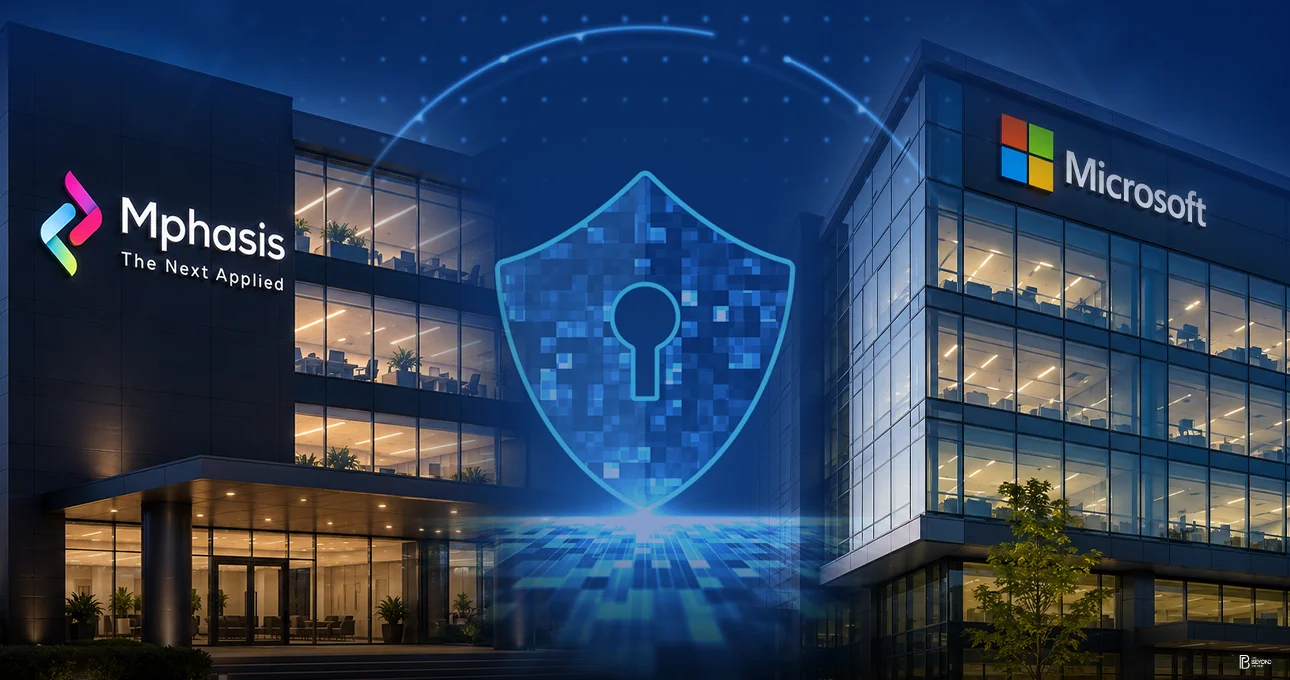
Against this backdrop, Mphasis has joined the Microsoft Intelligent Security Association (MISA), a move that strengthens its cybersecurity capabilities through deeper integration with Microsoft’s security ecosystem. While the announcement may appear to be another industry partnership on the surface, it reflects a much larger trend shaping enterprise security worldwide: the shift toward AI-driven, automation-first, and platform-based cybersecurity operations.
For business leaders, technology professionals, and enterprises evaluating their cyber defense strategies, this development offers important insights into where the future of cybersecurity is headed.
Why This Announcement Matters
Cybersecurity challenges today are vastly different from what organizations faced even a few years ago.
Threat actors are using increasingly sophisticated techniques, attack volumes are rising, and businesses are managing a growing number of cloud applications, devices, users, and digital assets. Traditional security models that rely heavily on manual monitoring and isolated tools are often struggling to keep pace.
This is where the Mphasis-Microsoft alignment becomes significant.
By joining the Microsoft Intelligent Security Association, Mphasis gains deeper integration with Microsoft’s security technologies while expanding its ability to deliver AI-powered and automation-driven cybersecurity solutions for enterprise customers.
For organizations, the value lies in having a more connected security approach that combines advanced technology, managed services, consulting expertise, and operational support within a unified framework.
In a landscape where response speed often determines the impact of an attack, that integration can make a meaningful difference.
What the Partnership Brings to Enterprises
The collaboration combines Mphasis’ Agentic AI accelerators and cybersecurity expertise with Microsoft’s security portfolio, including Microsoft Sentinel, Microsoft Defender, Microsoft Purview, Microsoft Entra, and Microsoft Intune.
Together, these capabilities are designed to help enterprises strengthen security across increasingly complex digital environments.
The integration aims to improve how organizations identify threats, investigate risks, and respond to incidents. Rather than relying solely on manual intervention, businesses can leverage automation and intelligent workflows to streamline security operations and reduce response times.
This is particularly important for large enterprises that operate across multiple cloud environments, remote workforces, hybrid infrastructures, and distributed business operations.
As digital ecosystems grow more interconnected, organizations need security models that can scale alongside them.
The partnership seeks to address exactly that challenge.
The Growing Importance of Agentic AI in Cybersecurity
One of the most interesting aspects of this development is the emphasis on Agentic AI.
Traditional cybersecurity operations often depend on security teams manually reviewing alerts, investigating incidents, and coordinating responses. While effective, this approach can become difficult to sustain as the volume and complexity of threats increase.
Agentic AI introduces a different model.
Instead of simply providing recommendations, AI-powered systems can assist with threat detection, automate repetitive processes, prioritize incidents, and accelerate response actions.
This allows security teams to focus their attention on higher-risk issues while reducing operational friction.
For enterprises facing persistent talent shortages in cybersecurity, this type of intelligent automation can become a significant advantage.
It enables organizations to scale their security operations without scaling human workloads at the same rate.
More importantly, it helps create a more proactive security posture where threats can be identified and addressed faster.
Building on Existing Security Services
The MISA membership also strengthens Mphasis’ existing cybersecurity portfolio.
The company already offers Managed Security Services, Cyber Fusion Center Services, and cybersecurity consulting solutions through the Microsoft Marketplace.
With deeper Microsoft Security integration, enterprises gain a more seamless pathway from strategic planning and implementation to ongoing monitoring and support.
This matters because cybersecurity is rarely solved through technology alone.
Successful security programs require a combination of tools, processes, governance, expertise, and continuous management.
Organizations increasingly prefer partners who can provide all of these capabilities under one operating model rather than stitching together multiple vendors and solutions.
The expanded relationship helps position Mphasis as one of those integrated security partners.
Why Enterprises Are Moving Toward Security Ecosystems
The announcement also reflects a broader industry trend.
For years, many organizations built cybersecurity programs using a collection of independent tools and point solutions. While this approach provided flexibility, it often created operational complexity, fragmented visibility, and management challenges.
Today, enterprises are moving toward ecosystem-based security models.
Rather than managing disconnected technologies, businesses want integrated platforms that share intelligence, automate workflows, and provide a unified view of risk.
Microsoft has become one of the major players driving this platform approach, and partnerships like this demonstrate how technology providers and service organizations are working together to simplify security operations.
For customers, the benefit is clear: fewer silos, improved visibility, and more coordinated protection across the enterprise.
Leadership Perspective on the Partnership
According to Ramanathan Srikumar, Chief Solutions Officer at Mphasis, the company’s inclusion in MISA reflects its deep alignment with Microsoft’s security ecosystem and its expertise in AI-driven, data-centric, automation-first cybersecurity solutions.
His comments highlight a growing industry reality.
Cybersecurity is no longer just about blocking attacks. It is increasingly about using intelligence, data, and automation to improve outcomes before threats can cause significant damage.
Similarly, Maria Thomson, Director of MISA, emphasized the shared commitment among members to help customers predict, detect, and respond to threats faster.
That focus on speed is becoming one of the defining characteristics of modern cybersecurity.
The faster organizations can identify and respond to threats, the lower the potential business impact.
The Bigger Picture
The cybersecurity industry is undergoing a major transformation.
Organizations are moving away from reactive security models and toward systems that are predictive, automated, and continuously adaptive. AI is becoming a central component of that evolution, helping security teams process vast amounts of information, identify anomalies, and respond more effectively to emerging threats.
Mphasis joining the Microsoft Intelligent Security Association is a reflection of this larger shift.
It demonstrates how enterprises increasingly expect security providers to deliver more than standalone services. They want integrated platforms, intelligent automation, managed expertise, and scalable protection that can evolve alongside their business needs.
As cyber risks continue to grow, partnerships like this will play an important role in shaping the future of enterprise security.
For organizations looking to strengthen their cybersecurity posture, the message is clear: the future of security will not be built around isolated tools. It will be driven by connected ecosystems, AI-powered intelligence, and operational models designed to predict, detect, and respond faster than ever before.