










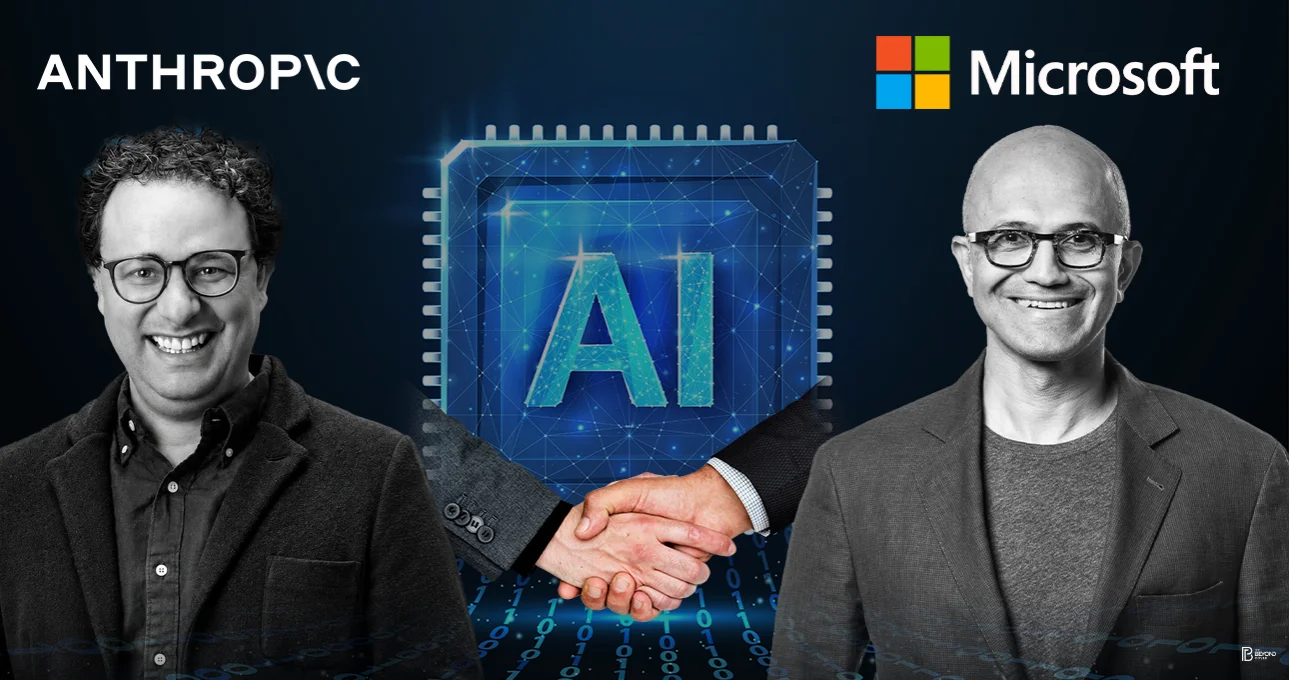
Microsoft’s AI Chip Strategy Could Get a Major Boost
Anthropic is reportedly in early discussions to rent servers powered by Microsoft-designed AI chips, a move that could significantly strengthen Microsoft’s in-house AI infrastructure ambitions if finalized. The talks are said to focus on Microsoft’s Maia 200 chips, although reports indicate that the discussions remain preliminary and may not lead to a formal agreement.
Even at this early stage, the possibility of Anthropic using Microsoft-built AI hardware highlights a major shift taking place across the artificial intelligence industry. As AI workloads continue to grow rapidly, companies are actively searching for alternatives to Nvidia’s expensive and supply-constrained processors.
Why Anthropic Is Looking Beyond Nvidia
Nvidia currently dominates the AI chip market, powering most large-scale AI models and cloud systems globally. However, rising costs and increasing demand have encouraged AI companies to diversify their infrastructure strategies.
Anthropic’s reported interest in Microsoft’s Maia 200 chips reflects this broader industry trend. AI companies now require enormous computing capacity for model training, inference, and enterprise deployments, making dependence on a single chip provider increasingly risky.
If the discussions move forward, Anthropic would gain access to servers running Microsoft’s own AI hardware instead of relying entirely on Nvidia-based systems.
Microsoft’s Maia 200 Chips Enter the Spotlight
Microsoft has been aggressively investing in AI infrastructure across cloud computing, enterprise software, and custom silicon development. The Maia chip initiative is a key part of that long-term strategy.
The Maia 200 chips are designed specifically for AI workloads and large-scale cloud operations. By building proprietary AI hardware, Microsoft aims to reduce reliance on external suppliers while improving efficiency and flexibility across its AI ecosystem.
A potential deployment by Anthropic would serve as an important validation of Microsoft’s chip capabilities. It would also demonstrate that enterprise AI customers are becoming more open to testing non-Nvidia infrastructure for demanding AI applications.
Microsoft and Anthropic Relationship Continues to Evolve
The reported talks also point to a growing relationship between Microsoft and Anthropic beyond infrastructure alone.
Microsoft has already integrated Anthropic’s Claude models into some Copilot experiences while gradually reducing its dependence on OpenAI. This signals a broader strategy where Microsoft is diversifying both its AI model partnerships and its infrastructure ecosystem.
By expanding relationships across multiple AI providers, Microsoft gains greater flexibility in developing AI services across Azure, enterprise software, and productivity tools.
For Anthropic, working with multiple infrastructure partners such as Amazon, Google, and potentially Microsoft allows the company to scale compute resources while minimizing operational risk.
AI Infrastructure Competition Is Intensifying
The discussions reflect a much larger transformation happening across the AI industry. Technology companies are no longer competing only through AI models – they are increasingly competing through infrastructure ownership.
Custom AI chips, cloud servers, networking systems, and compute availability are becoming critical competitive advantages.
Companies like Microsoft, Amazon, Google, and Meta are now accelerating investments in proprietary AI silicon to reduce dependence on Nvidia and gain more control over long-term AI scalability.
The Bottom Line
Although the talks remain in the early stages, Anthropic’s reported interest in Microsoft’s Maia 200 chips highlights how rapidly the AI infrastructure landscape is evolving.
For Microsoft, the deal could validate years of investment in custom AI hardware. For Anthropic, it represents a broader strategy focused on infrastructure flexibility and compute diversification.
As AI adoption accelerates worldwide, the competition for AI infrastructure leadership is becoming just as important as the race to build advanced AI models.