









AI vs AI in Cybersecurity
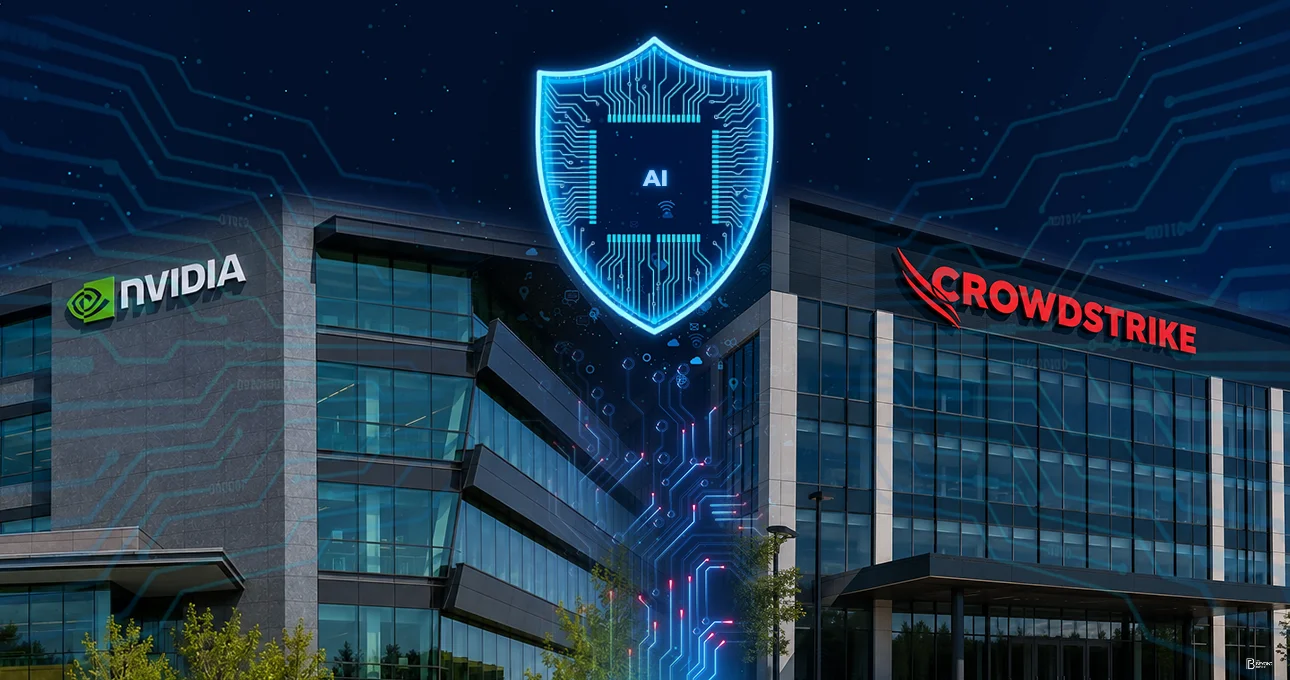
To put it simply, AI has made cyberattacks more sophisticated and quicker to execute. NVIDIA and CrowdStrike are looking to level the playing field for defenders with an AI system of their own.
That system is SafeMind, an agentic cybersecurity platform the two companies put on display at Fal.Con 2026 in Las Vegas. In a joint announcement by CEO Jensen Huang of NVIDIA and George Kurtz of CrowdStrike, they presented a tool built on the open models of NVIDIA’s Nemotron as well as some of CrowdStrike’s own frontier security models.
What sets SafeMind apart for an enterprise is not that it is yet another AI security product, but how it operates. It is meant to be proactive, continuously testing and hardening an organisation’s defences rather than just sounding the alarm once a problem has occurred.
A Continuous AI Battle
Think of SafeMind as a coevolutionary, closed-loop system in which offensive and defensive AI are in constant contention. The Red Tempest model is the aggressor, simulating the kind of advanced attacks one would expect from an AI-driven adversary and probing for any weak spots. On the other side is Blue Solano, which puts detection rules to the test and makes sense of the telemetry.
Both are run by agent harnesses within a digital twin of the enterprise infrastructure so that the back and forth can be repeated ad infinitum, yielding detections that are actually actionable.
CrowdStrike is quick to point out this is no chatbot with a security veneer. It is a family of frontier-class models honed by the company’s incident-response history and threat data.
NVIDIA and CrowdStrike in Tandem
The defensive side of SafeMind was post-trained by CrowdStrike with its years of fieldwork from the Cyber Superintelligence Lab, Falcon telemetry and threat intelligence, using NVIDIA Nemotron as the foundation. Nemotron 3 Ultra runs the show for the defensive agent harness; a fine-tuned version of Nemotron 3 Super is behind the rule-generation sub-agent.
The numbers bear out the partnership. In tests on a digital twin of its accelerated computing setup, NVIDIA saw the agents come up with a 41.9% mean detection rate, some 2.5 times better than what the base model could do on its own. For a security team, the implication is clear: there is value in having AI stress-test your position before a real attacker does.
Falcon IQ Joins the Fight
Then there is Falcon IQ, also announced by CrowdStrike. This is an agentic workflow layer on top of Falcon Foundry and Charlotte AI AgentWorks that can call on models from OpenAI, Anthropic or NVIDIA. With over 50 pre-built agents, it is aimed at the sort of drudgery that plagues assessment and remediation work, from validating vulnerabilities to producing playbooks and fixing issues at machine speed.
Why Autonomous Security Matters
The need for such tools is only growing. According to CrowdStrike, the past year has seen an 89% jump in AI-enabled attacks and eCrime breakout times as low as 27 seconds. There is no time for manual responses.
SafeMind and Falcon IQ are intended to alter that dynamic by taking over routine human-in-the-loop processes. While it will be a native part of the Falcon platform for existing clients, the models and tools will also be put forward via Project QuiltWorks to help secure against frontier AI risks in the broader ecosystem. The message is plain: if attackers are going to use AI, then cybersecurity must become every bit as autonomous and adaptive.