









Why Emotional Resilience and Mindful Leadership Matter More Than Ever
In today’s rapidly evolving business landscape, leadership conversations are often centered around performance, productivity, innovation, and growth. Organizations are navigating constant change, technological disruption, and shifting workforce expectations. Yet amid all these discussions, one critical aspect of leadership continues to receive far less attention than it deserves– emotional wellbeing.
For decades, leadership was defined by authority, decisiveness, and the ability to deliver results. Leaders were expected to remain composed under pressure, have answers to every challenge, and project confidence regardless of what they were experiencing internally. Vulnerability was often viewed as weakness, and emotional struggles were considered personal matters that had little place in professional environments.
But the realities of today’s workplace tell a different story.
Burnout, stress, emotional exhaustion, and disengagement are no longer isolated issues. Across industries, employees are seeking more human-centered workplaces, while leaders themselves are facing unprecedented levels of pressure and responsibility. As expectations continue to rise, organizations are beginning to recognize that effective leadership is no longer only about strategy and execution. It is equally about empathy, self-awareness, emotional intelligence, and resilience.
Recognizing this shift, The Beyond Cover continues to explore the evolving dimensions of leadership and the human experiences shaping the future of work.
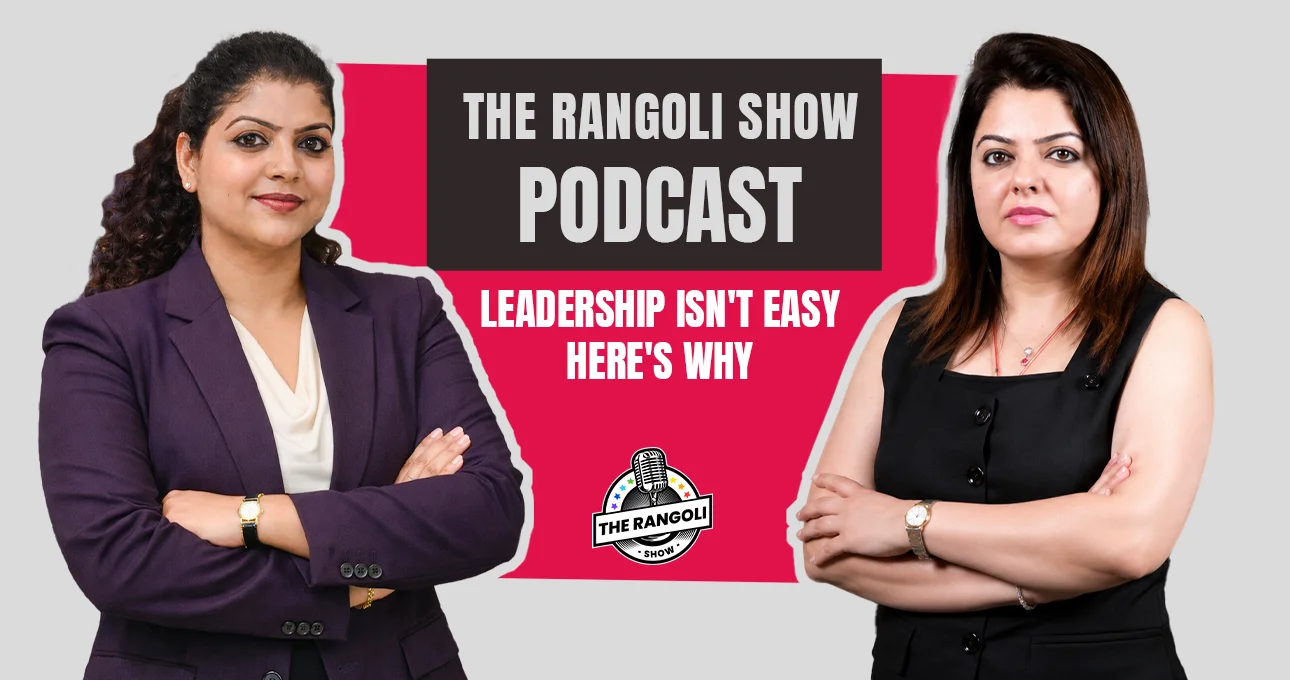
In a recent episode of The Rangoli Show, powered by POISE InStyle, host Rangoli Jaiswal sat down with Aruna Babbar, Corporate Leader, Mental Wellness Advocate, and Mindful Leadership Speaker, for a thought-provoking conversation on emotional resilience, self-awareness, and why the strongest leaders are not those who suppress emotions, but those who understand them.
The Leadership Burden Nobody Talks About
Leadership often comes with invisible expectations.
Leaders are expected to inspire teams, make difficult decisions, navigate uncertainty, and support others while maintaining composure through every challenge. Yet, very few conversations acknowledge the emotional burden that comes with these responsibilities.
According to Aruna Babbar, many high-performing professionals and leaders quietly carry stress, self-doubt, emotional exhaustion, and the pressure to always appear strong.
Success may be visible.
The emotional cost behind it often is not.
Over time, carrying these pressures without reflection, support, or emotional awareness can lead to burnout, disengagement, and fatigue. The challenge is not that leaders experience emotions. The challenge is that many believe they are not allowed to express them.
Why High-Performing Leaders Struggle to Ask for Help
One of the most powerful insights from the conversation explored why successful individuals often hesitate to seek support.
High achievers frequently become the people everyone relies on. They are mentors, decision-makers, problem-solvers, and sources of guidance. As a result, asking for help can feel uncomfortable. Many leaders fear that vulnerability may be perceived as weakness, leading them to carry challenges alone.
However, modern leadership requires a different mindset.
True strength does not come from suppressing emotions.
It comes from understanding them.
Leaders who are emotionally aware are often better equipped to understand the people around them. They communicate with empathy, navigate uncertainty with clarity, and create environments where individuals feel seen, heard, and valued.
In many ways, emotional intelligence is becoming one of the most important leadership capabilities of the future.
The Rise of Mindful Leadership
As organizations evolve, so do expectations from leadership.
Today’s workforce seeks authenticity, trust, and psychological safety. Employees are increasingly drawn to leaders who demonstrate empathy and self-awareness rather than authority alone.
This is where mindful leadership becomes especially relevant.
Mindful leadership is not about perfection.
It is about presence.
It is about recognizing emotions without being controlled by them. It is about responding thoughtfully rather than reacting impulsively. And perhaps most importantly, it is about remembering that leaders are human beings first.
According to Aruna Babbar, meaningful leadership begins with understanding ourselves.
Without self-awareness, it becomes difficult to align with purpose, manage emotions effectively, or build authentic relationships with others.
Leadership, therefore, is not simply about guiding people.
It is also about continuously growing ourselves.
The Human Side of Leadership
One of the most significant transformations taking place in organizations today is the shift from transactional leadership to human-centered leadership.
Employees no longer expect leaders to have all the answers.
What they seek instead are leaders who create cultures built on trust, empathy, connection, and belonging.
This shift requires organizations to move beyond traditional leadership frameworks and acknowledge the importance of emotional wellbeing.
Because performance and wellbeing are not competing priorities.
They are deeply interconnected.
Teams perform better when leaders create psychologically safe environments. Innovation flourishes when people feel respected and understood. And resilience grows stronger when individuals know they do not have to navigate challenges alone.
The future of leadership will not belong solely to those who drive performance.
It will belong to those who understand people.
Why Self-Awareness Has Become a Leadership Imperative
In an era defined by uncertainty, complexity, and rapid change, self-awareness is emerging as one of the most valuable leadership advantages.
Leaders who understand their emotions, biases, triggers, and behavioral patterns are often better positioned to make sound decisions, manage conflict effectively, and inspire others.
Self-awareness enables leaders to navigate challenges with greater clarity and compassion.
It encourages reflection.
It strengthens resilience.
And it creates space for continuous growth.
As Aruna Babbar highlights, some of the most meaningful transformations happen quietly.
Growth does not always come through promotions, achievements, or recognition. Sometimes, it emerges through setbacks, challenges, difficult experiences, and moments of introspection.
The leaders who embrace these moments often become more authentic, empathetic, and effective.
Redefining What Strength Really Means
Perhaps the most powerful takeaway from the conversation is the need to redefine strength itself.
For years, strength has been associated with endurance, certainty, and emotional control.
But the future calls for a more balanced definition.
Strength is not pretending everything is fine.
Strength is acknowledging challenges while continuing to move forward.
Strength is asking for help when needed.
Strength is creating space for reflection.
And strength is understanding that vulnerability and resilience can exist together.
As organizations continue to navigate increasingly complex realities, emotional intelligence and mindful leadership will become essential rather than optional.
Because ultimately, leadership is not only about what we accomplish.
It is about how we show up for ourselves and for others.
The Leadership Lesson That Matters Most
Perhaps the most effective leaders of tomorrow will not be remembered solely for the results they delivered.
They will be remembered for the environments they created, the people they empowered, and the humanity they brought into leadership.
In a world obsessed with performance, that may be the most important leadership lesson of all.
Because leadership is not just about driving success.
It is about creating meaningful impact while remaining deeply connected to the people who make that success possible.