










Redefining Enterprise AI Collaboration
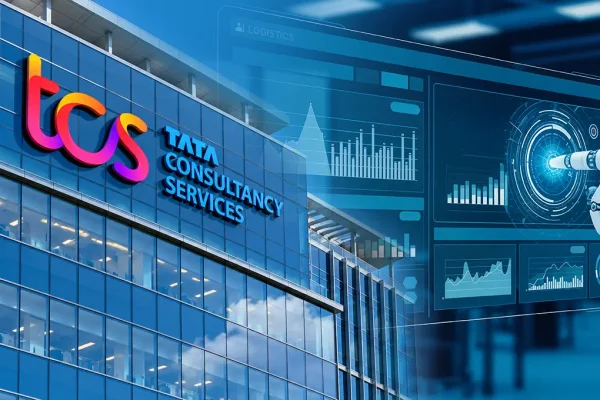
Tata Consultancy Services (TCS) is reshaping the future of enterprise AI through deep strategic partnerships with OpenAI, Anthropic, and Mistral AI. Moving beyond conventional go-to-market collaborations, TCS is building what it calls “360-degree partnerships”– a model designed to integrate innovation, infrastructure, and execution into a single ecosystem.
During the Q4 FY26 earnings call, COO Aarthi Subramanian emphasized that these alliances are being shaped differently from traditional partnerships. Instead of focusing on one-dimensional outcomes, TCS aims to create a reciprocal structure where both parties contribute across the value chain, positioning the company as not just a service provider but a critical enabler of AI infrastructure.
HyperVault: The Foundation of TCS’s AI Infrastructure Strategy
At the center of this transformation is HyperVault, TCS’s sovereign AI infrastructure platform that is redefining how AI solutions are deployed at scale. Unlike traditional models where enterprises depend entirely on external cloud providers, HyperVault allows TCS to host and manage large-scale AI workloads while also serving as a platform for model providers themselves.
A key highlight of this initiative is the 100-megawatt committed capacity with OpenAI, with plans to scale up to one gigawatt. This level of infrastructure capability reflects TCS’s ambition to operate at hyperscaler scale while maintaining control over security, compliance, and performance. By integrating GPU clusters with cloud ecosystems, HyperVault addresses growing global concerns around data sovereignty and regulatory compliance, making it particularly relevant for enterprises operating across multiple geographies.
FY26: The Turning Point for Scaled AI Adoption
According to Subramanian, FY26 marks a significant shift in how organizations approach AI. What was once limited to experimentation is now becoming central to business strategy. AI is no longer a side initiative—it is embedded in every customer conversation at TCS.
This transition is visible across industries, where enterprises are rapidly adopting AI for IT operations, supply chain optimization, and developer productivity. The shift mirrors a broader trend in the global market, where businesses are moving beyond pilots and proofs of concept toward full-scale deployment of agentic AI systems.
Strategic Depth Across Leading AI Players
TCS’s partnerships with leading AI companies are carefully structured to deliver both flexibility and depth. Its collaboration with OpenAI is already formalized through significant infrastructure commitments, while its engagement with Anthropic continues to deepen, with further strategic announcements expected. At the same time, TCS is working closely with Mistral AI, particularly in the context of European sovereign AI requirements.
This multi-layered approach allows TCS to cater to diverse enterprise needs without being tied to a single provider. By maintaining strong relationships across multiple AI ecosystems, the company is building a foundation that supports cross-industry scalability and innovation.
A Multi-Model Approach to Enterprise AI
One of TCS’s most distinctive strategies is its model-agnostic approach. Instead of relying on a single AI system, TCS enables enterprises to leverage multiple models depending on their specific requirements. This flexibility allows organizations to optimize for performance, cost, and compliance while avoiding vendor lock-in.
By hosting a range of AI models on HyperVault, TCS empowers businesses to design hybrid AI environments tailored to their operational needs. This approach is particularly valuable in a rapidly evolving landscape, where no single model can address every use case effectively.

Business Impact and Revenue Potential
The scale of HyperVault’s ambition signals a major opportunity for TCS in the AI infrastructure space. With plans to expand toward gigawatt-level capacity, the platform has the potential to generate multi-billion-dollar revenue streams, complementing TCS’s already strong services business.
The company’s AI deal pipeline reflects this momentum, with a reported 40% year-on-year growth in AI-related engagements. Enterprises are increasingly looking for partners who can not only develop AI solutions but also deploy and manage them securely at scale. TCS’s integrated approach positions it strongly to meet this demand.
TCS’s Role in the Global AI Ecosystem
In a global landscape shaped by technological competition and geopolitical considerations, TCS is carving out a unique position as a neutral and trusted AI infrastructure partner. While some players focus on building proprietary models or expanding cloud dominance, TCS is enabling a collaborative ecosystem that supports multiple technologies and regulatory environments.
This positioning allows enterprises to navigate challenges such as data localization, compliance requirements, and cross-border operations with greater confidence. By bridging the gap between innovation and implementation, TCS is helping organizations unlock the full potential of AI without compromising on governance.
A Defining Shift in the AI Industry
The concept of “360-degree partnerships” reflects a broader transformation in the AI industry. Companies are no longer operating in silos; instead, they are building interconnected ecosystems where infrastructure, models, and applications work seamlessly together.
TCS’s strategy captures this shift, demonstrating how collaboration at every level can accelerate innovation while ensuring scalability and reliability. As AI continues to evolve, such integrated approaches are likely to become the standard for enterprise adoption.
Final Thoughts
With its HyperVault platform and deep partnerships across leading AI companies, TCS is positioning itself as a key enabler of the next phase of AI growth. By combining infrastructure, flexibility, and strategic collaboration, the company is helping enterprises move from experimentation to real-world, large-scale AI deployment.
In an era where AI is becoming foundational to business success, TCS is not just adapting to change– it is helping define the future of enterprise AI.