









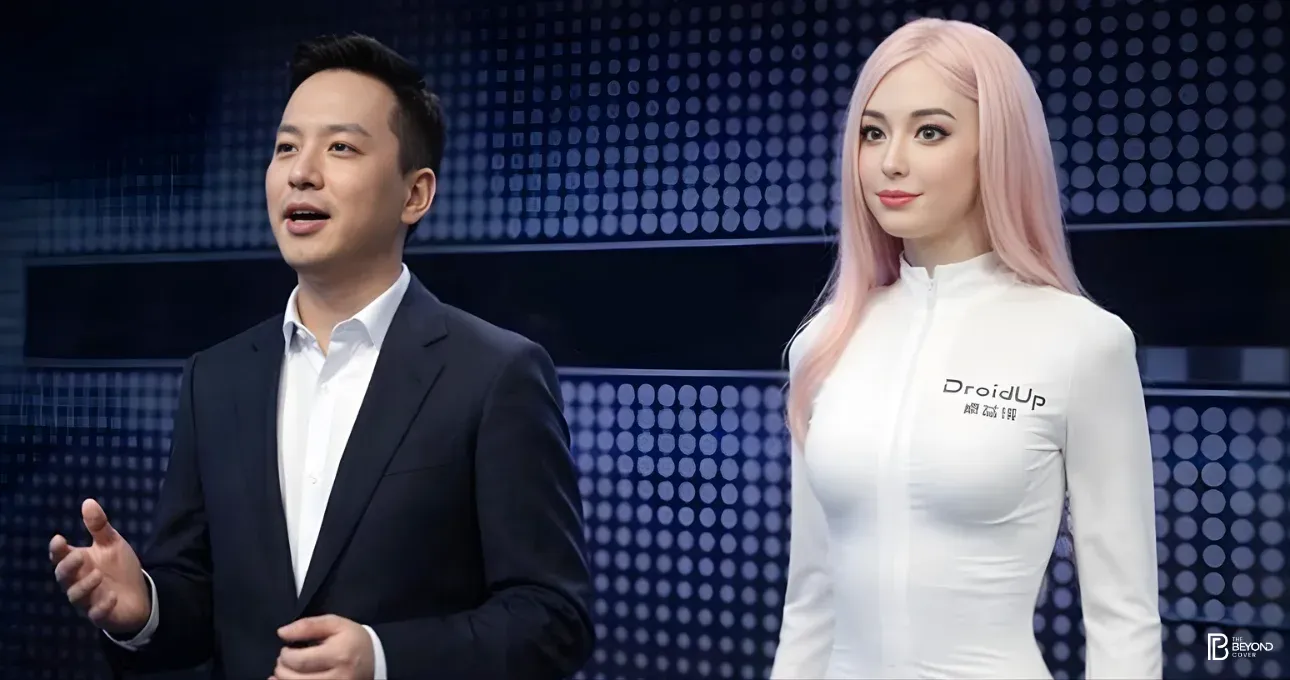
The global robotics and artificial intelligence landscape has taken a major leap forward with the introduction of Moya, the world’s first fully lifelike, biomimetic intelligent humanoid robot capable of winking, smiling, and expressing emotions in a strikingly human manner. Designed around the principles of embodied AI, Moya represents a new class of intelligent machines that do more than compute—they perceive, reason, and act within the physical world.
What Makes Moya a Breakthrough in Humanoid Robotics
Unlike conventional humanoid robots that rely on rigid movements and scripted responses, Moya is built as a fully biomimetic embodied intelligent robot. This means its physical design, facial expressions, and behavioral responses closely mimic human anatomy and social cues. From subtle eye movements to natural smiles, Moya is engineered to interact with people in a way that feels intuitive and emotionally engaging.
At the core of Moya’s design is embodied artificial intelligence, an approach that tightly integrates perception, cognition, and physical action. Rather than treating intelligence as purely software-based, embodied AI allows Moya to understand its surroundings through vision, sound, and touch, then respond appropriately through coordinated physical movement.
Embodied AI: Perceive, Reason, and Act
Moya’s creators emphasize that true intelligence cannot exist in isolation from the physical world. Using advanced sensors, cameras, and AI-driven perception systems, Moya continuously gathers real-time data from its environment. This information feeds into reasoning models that help the robot interpret human behavior, context, and emotional signals.
The result is a humanoid robot that can maintain eye contact, react to facial expressions, and adapt its responses during interactions. This human-like responsiveness sets Moya apart from earlier social robots and positions it as a major milestone in the evolution of intelligent humanoid robots.
Designed for Human-Centered Interaction
One of Moya’s most distinctive features is its focus on human-centered AI design. The robot’s lifelike expressions are not just cosmetic; they are intended to build trust, comfort, and emotional connection. Research has shown that people communicate more naturally with machines that display recognizable social cues, such as smiling or nodding.
By incorporating these behaviors, Moya aims to make interactions with AI feel less mechanical and more collaborative. This could be especially valuable in environments where empathy and communication are critical.
Potential Applications Across Industries
Moya’s embodied intelligence opens doors to a wide range of real-world applications. In healthcare, lifelike humanoid robots could support patient engagement, elder care, and rehabilitation by offering companionship and guided assistance. In education, Moya could act as an interactive teaching assistant, adapting lessons based on student responses.
Customer service, hospitality, research, and human–robot interaction studies are also potential use cases. Because Moya can operate in shared human spaces, it provides a testbed for understanding how intelligent robots can safely and effectively collaborate with people.
A Glimpse into the Future of Humanoid AI
The debut of Moya signals a shift in how the industry defines progress in robotics. Rather than focusing solely on speed, strength, or raw computational power, the emphasis is now on natural interaction, embodiment, and social intelligence. As embodied AI systems mature, humanoid robots like Moya could become everyday collaborators rather than distant novelties.
While Moya is still at an early stage, its lifelike design and integrated intelligence suggest a future where robots are not only tools, but partners capable of understanding and responding to human needs. In that sense, Moya is more than a robot—it is a glimpse into the next era of human–AI coexistence.