










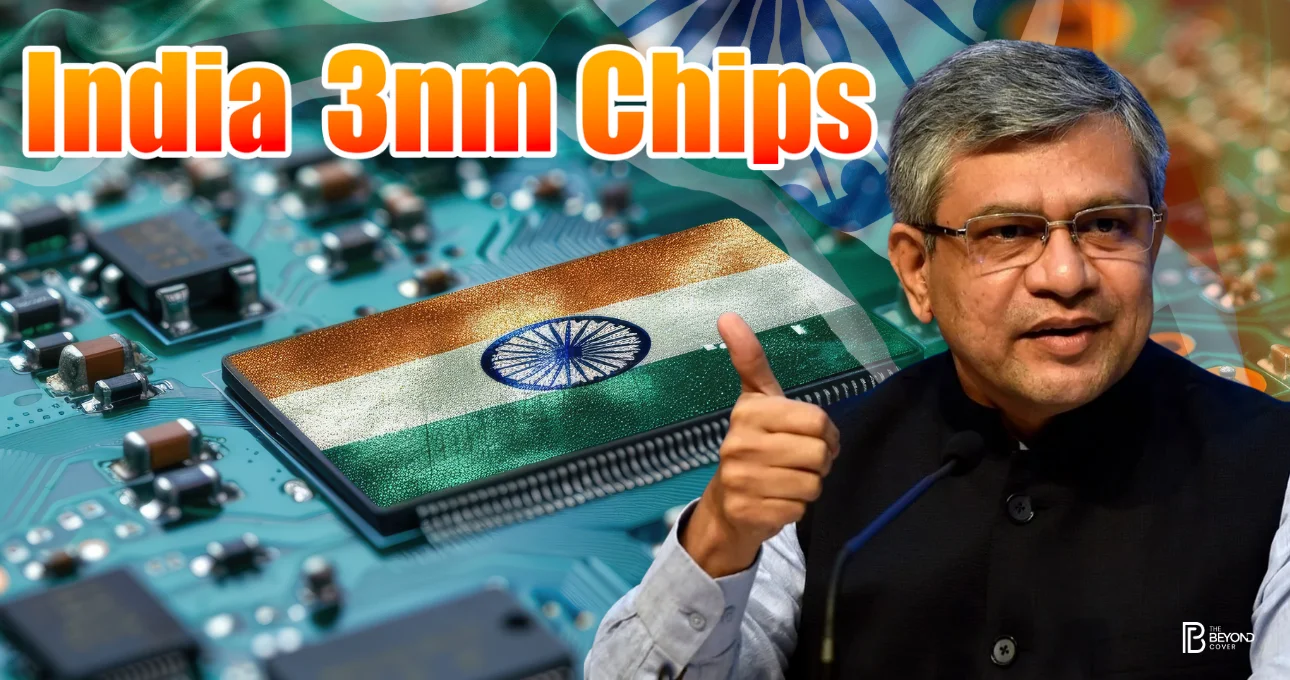
India has set its sights on the most advanced frontier of semiconductor manufacturing, announcing plans to develop 2-nanometre (2nm) and 3-nanometre (3nm) chips by 2032. The move signals the country’s ambition to become a serious global player in the high-end semiconductor value chain, as governments worldwide race to secure chip supply amid rising geopolitical and technological pressures.
The target was outlined by senior government officials as part of India’s long-term semiconductor roadmap, which builds on recent investments in chip fabrication, packaging, and design. If achieved, the milestone would place India among an elite group of nations capable of producing leading-edge semiconductor nodes, currently dominated by companies such as TSMC, Samsung, and Intel.
Why 2nm and 3nm Chips Matter
Chips manufactured at 2nm and 3nm process nodes are essential for next-generation technologies, including artificial intelligence, high-performance computing, advanced smartphones, autonomous systems, and defense applications. Smaller nodes allow more transistors to be packed onto a chip, improving performance while reducing power consumption.
As AI workloads grow more complex and energy-intensive, demand for cutting-edge chips is accelerating. By targeting advanced nodes, India aims to reduce dependence on imports and strengthen its position in global supply chains.
Building on Recent Semiconductor Push
India’s ambition builds on its Semicon India programme, under which the government has committed billions of dollars in incentives to attract chipmakers. Over the past two years, the country has approved semiconductor fabrication and assembly projects involving global partners, including initiatives focused on mature nodes and advanced packaging.
Officials say the strategy is phased. In the near term, India is prioritising chip design, assembly, testing, and packaging (ATMP), while gradually moving up the manufacturing complexity curve. Advanced nodes such as 3nm and 2nm are expected to come later in the decade, once infrastructure, talent, and ecosystem readiness are in place.
Challenges on the Road Ahead
Industry experts caution that producing 2nm and 3nm chips is extraordinarily complex and capital-intensive. Leading-edge fabs require investments exceeding $20 billion, extreme ultraviolet (EUV) lithography tools, and a deep ecosystem of suppliers and skilled engineers.
India currently lacks domestic EUV manufacturing capabilities and remains dependent on global equipment suppliers. Talent development will also be critical, as advanced chipmaking demands highly specialised expertise in materials science, process engineering, and yield optimisation.
Despite these challenges, policymakers argue that long-term planning is essential. Global semiconductor supply chains are being reshaped by geopolitics, and countries are increasingly investing in local capabilities to ensure technological sovereignty.
Strategic and Geopolitical Implications
India’s push into advanced nodes aligns with broader efforts by the US, Europe, Japan, and others to diversify chip manufacturing away from single-region concentration. As a trusted democratic partner, India could play a strategic role in future semiconductor alliances.
Analysts say even partial success—such as participation in advanced-node R&D or specialised manufacturing steps—could significantly enhance India’s global standing.
Looking Ahead
Reaching 2nm and 3nm production by 2032 will require sustained investment, policy stability, and close collaboration with global technology leaders. While the goal is ambitious, it reflects India’s growing confidence in its semiconductor ecosystem.
If successful, the move could transform India from a chip design powerhouse into a full-stack semiconductor nation, capable of supporting the world’s most advanced technologies.