









In the realm of digital defense, security compromises are no longer a possibility– they are an inevitability. The key issue isn’t whether an intruder gains access, but the extent of their reach within the system. This precise dilemma motivated Illumio when it introduced Zero Trust Segmentation– a framework intended not only to guard boundaries but to halt the propagation of threats across the internal infrastructure.
Since its inception in 2013, Illumio has cultivated a system that functions as an inner layer of defense for contemporary organizations– quietly charting data flow, enforcing protocols, and isolating incidents before they become widespread crises. Amidst a landscape of diverse cloud setups, containerized applications, and AI-powered operations, Illumio’s methodology has emerged as a vital component of robust security designs.
Company Origins and Founders
Illumio was established in 2013 in Sunnyvale, California, by Andrew Rubin and PJ Kirner (Peter John Kirner). Their core objective was explicit: eradicate movement between systems inside data centers–a major oversight in older security paradigms based solely on external defenses.
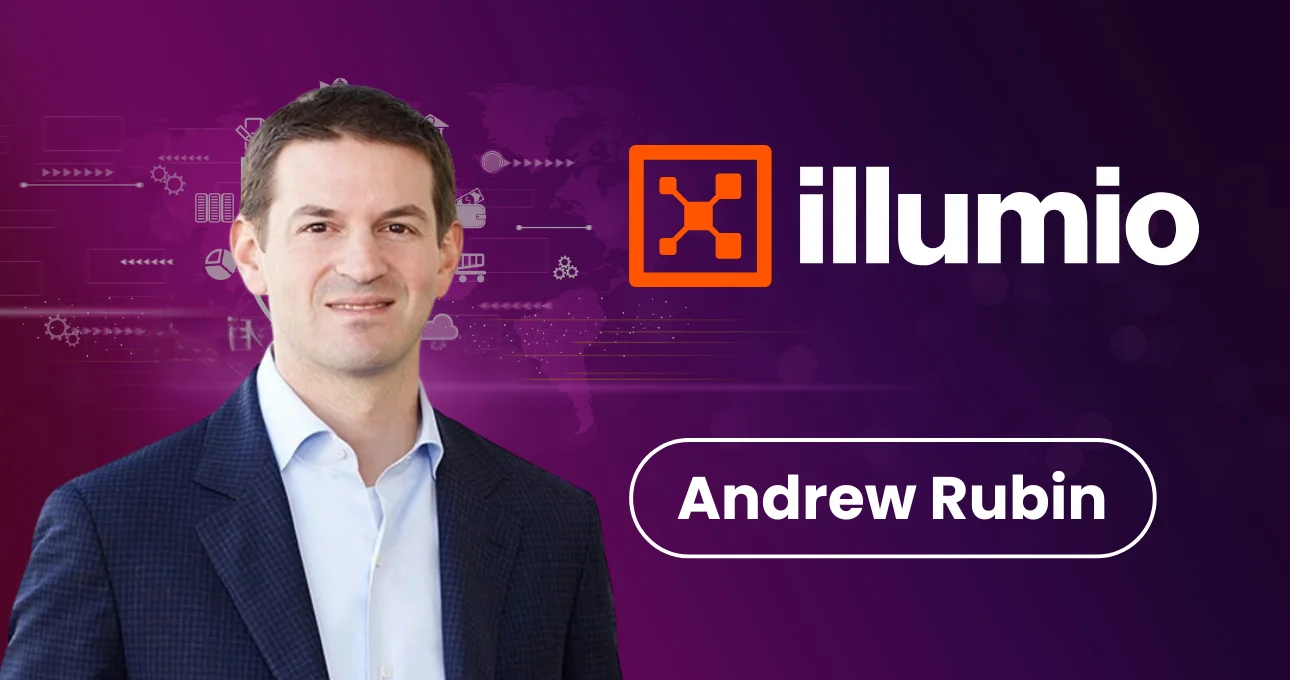
Andrew Rubin, the CEO and Co-Founder, brought substantial prior expertise in securing networks. His direct involvement with major clients, including entities like Citi and Microsoft, shaped Illumio’s client-focused approach. Instead of generating theoretical security utilities, Rubin concentrated on resolving tangible issues—specifically, how threats navigate once they have penetrated systems.
PJ Kirner, the company’s initial CTO and Co-Founder, engineered the core technical structure of Illumio’s solution. Drawing on prior work at Juniper Networks and Cymtec, he was instrumental in creating a framework capable of visualizing and governing data movement at a fine-grained level. By 2023, Kirner shifted to consultative roles, yet his architectural imprint remains integral to the product.
Key Milestones Marking Illumio’s Ascent
Illumio’s development path illustrates not just growth, but validation of a completely new security viewpoint.
2013: Founded by Rubin and Kirner, securing initial investment from Andreessen Horowitz and General Catalyst.
2015: Secured $100 million in a Series C round led by BlackRock and Accel, bringing total capital raised to over $142 million.
2017: Garnered $125 million in Series D funding headed by J.P. Morgan, facilitating worldwide expansion.
2019: Raised an additional $65 million, onboarded Anup Singh as CFO, and attained ‘unicorn’ status with a valuation surpassing $1 billion.
2021: Finalized a $225 million Series F funding round led by Thoma Bravo, hitting a $2.75 billion valuation and total funding of $557.5 million. Recognized as a frontrunner in the Forrester Wave for concepts related to No Trust.
2023: Commemorated its decade anniversary and welcomed John Kindervag—widely credited as the “Originator of Zero Trust.”
2025: Designated L. David Kingsley as Chief People Officer.
These accomplishments have elevated Illumio among premier cybersecurity innovators, safeguarding leading global corporations against ever more sophisticated dangers.
Zero Trust Segmentation: The Guiding Principle
Illumio’s major contribution is its interpretation of Zero Trust– viewing it not merely as an access control model, but as a strategy for internal isolation.
The Zero Trust Segmentation ethos accepts that security breaches are inevitable. Rather than focusing exclusively on preventing entry, it ensures that once an attacker gains a foothold, their progress across systems is blocked.
Illumio’s system provides visibility into east-west traffic–the internal communication between operational components spanning:
- Data centers
- Cloud venues
- User devices
- Container clusters
Utilizing both software-installed and non-installed methods, the system enforces precise rules dictating exactly which workloads are permitted to interact.
Key Elements
Illumio Core: Catalogs application connections and enforces security rules based on descriptive labels.
Dynamic Policy Testing: Validates security directives before activation to avert operational interruptions.
Malware Containment: Halts the propagation of security incidents by quarantining affected systems.
Adherence Reporting: Supports mandates like PCI DSS and NIST.
Unlike legacy firewalls that operate at the network edge, Illumio functions at the application layer. This enables organizations to shrink their potential attack surface significantly without undertaking major infrastructure overhauls.
In mixed IT environments, the platform smoothly accommodates multi-cloud arrangements, Kubernetes, and endpoint safeguards–making it particularly valuable as businesses scale up AI and data-centric systems.
Executive Team Steering Progress
Illumio’s management combines deep technology comprehension with strategic deployment capabilities, ensuring the company continues to innovate while expanding globally.
CEO & Co-Founder
Rubin steers Illumio with a strong emphasis on client-centered Zero Trust approaches, particularly as the firm considers public offering possibilities.
Chief Technology Officer
Directs system advancements and technical direction.
Co-Founder & Former CTO (Consultant)
PJ Kirner
Chief Product Officer
Chief Marketing Officer
Gautam Mehandru
Chief People Officer
David Kingsley
Chief Revenue Officer
SVP, Global Partner Sales
Todd Palmer
This executive group ensures Illumio stays both pioneering and operationally effective in a highly competitive marketplace.
Platform Capabilities and Practical Impact
Illumio’s Adaptive Security Platform (ASP) moves beyond fixed security measures. It continuously maps how applications rely on each other, providing live visibility into workload interactions.
A particularly potent characteristic is policy simulation–allowing security personnel to trial segmentation configurations prior to activation. This removes the risk of system outages, a common concern in large corporate settings.
The system integrates smoothly with broader security assemblies, including SIEM solutions and endpoint detection services like CrowdStrike. This integration facilitates unified tracking and response to threats.
Quantifiable Results
Enterprises utilizing Illumio report:
- 50% quicker deployment of segmentation
- 99% containment success for security incidents
These outcomes underscore the system’s capacity to deliver both swiftness and accuracy.
In the context of corporate AI and cloud-native development, Illumio is crucial for securing data pathways and preventing internal threats. This is especially pertinent in rapidly growing tech hubs like India, where cloud adoption and artificial intelligence innovation are accelerating.
Following its 2021 capital raise, Illumio aggressively broadened its presence in the APAC and EMEA regions, solidifying its worldwide reach. The company has also received praise from industry analysts like Gartner and Forrester for its leadership in finer-grained segmentation.
Market Status and Forecast
Illumio competes in an active arena alongside entities such as Zscaler and Palo Alto Networks (via Prisma Cloud). Nevertheless, its concentration on precision through installed agents and application-level separation grants it a notable edge, especially for organizations maintaining older systems.
Backed by Thoma Bravo, Illumio continues substantial reinvestment in exploration and development. Its future plans involve automation driven by AI, advanced service models delivered via software, and new segmentation techniques for emerging technologies.
Hurdles persist, notably in widely deploying agents across immense environments. However, Illumio is addressing this via flexible installation options, including those that don’t require agents.
Looking toward 2027, the company is focusing on:
- Blending endpoint and cloud security measures
- Strategies for segmentation secure against quantum computing threats
- Deeper incorporation with security frameworks powered by AI
Conclusion
Illumio has fundamentally altered the outlook on digital protection for organizations. By shifting emphasis from perimeter barriers to internal confinement, it has established a model where compromises do not result in disaster–they become manageable incidents.
With steadfast leadership, ongoing innovation, and a clear vision grounded in the Zero Trust principle, Illumio is not just reacting to contemporary threats, it is redefining how enterprises construct secure, resilient infrastructures fit for the future.