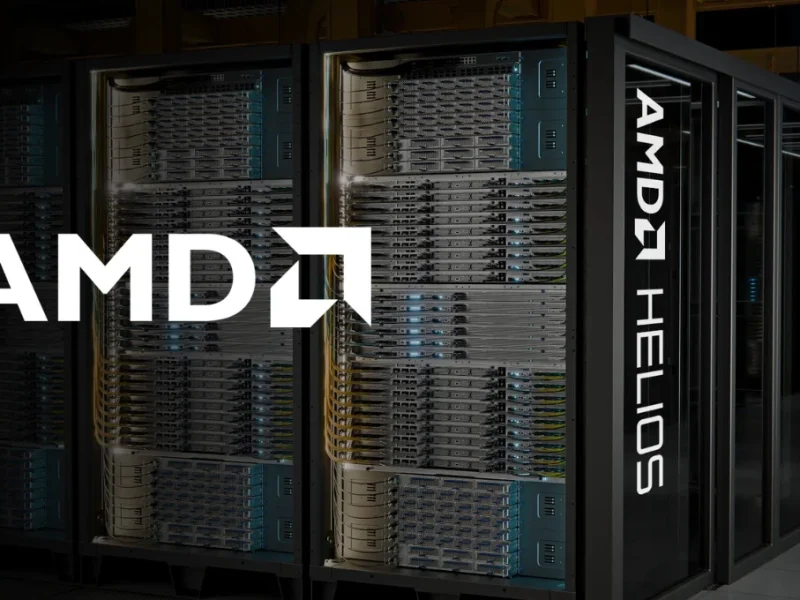










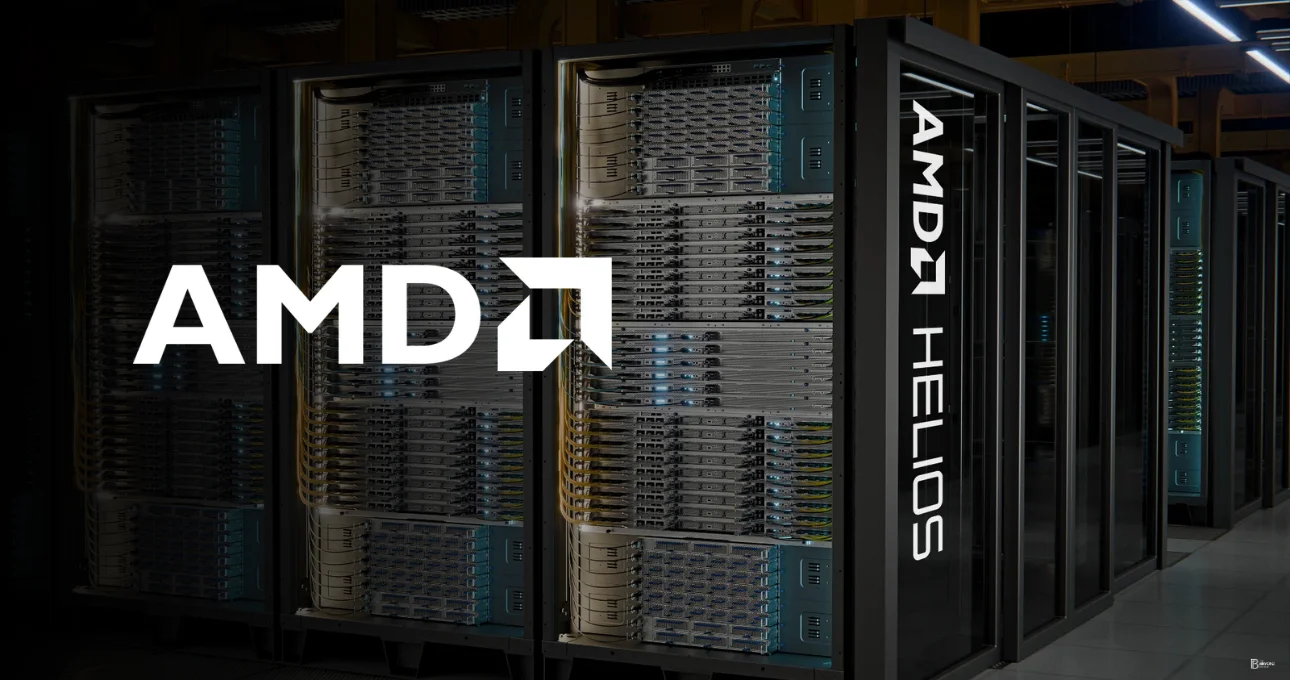
With AI models of ever-increasing size and complexity on the rise, there is a pressing need for infrastructure that can keep pace without sacrificing performance or flexibility. AMD has met that need with the official launch of Helios, a rack-scale AI platform intended to drive the next wave of enterprise AI.
Helios is not merely an assemblage of hardware parts but a comprehensive solution. By bringing together AMD Instinct MI455X GPUs, 6th Gen EPYC CPUs, Pensando networking and the ROCm software stack, the company has created a unified platform capable of underpinning anything from one AI rack to a gigawatt-scale cluster. In doing so, AMD is putting forward an open alternative to the proprietary ecosystems that have come to dominate the space, affording hyperscalers and enterprises more latitude in their large-scale builds.
A Platform Made for Scale
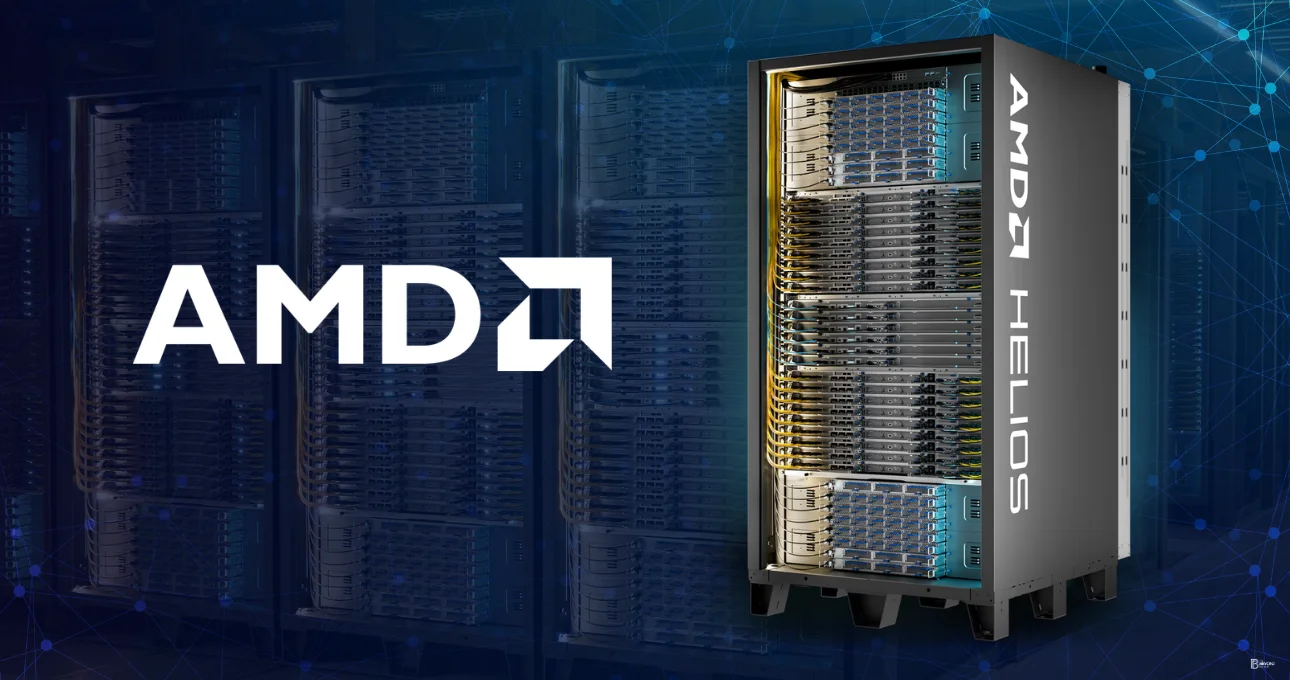
Where you might find a conventional hardware deployment, Helios offers a fully integrated architecture at the rack level. The 72 AMD Instinct MI455X GPUs in each unit are tied together via Ultra Accelerator Link (UALink) to operate as a single GPU pool. 6th Gen AMD EPYC “Venice” processors supply the power, and Pensando Vulcano and Pollara SuperNICs ensure networking speeds of 300 Gbps per accelerator over RoCE-based fabrics and Ultra Ethernet.
On the software side, the ROCm ecosystem handles cluster management and GPU programming in accordance with open standards like those of the Open Compute Project and the Ultra Ethernet Consortium. The whole system is constructed to Meta’s Open Rack Wide specification and features liquid cooling to cope with the demands of high-density workloads.
High-Performance AI Infrastructure Designed for Frontier Workloads
When it comes to frontier AI, the numbers are telling. A lone Helios rack can put out 2.9 exaFLOPS of FP4 inference and 1.4 exaFLOPS of FP8 training, backed by 31 TB of HBM4 memory and 1.4 PB/s in aggregate bandwidth. The design allows research bodies and cloud providers to grow their capacity from one rack to many on a consistent foundation.
How Helios Compares with NVIDIA’s Vera Rubin AI Platform
In some ways, Helios is AMD’s most direct contest to date against NVIDIA’s Vera Rubin offerings. The company claims its platform provides about 15% more compute than the Vera Rubin NVL72 and close to 50% more in the way of memory and bandwidth than the NVL144. That extra headroom is something AMD says will be of use to customers training large language models.
But openness is the true differentiator. Instead of binding a customer to a proprietary stack, Helios works with industry standards and the open-source ROCm. For an organisation looking to put in place AI infrastructure for the long term, that kind of freedom from vendor lock-in is hard to put a price on.
Why Helios Matters for the Future of Enterprise AI
For the hyperscaler or the sovereign AI project, Helios represents a shift for AMD beyond the GPU market into full-blown AI infrastructure. It is a high-performance choice for a time when having an open, scalable and memory-rich environment is more important than ever.