









A Strategic Bet on the Future of AI at Scale
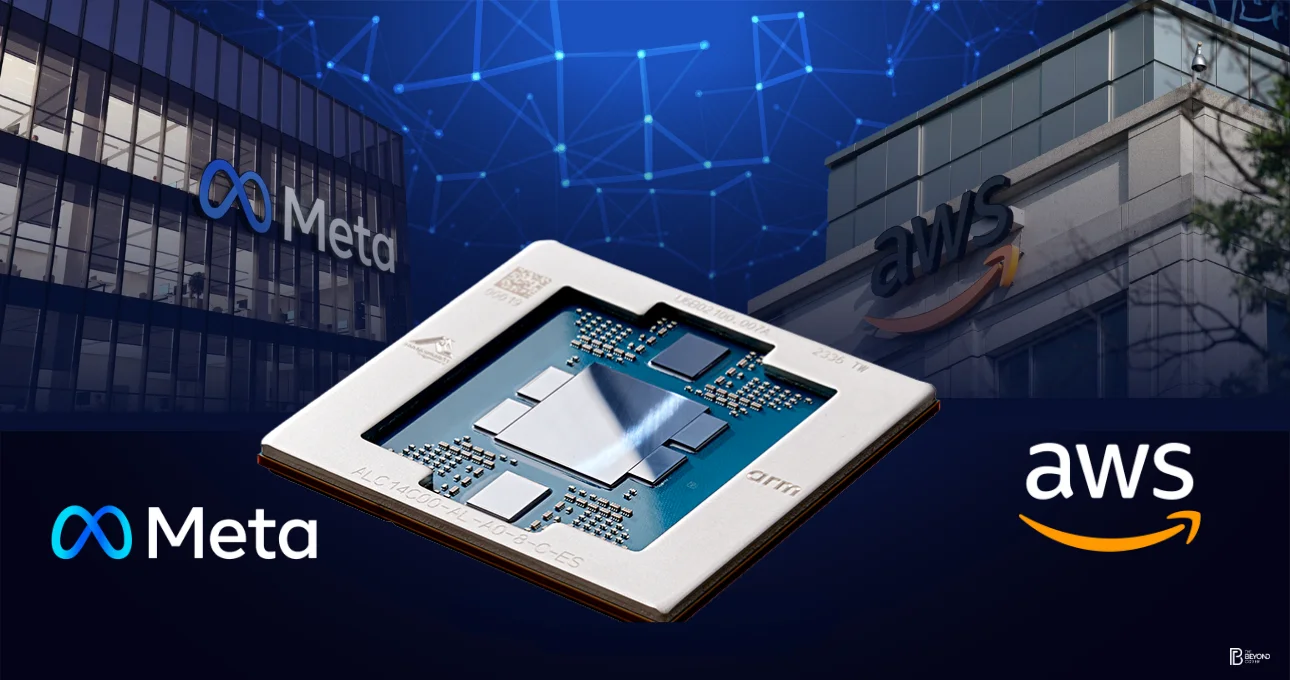
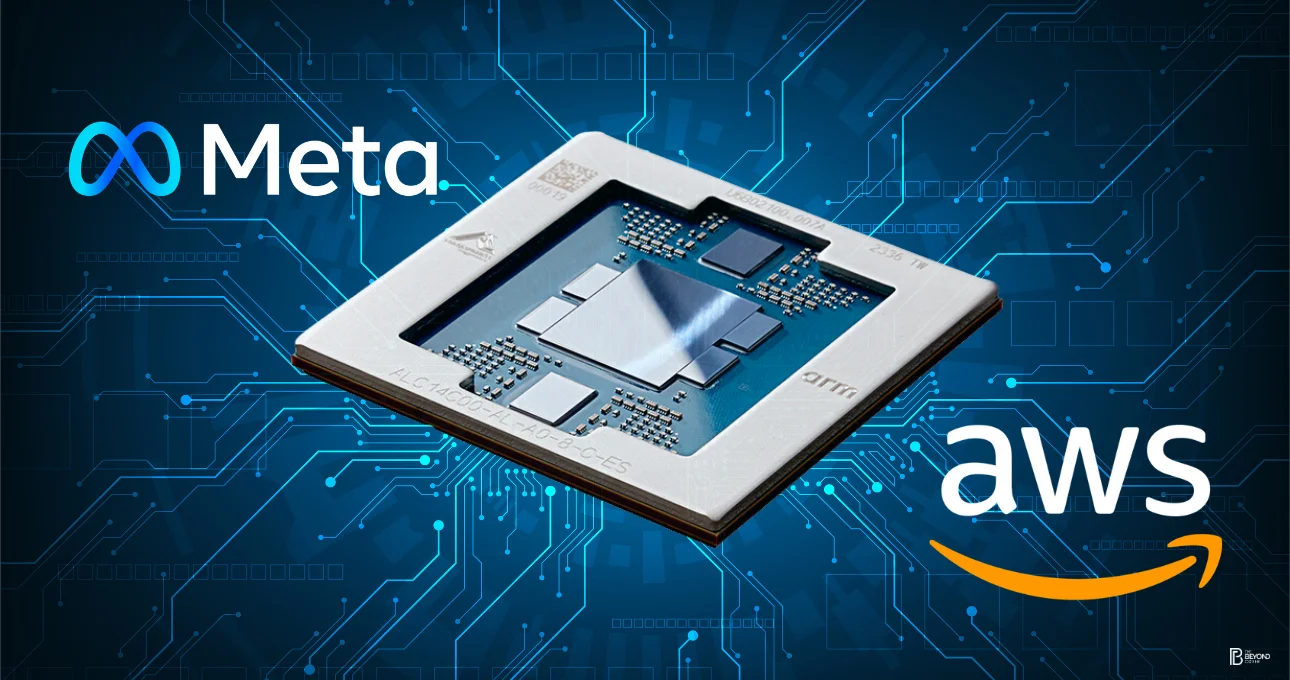
Meta is doubling down on the future of artificial intelligence with a landmark agreement with Amazon Web Services (AWS). The company will deploy tens of millions of Graviton5 processor cores, marking one of the most significant infrastructure expansions aimed at powering agentic AI– systems capable of reasoning, planning, and executing tasks autonomously.
Santosh Janardhan, Meta’s Head of Infrastructure, highlighted the intent behind the move:
“Expanding to Graviton allows us to run the CPU-intensive workloads behind agentic AI with the performance and efficiency we need at our scale.”
This isn’t just an upgrade- it’s a clear signal that AI infrastructure is entering a new phase.
What Makes Graviton5 a Game-Changer?
At the heart of this deal is AWS’s latest Arm-based chip, Graviton5, designed for high-performance, energy-efficient computing.
Key capabilities include:
- 192 cores for large-scale parallel processing
- 5x larger cache compared to Graviton4
- 25% better performance for reasoning-heavy workloads
These improvements make Graviton5 particularly suited for:
- Real-time AI reasoning
- Code generation
- Search and recommendation systems
- Multi-step agent workflows
For a platform serving over 3.2 billion daily active users, these efficiencies translate into faster responses and lower operational costs.
Why Meta Is Moving Toward CPU-First AI Architectures
For years, GPUs have dominated AI workloads. But the rise of agentic AI is changing that equation.
AI infrastructure is now splitting into specialized layers:
- Training: GPUs and TPUs remain dominant
- Inference: Optimized by GPUs
- Agentic reasoning: Increasingly CPU-driven
Graviton5 is purpose-built for this third category- handling orchestration, planning, and multi-step decision-making with greater efficiency than traditional GPU setups.
This shift reflects a deeper industry trend:
AI systems are no longer one-size-fits-all– they require specialized hardware for each task.
Inside the Technology: How Agentic AI Works at Scale
Consider a simple request:
“Plan a Paris trip, book flights, and reserve dinner.”
Behind the scenes, an AI system powered by Graviton5 could:
- Break the request into multiple steps
- Run parallel agents for flights, hotels, and dining
- Integrate APIs for bookings
- Combine outputs into a seamless experience
Now imagine this happening across billions of users simultaneously.
Graviton5 enables:
- Parallel execution across millions of agents
- Persistent context across interactions
- Faster response times with minimal latency
This is the foundation of always-on, intelligent systems.
The Competitive Landscape: A Shift Beyond GPUs
Meta’s move comes as the AI infrastructure race intensifies:
- Google is advancing TPU-based inference systems
- Microsoft is building its Maia AI chips
- NVIDIA continues to lead in GPU-based training
However, agentic AI introduces a new battleground, where CPUs like Graviton5 are gaining relevance.
This marks a “CPU renaissance,” where efficiency, scalability, and orchestration capabilities become just as important as raw compute power.
Cost Efficiency: A Multi-Billion Dollar Advantage
Beyond performance, economics play a crucial role in this decision.
Graviton5 is expected to deliver:
- 40–50% lower total cost of ownership compared to x86 systems
- 25% better performance per watt
- Significant savings at Meta’s scale of billions of interactions
With AI interactions potentially exceeding 100 billion per day, even marginal efficiency gains can lead to massive cost reductions.
What This Means for Meta’s Platforms
This infrastructure upgrade will power AI-driven experiences across Meta’s ecosystem:
- WhatsApp: Multilingual commerce and conversational agents
- Instagram: AI copilots for content creation
- Facebook Groups: Smarter moderation and recommendations
- Reality Labs: Advanced AR/VR experiences powered by spatial AI
Graviton5 becomes the backbone of these next-generation capabilities.
India’s Growing Role in AI Infrastructure
With Amazon Web Services investing heavily in India, regions like Mumbai and Hyderabad are emerging as key hubs for AI deployment.
This aligns with:
- Rising enterprise adoption of AI
- Expanding cloud infrastructure
- Growing demand for real-time AI applications
India is increasingly becoming a crucial player in the global AI ecosystem.
Final Take: The Future of AI Is Specialized and Scalable
Meta’s Graviton5 deal underscores a major shift in AI strategy:
the future belongs to specialized infrastructure.
Instead of relying solely on GPUs, companies are now building layered architectures:
- GPUs for training
- Accelerators for inference
- CPUs for reasoning and orchestration
As AI evolves into agent-driven, always-on systems, efficiency and scalability will define the winners.
With this move, Meta isn’t just scaling infrastructure- it’s laying the groundwork for the next generation of intelligent, autonomous digital experiences.