









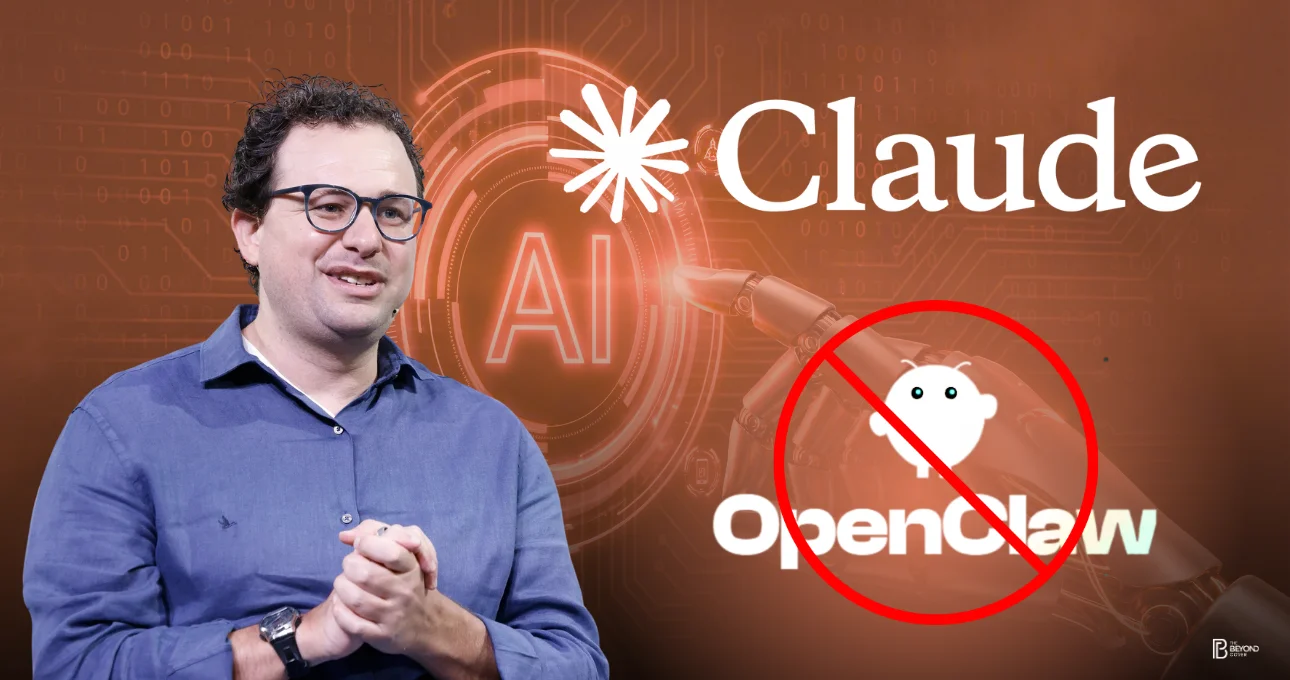
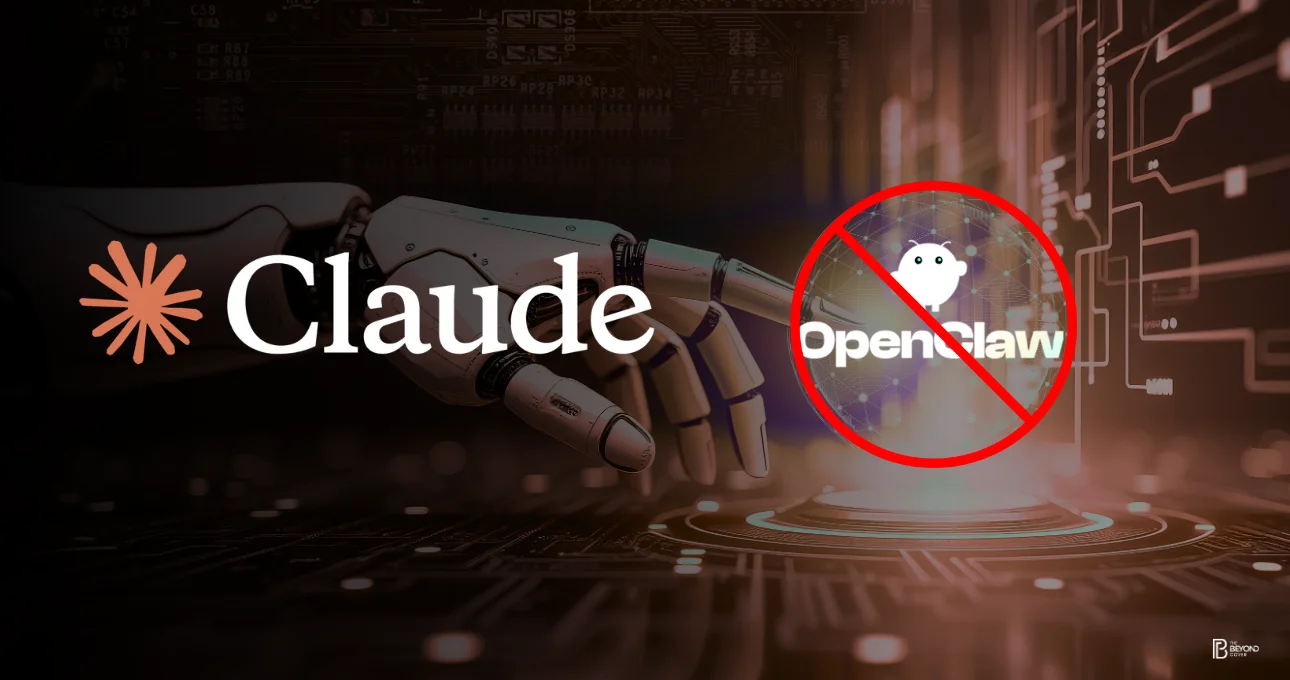
In a development signaling a shift in AI platform revenue models, Anthropic has officially curtailed access to its Claude models for external applications such as OpenClaw. Starting April 5, 2026, standard Claude subscriptions will no longer cover powering these outside services, necessitating a move toward usage-based API access.
This is more than a minor policy adjustment; it clearly indicates the sunsetting of unrestricted AI access through fixed subscriptions.
Why Anthropic Made This Move
The core reason for this action lies in the growing mismatch between subscription fees and actual consumption by these external users.
According to Boris Cherny, Claude subscriptions were never intended to support the continuous, high-volume demands generated by third-party tools, particularly agent-based frameworks that run numerous query cycles incessantly.
Tools like OpenClaw, frequently employed for automation, coding agents, and AI pipelines, were effectively converting flat-rate subscriptions into limitless computing resources. This poses an issue, given the persistent sharp increases in AI infrastructure expenses.
Anthropic’s solution?
To prohibit third-party access under current subscriptions and direct users to metered API rates, ensuring usage aligns with expenses.
What Changes for Users
The effect is immediate for developers and enterprises.
- Claude Pro and Max plans no longer cover external tools.
- Third-party applications now mandate separate API credentials or usage credit pools.
- Users accessing Claude outside official channels will encounter limitations sooner.
Anthropic is extending a one-time credit equivalent to one month’s subscription, alongside discounted usage packages but the directive is clear: payment must match consumption.
Meanwhile, Claude’s proprietary platforms, such as Claude Code and its web portal, continue to be fully accessible via subscriptions.
The Underlying Concern: Scaling AI Incurs Significant Cost
This change underscores a wider industry hurdle: AI consumption doesn’t scale like typical Software as a Service.
Unlike software, where additional use carries minimal incremental cost, AI models demand substantial processing power for every prompt. When these prompts are chained through automated workflows, costs can escalate rapidly.
A single request might cost mere cents, but thousands of automated iterations? That strains the infrastructure considerably.
Anthropic’s decision reflects a broader industry realization:
Flat subscriptions cannot underwrite unending AI utilization.
Pressure on Developers
For the developer community, especially those utilizing OpenClaw, this introduces new hurdles.
Projects relying on Claude for:
- Coding assistance
- Retrieval-augmented generation (RAG) setups
- Automated processes
now face potentially much higher operating expenses, possibly multiplying costs five to ten times for heavy utilization.
This necessitates a reassessment:
- Employ subscriptions for light, exploratory activities
- Migrate production loads to APIs with monitored spending limits
This is a more formalized approach, though it offers less ease for initial exploration.
A Wider Industry Trend
Anthropic is not alone in adopting this direction.
As AI takes hold, companies like OpenAI and others are also tightening access governance, prioritizing API revenue and infrastructure efficiency.
The pattern is evident:
- Subscriptions → for individuals and low-volume tasks
- APIs → for developers and scalable deployments
This fosters a more durable environment, though it may raise entry barriers for independent developers and newer firms.
Implications for the AI Landscape
This move by Anthropic redefines how AI tools will be developed and expanded henceforth.
Rather than casually integrating powerful models, developers must now consider:
- The expense per interaction
- The effectiveness of their workflows
- Optimized model deployment
Conversely, this might inspire:
- More efficient AI architectures
- Smarter agent design principles
- Improved resource management
However, it also curtails the unrestricted exploration that spurred earlier innovation.
The Broader Context
Anthropic’s action confirms a vital transition in the AI economy:
Computational power is emerging as the essential commodity.
As the need for agentic AI systems expands, firms must balance fostering innovation with ensuring operational viability. Open access drives uptake—but it cannot sustain long-term infrastructure overhead.
By establishing clearer boundaries, Anthropic prioritizes structure over unpredictability.
Final Take
This situation transcends just Claude or OpenClaw; it speaks to the future of gaining access to AI capabilities.
The sector is moving from unrestricted experimentation toward managed scalability, where every unit of processing, query, and workflow carries a quantifiable price tag.
For developers, companies, and startups, the core message is straightforward:
AI must now be viewed as an infrastructure commitment.
And how you choose to deploy it will soon be as crucial as the innovations you create with it.