









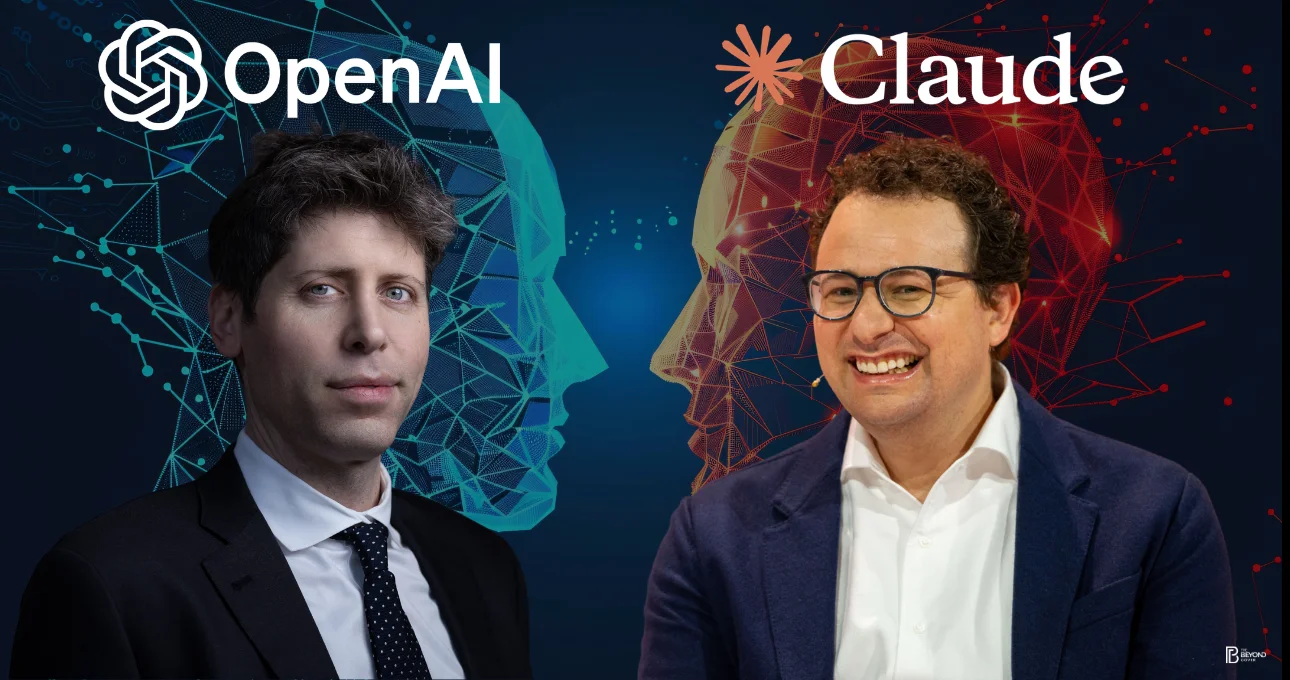
In a high-stakes thrust to capture the enterprise AI market, OpenAI is deploying an assertive plan to get ahead of its main rival, Anthropic- and it’s leveraging private investment to make this happen.
Based on insights from individuals informed on the situation, OpenAI is presenting highly appealing financial terms and early technology availability to major buyout organizations via newly arranged partnerships. The objective is to speed up client adoption, secure new funding, and solidify its standing before a possible public offering.
A Highly Attractive Incentive: 17.5% Assured Profits
Central to OpenAI’s approach is a compelling financial offer. The firm is providing private-equity backers a guaranteed minimum yield of approximately 17.5% on preferred ownership shares- significantly exceeding typical returns seen in early-stage or private equity deals.
This action markedly sets OpenAI apart from rivals like Anthropic, whose enterprise-focused agreements reportedly lack such guaranteed payouts. For PE groups analyzing long-term involvement in AI, this elevated yield could be a deciding factor.
In addition to returns, OpenAI is also offering something more valuable: preferred entry to its newest AI models. This means companies supported by PE can implement state-of-the-art tools before the wider market- creating a substantial competitive advantage.
Glance Inside the $10 Billion Joint Enterprise Vision.
OpenAI is engaged in talks with some of the world’s premier private-equity entities-including TPG, Advent International, Bain Capital, and Brookfield Asset Management- to establish a joint operation potentially valued at around $10 billion before new investment.
Within the suggested framework:
- Each primary investor may inject about $4 billion
- PE firms would gain ownership shares and board seats
- The venture would function as a delivery mechanism for OpenAI’s enterprise services
These offerings comprise:
- AI models accessed via API
- Copilots tailored for specific sectors
- Managed AI solutions
The joint entity would not only deploy these tools across its associated companies but also offer them to a broader base of business clients.
Significantly, this arrangement permits the venture to handle technically demanding engineering work, such as adapting and refining models, helping to ease budget strain on OpenAI as it prepares for a public debut.
Enterprise AI Competition: OpenAI Versus Anthropic
This push signals OpenAI’s stronger pivot towards enterprise arenas- a territory where Anthropic has historically held an edge, due to robust ties with cloud providers and financial institutions.
Now, both companies are racing to secure collaborations with private-equity firms. The rationale? PE organizations are in charge of vast networks of medium-sized and large businesses, which are important decision-makers when it comes to business software and AI spending.
By integrating AI solutions directly within these portfolios, OpenAI intends to:
- Promote quick, widespread uptake
- Position itself as the standard AI foundation
- Foster lasting client attachment
Concurrently, these ventures assist both OpenAI and Anthropic in presenting clearer revenue breakdowns, a crucial element as they move closer to being ready for an IPO.
Implications for Investors and Businesses
For private-equity firms, this structure offers more than just financial returns. It equips them with a strategic set of tools to safeguard their holdings against AI-driven transformation. By incorporating automation, data analysis, and AI-powered efficiencies, firms can boost profitability and reposition underperforming assets.
For business clients, the advantages are immediate—though potential drawbacks exist:
- Quicker entry to advanced AI capabilities through PE ownership
- Deeper embedding within operational processes
- The possibility of vendor dependency as AI becomes intrinsic at the portfolio level
A New Model for AI Supremacy
If realized, OpenAI’s joint venture could set an industry trend, representing one of the first major investments backed by private equity into core AI infrastructure.
The most notable element—the 17.5% guaranteed return—points to a clear priority: trading some potential long-term gains for immediate speed, scale, and market authority.
As the contest between OpenAI and Anthropic escalates, one thing is becoming evident: succeeding in AI is no longer solely about creating superior models. It’s about controlling the path to the customer—through private equity, cloud infrastructure, and business networks.
And in this race, OpenAI is taking one of its most ambitious steps yet.