









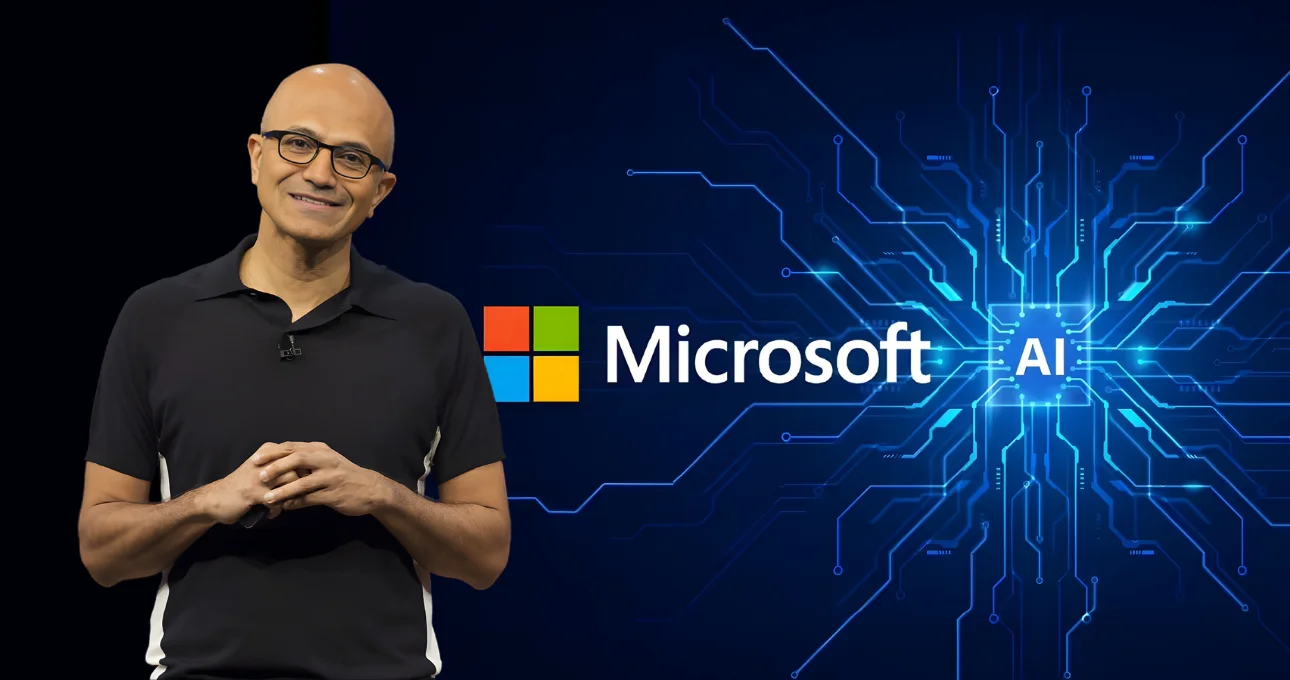
Microsoft is accelerating its internal AI transformation by encouraging nearly every employee—not just engineers—to actively use artificial intelligence in daily work. The strategy reflects the company’s belief that AI is no longer a niche technical tool but a foundational productivity layer that can reshape how organizations operate.
According to recent reports, Microsoft leadership sees widespread AI usage across roles as critical to staying competitive in an increasingly AI-driven economy.
AI as a Universal Workplace Tool
Traditionally, advanced software tools were limited to engineers and technical teams. Microsoft is now breaking that mold by embedding AI capabilities across departments such as sales, marketing, finance, customer support, and human resources.
Tools like Microsoft Copilot, integrated into Microsoft 365 apps including Word, Excel, Outlook, and Teams, are designed to help non-technical employees draft documents, analyze data, summarize meetings, and automate repetitive tasks.
The goal is to make AI as ubiquitous as spreadsheets or email—accessible to anyone, regardless of technical background.
Driving Productivity at Scale
Microsoft executives believe that broad AI adoption can unlock significant productivity gains. By automating routine work, employees can focus on higher-value tasks such as strategic planning, creativity, and decision-making.
Internal experiments and early customer feedback suggest that AI-powered tools can reduce time spent on administrative tasks and improve output quality across multiple roles.
This company-wide approach also reflects Microsoft’s broader vision of AI as an economic multiplier, rather than a job replacement technology.
Building an AI-First Culture
Encouraging AI use across the organization requires more than software. Microsoft is reportedly investing in training programs, internal guidelines, and change management initiatives to help employees adopt AI responsibly and effectively.
Employees are being encouraged to experiment with AI tools, learn prompt-writing skills, and identify workflows where AI can deliver the most impact. This cultural shift is intended to normalize AI usage and remove hesitation around adoption.
Microsoft has emphasized that human judgment remains central, with AI acting as an assistant rather than a decision-maker.
Learning From Internal Deployment
By deploying AI at scale within its own workforce, Microsoft gains valuable insights into real-world usage patterns, limitations, and risks. These learnings feed directly into product improvements for enterprise customers.
This “customer zero” strategy allows Microsoft to test AI tools under realistic conditions, ensuring they are robust, secure, and aligned with compliance requirements before broader rollout.
Implications for the Future of Work
Microsoft’s push signals a broader trend in the future of work, where AI literacy becomes a core skill across professions. Just as digital tools became essential over the past two decades, AI proficiency may soon be expected in most roles.
Analysts say this shift could reshape job descriptions, performance metrics, and workplace training programs. Employees who effectively collaborate with AI tools may gain a competitive edge in productivity and career growth.
Addressing Risks and Responsibility
With increased AI usage comes responsibility. Microsoft has stressed the importance of data privacy, security, and ethical AI use. The company continues to invest in safeguards to prevent misuse, bias, and over-reliance on automated systems.
Clear policies and transparency around AI-generated content are also part of Microsoft’s internal strategy.
A Strategic Bet on AI-Driven Workplaces
By encouraging almost every employee to use AI, Microsoft is making a bold bet that widespread AI adoption—not isolated expertise—will define the next generation of work.
The move reinforces the company’s position as a leader in enterprise AI and offers a glimpse into how organizations worldwide may soon operate.
Final Takeaway
Microsoft’s message is clear: AI is no longer just for engineers writing code. It is becoming a core skill for the modern workforce, reshaping how people across roles create, collaborate, and deliver value.