










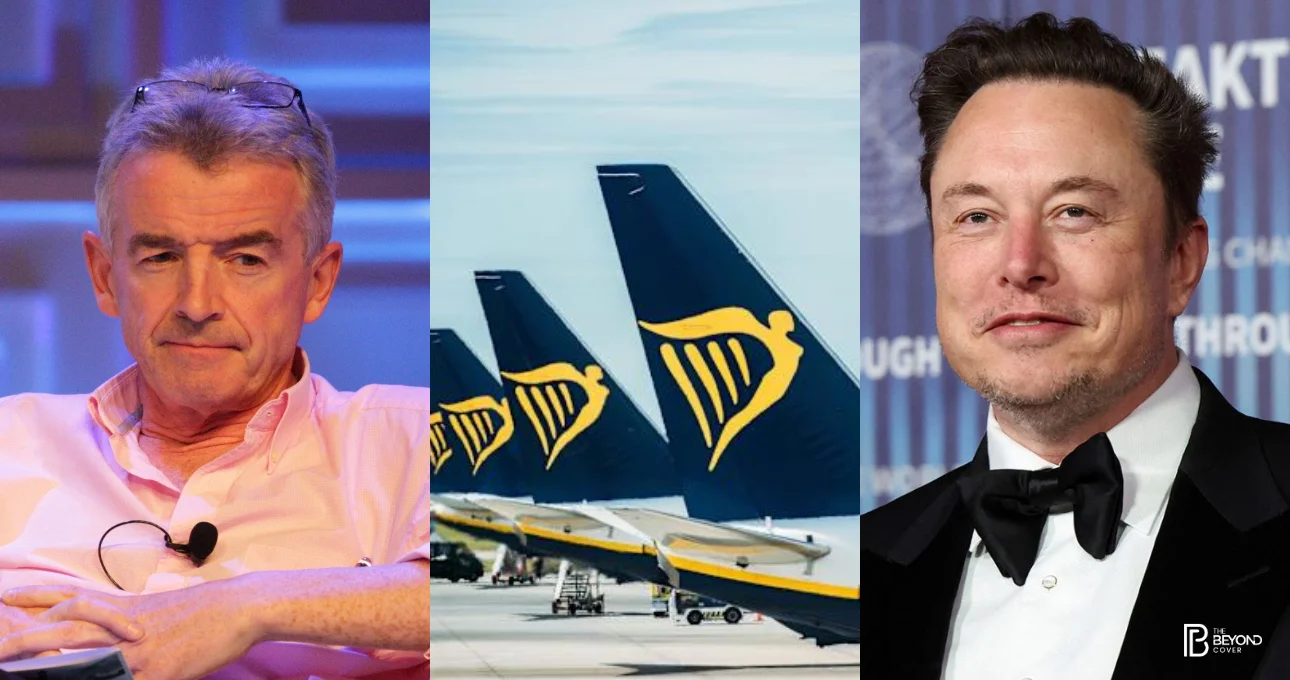
A public disagreement has emerged between Elon Musk and Ryanair CEO Michael O’Leary over the cost and pricing model of Starlink in-flight Wi-Fi, highlighting broader tensions around satellite internet adoption in the aviation industry. The exchange underscores the challenges airlines face in balancing passenger expectations for fast, free connectivity with the high costs of deploying next-generation satellite technology.
Starlink and the Promise of Faster In-Flight Wi-Fi
Starlink, operated by SpaceX, has been rapidly expanding its aviation connectivity services, promising low-latency, high-speed internet that can support streaming, video calls, and real-time browsing at cruising altitude. Unlike traditional geostationary satellite systems, Starlink relies on a constellation of low Earth orbit (LEO) satellites, enabling faster speeds and reduced lag.
Several global airlines have already signed up for Starlink Wi-Fi, marketing it as a premium feature that enhances the passenger experience. However, the cost of installing and operating the service remains a key point of contention.
The Public Clash
The debate between Musk and O’Leary reportedly unfolded during discussions around pricing expectations for budget airlines. Ryanair, Europe’s largest low-cost carrier, is known for its strict cost discipline and focus on keeping fares low. O’Leary has questioned whether Starlink’s pricing structure aligns with the economics of low-fare airlines, suggesting that high connectivity costs could undermine the low-cost model.
In response, Musk has defended Starlink’s value proposition, emphasizing the performance advantage and long-term cost efficiency of the system. He has argued that Starlink delivers far superior speeds compared to legacy in-flight Wi-Fi solutions, justifying its pricing for airlines seeking a competitive edge.
Cost vs. Passenger Expectations
The clash reflects a wider industry dilemma. Passengers increasingly expect fast, reliable, and often free Wi-Fi on flights, even on short-haul and budget routes. For airlines, however, in-flight connectivity is still a significant expense, involving hardware installation, satellite bandwidth fees, and ongoing maintenance.
Low-cost carriers like Ryanair must decide whether high-speed Wi-Fi should be offered as a paid add-on, bundled into fares, or subsidized through advertising or partnerships. Starlink’s premium performance could force airlines to rethink traditional pricing models.
Implications for the Aviation Industry
The disagreement also highlights the negotiating power shift as satellite internet providers gain influence. With limited alternatives offering comparable performance, airlines may face reduced leverage in pricing talks. At the same time, widespread adoption by major carriers could eventually drive costs down through scale.
Industry analysts say that the outcome of such debates will shape how quickly Starlink aviation Wi-Fi becomes mainstream, particularly among budget airlines operating on thin margins.
What Comes Next
Despite the clash, both sides have strong incentives to find common ground. Ryanair serves one of the largest short-haul passenger bases in the world, while Starlink is eager to expand its aviation footprint. A compromise on pricing or usage models could pave the way for broader adoption across Europe’s low-cost airline sector.
As airlines compete on customer experience as much as ticket price, the Musk-O’Leary exchange highlights a key question: how much are airlines—and passengers—willing to pay for always-on connectivity in the skies?
Bigger Picture
The debate is emblematic of the growing intersection between space technology and commercial aviation. As satellite internet becomes faster and more reliable, pricing battles like this will determine who benefits most from the next era of in-flight connectivity.