










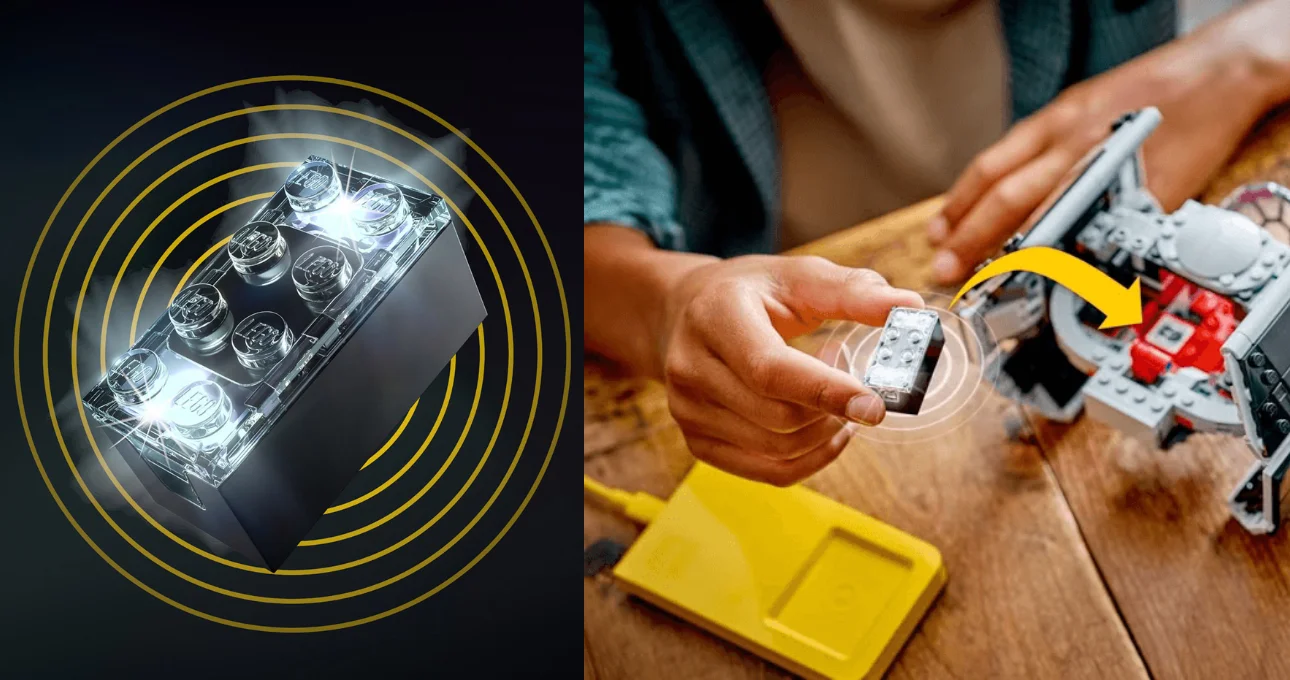
LEGO has taken a bold step into the future of play by unveiling its latest innovation: a smart brick designed to blend traditional hands-on creativity with digital intelligence. The move signals LEGO’s ambition to redefine how children and adults alike interact with physical toys in an age increasingly shaped by artificial intelligence, sensors, and connected experiences.
At its core, the new LEGO smart brick looks familiar, preserving the iconic form that has defined the brand for decades. But inside, it tells a very different story. Embedded with sensors, connectivity features, and processing capabilities, the smart brick can detect movement, orientation, pressure, and interactions with other bricks. This allows LEGO creations to respond dynamically to how they are built and played with, transforming static models into interactive systems.
For LEGO, this launch is less about chasing trends and more about evolving its core philosophy. The company has long believed that play is a powerful tool for learning, creativity, and problem-solving. By introducing intelligence directly into its bricks, LEGO is extending that philosophy into the digital era—without abandoning the tactile experience that made it a global icon.
One of the most compelling aspects of the smart brick is its potential to bridge physical and digital play. Creations built with these bricks can connect to companion apps or platforms, enabling real-time feedback, challenges, and storytelling layers. A simple structure can become part of a game, a learning simulation, or even an early robotics experiment, depending on how it’s programmed or used. This opens the door to personalized play experiences that adapt to a child’s skill level, curiosity, and imagination.
Education is another major focus behind the smart brick. LEGO has already made significant inroads into classrooms through its STEM and robotics kits. The new smart brick builds on that foundation, offering educators tools to teach concepts like logic, cause-and-effect, engineering, and computational thinking—without requiring screens to dominate the experience. By embedding intelligence into the bricks themselves, learning becomes more intuitive and hands-on.
The timing of the launch is also significant. As concerns grow around excessive screen time for children, parents are increasingly seeking toys that balance digital engagement with physical activity. LEGO’s smart brick positions itself as a middle ground: technology-enhanced, but still rooted in real-world building and creativity. Instead of replacing imagination, the technology is designed to amplify it.
From a broader industry perspective, LEGO’s move reflects a growing trend toward “phygital” products—experiences that seamlessly merge physical and digital worlds. Toys are no longer expected to exist in isolation; they are part of connected ecosystems that evolve over time. By embedding intelligence directly into its most fundamental component, LEGO is future-proofing its brand against rapid shifts in how children play and learn.
Importantly, LEGO has emphasized that the smart brick will remain compatible with existing systems, ensuring that longtime fans can integrate new capabilities into their current collections. This backward compatibility reinforces LEGO’s commitment to continuity, even as it innovates.
As the smart brick rolls out across new sets and platforms, it marks a defining moment for LEGO. The company isn’t just adding technology to toys—it’s reimagining what a brick can be. In doing so, LEGO is laying the foundation for a new generation of play, where creativity, intelligence, and imagination snap together as effortlessly as the bricks themselves.