










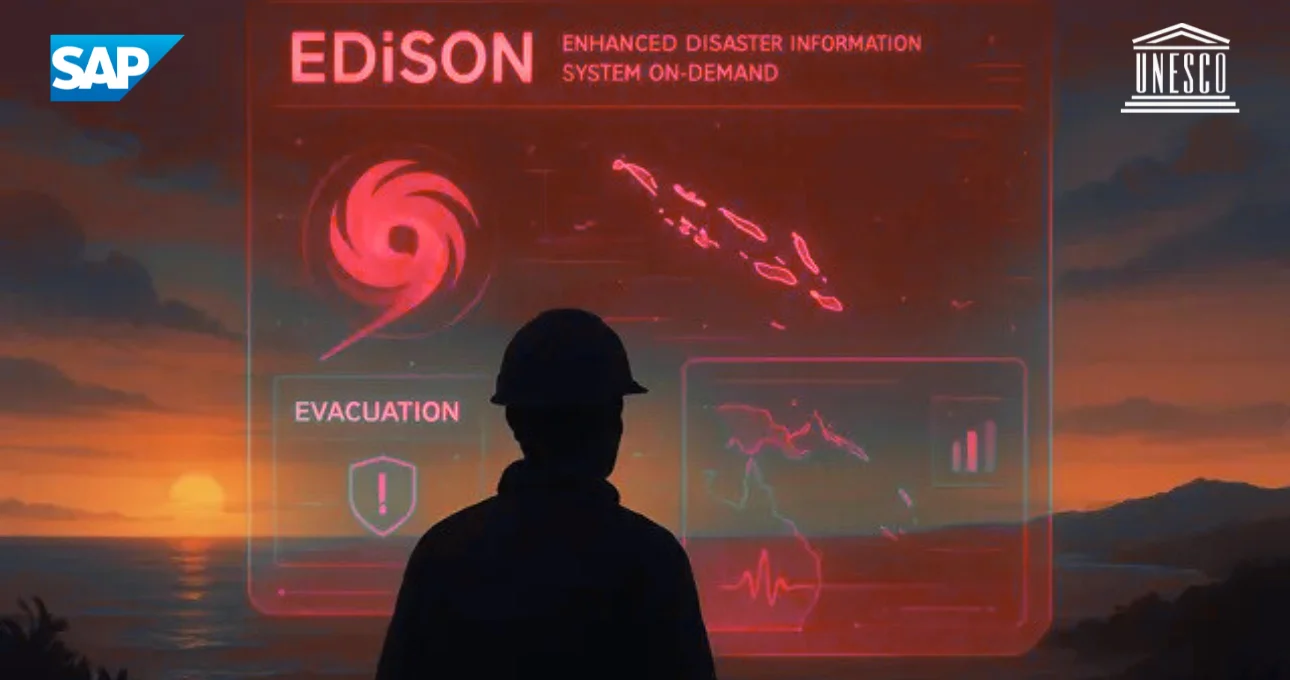
In a significant step toward building climate-resilient communities, UNESCO and SAP have jointly launched EDiSON, an advanced AI-powered disaster management platform. Debuting in the Solomon Islands, one of the world’s most climate-vulnerable regions, EDiSON aims to strengthen early-warning systems, improve damage prediction, and help local authorities respond faster and more effectively during emergencies.
The platform marks a major milestone in global disaster preparedness, especially at a time when unpredictable weather patterns, rising sea levels, and frequent natural disasters are putting immense pressure on developing nations.
A New Era of Data-Driven Disaster Response
EDiSON—short for Emergency Disaster Information System Online—leverages the power of artificial intelligence, real-time analytics, and historical data modeling to predict disaster impact with significantly higher accuracy. Instead of relying solely on manual assessments or fragmented datasets, the system integrates:
- Live weather data
- Satellite observations
- Historical disaster patterns
- Population distribution maps
- Infrastructure and economic risk indicators
This allows agencies to forecast the severity of natural events such as cyclones, floods, and tsunamis, giving first responders more time to plan and allocate critical resources.
Why the Solomon Islands?
The Solomon Islands sit in the Pacific Ring of Fire—a region prone to earthquakes, volcanic eruptions, and ocean-driven disasters. Climate change has pushed the islands into an even more precarious position, with communities frequently battling coastal erosion, extreme rainfall, and intensifying storms.
By implementing EDiSON here first, UNESCO and SAP are targeting a high-impact region where advanced digital tools can make an immediate difference. The platform will support national authorities, local disaster centers, and frontline workers by delivering:
- Faster alerts for remote villages
- Clear visual dashboards for risk interpretation
- Real-time coordination insights across agencies
- Better preparedness strategies ahead of severe weather
AI at the Heart of Smarter Predictions
EDiSON’s core strength lies in its AI-driven predictive engine. The platform analyzes patterns from previous disasters—how storms moved, which regions were most affected, and what damage occurred—to estimate future impact. Combined with real-time sensor and satellite data, the system can:
- Predict the scale of economic damage
- Identify the most vulnerable communities
- Recommend resource deployment
- Minimize loss of life and property
Such capabilities not only speed up emergency response but also help governments develop long-term climate adaptation policies.
A Collaborative Approach to Resilience
SAP brings its technological expertise in cloud computing, data integration, and process automation, while UNESCO contributes its decade-long experience in disaster risk reduction and community engagement. Together, they aim to close the gap between early-warning technologies and on-the-ground implementation.
The initiative also focuses on training local officials and community leaders to use the platform confidently—ensuring that digital transformation translates into real-world preparedness.
Setting a Global Example
With the successful rollout in the Solomon Islands, EDiSON is positioned to become a blueprint for other developing countries facing climate-induced risks. UNESCO and SAP plan to expand the platform across the Pacific and eventually to regions in Africa and Asia where natural disasters continue to disrupt lives and economies.
As climate challenges intensify, EDiSON represents more than just a new tool—it’s a symbol of how global partnerships and cutting-edge AI can work together to protect vulnerable populations. By empowering nations with data-driven insights and faster decision-making capabilities, UNESCO and SAP are setting a new global benchmark for intelligent, inclusive, and sustainable disaster management.