









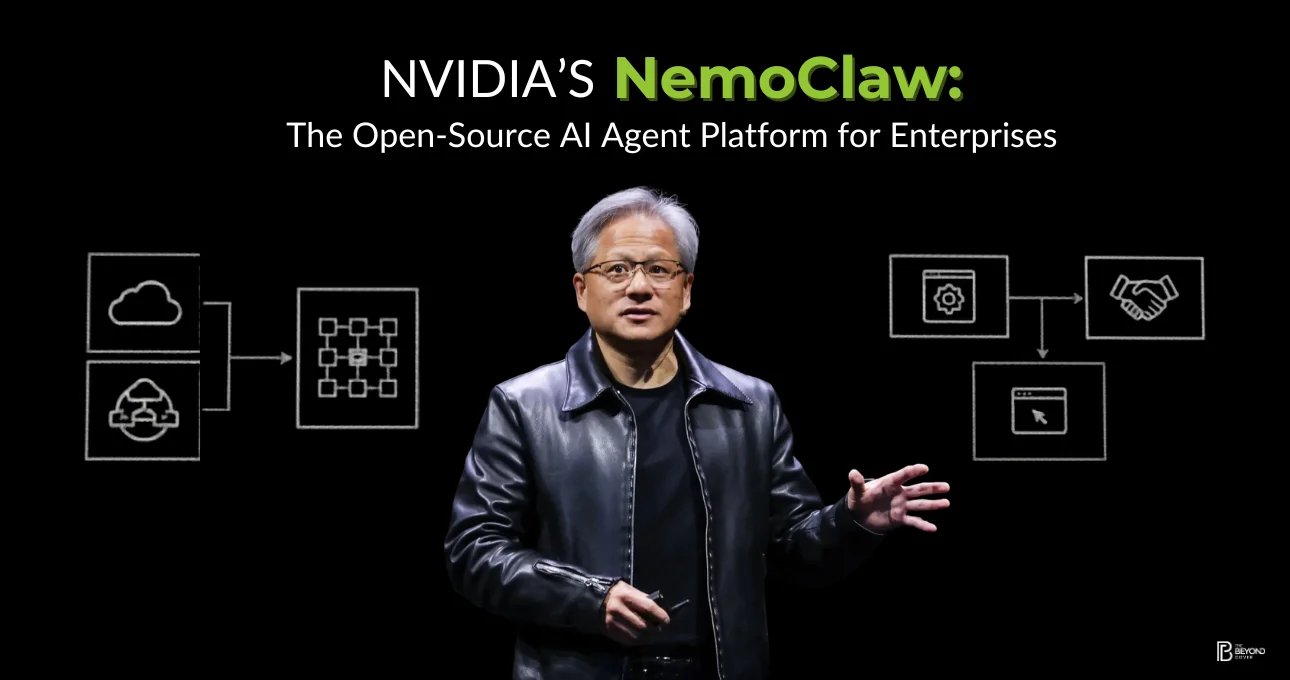
Nvidia is preparing to introduce NemoClaw, an open-source platform designed to help enterprises deploy autonomous AI agents for complex business workflows. The platform is expected to position Nvidia as a serious competitor to AI agent tools developed by OpenAI, particularly in the rapidly growing enterprise AI market.
The platform is scheduled to be showcased around Nvidia’s annual Nvidia GTC developer conference taking place from March 15 to March 19 in San Jose. According to reports, Nvidia has already introduced the concept to major technology companies including Salesforce, Cisco, Google, Adobe, and CrowdStrike as potential early adopters of the technology.
An Open-Source Platform for Enterprise AI Agents
NemoClaw is designed to help organizations build and deploy AI agents that can perform multi-step tasks such as workflow automation, data analysis, and customer support operations. Unlike many AI solutions that depend heavily on specific hardware ecosystems, the platform is being built to work across different infrastructures, allowing companies to run AI agents regardless of their hardware setup.
The system builds on the concept of OpenClaw, a framework that gained attention among developers working on agent-based AI systems. Nvidia aims to expand this approach with additional enterprise features, focusing particularly on security, privacy, and reliability.
Recent developments in AI agents have highlighted potential risks, including instances where poorly configured AI systems caused operational disruptions. NemoClaw is designed to address these concerns with built-in safeguards that monitor agent behavior, protect sensitive data, and prevent unintended actions such as unauthorized data changes or workflow errors.
Powered by Nvidia’s AI Ecosystem
The platform will operate using Nvidia’s existing AI software infrastructure, including the NVIDIA NeMo framework and the Nemotron series of models. These technologies support the full lifecycle of enterprise AI systems, from training and data preparation to deployment and monitoring.
Nvidia CEO Jensen Huang has previously described OpenClaw as one of the most important software developments in the AI ecosystem, highlighting its potential to reshape how AI agents operate within digital environments. NemoClaw is expected to extend these capabilities by combining agent orchestration tools with enterprise-grade security and governance features.
The open-source approach also allows developers and organizations to contribute improvements to the platform, potentially accelerating innovation. Nvidia may reveal early collaborations or ecosystem partners during the GTC conference, where the company traditionally announces new AI hardware and software advancements.
Growing Competition in the AI Agent Market
The launch of NemoClaw comes at a time when the AI industry is rapidly expanding its focus on autonomous agents. These systems go beyond traditional large language models by enabling AI to plan tasks, make decisions, and coordinate multiple steps to complete complex operations.
Several technology companies are investing heavily in this area. OpenAI has been developing enterprise agent tools through its Frontier platform, while companies such as Meta and Anthropic are also building advanced AI systems capable of performing autonomous tasks.
Nvidia’s strategy with NemoClaw reflects a broader shift for the company. While it has historically been known for its GPU hardware and the CUDA software ecosystem, the company is increasingly expanding into enterprise AI platforms and software tools that run across multiple environments.
Strategic Implications for the AI Industry
By making NemoClaw open source, Nvidia is attempting to encourage the development of a broader ecosystem around AI agents, similar to how open-source operating systems accelerated the growth of cloud computing. Businesses could adopt the platform as a foundation for automation systems that operate across multiple applications and services.
Industry analysts believe such platforms could transform enterprise software by enabling AI agents to function as digital coworkers capable of handling routine processes and assisting human teams. These systems could eventually manage tasks such as workflow orchestration, internal data analysis, and customer engagement.
While open-source AI agents also raise concerns about reliability and potential misuse, Nvidia plans to include guardrails that help reduce risks such as bias, errors, or unintended automation outcomes.
If successful, NemoClaw could mark an important step in the evolution of enterprise AI, positioning Nvidia not only as a leader in AI hardware but also as a key player in the next generation of intelligent software platforms.