









Vercel has entirely reconstructed its agent-browser utility using Rust, resulting in substantial enhancements in speed, resource utilization, and scalability. This newly optimized open-source command-line interface (CLI) allows AI coding assistants such as Claude Code, Cursor, and GitHub Copilot to command actual web browsers with vastly improved performance.
Vercel reports that the Rust iteration achieves 1.6 times quicker initial startups, consumes 18 times less memory, and boasts an installation size 99 times smaller compared to its prior hybrid structure. This enhancement represents a major advancement for engineers developing autonomous AI setups that interface with the internet.
A Full Migration to Native Rust Structure
The enhancement was announced by Chris Tate, Vercel’s Engineering Vice President, who emphasized the advantages of transitioning to a completely native system.
Previously, the utility employed a mixed architecture where a Rust CLI communicated with a Node.js background process responsible for managing browser sessions via Playwright. While functional, this design introduced extra memory demands and slower initialization periods.
With this newest iteration, Vercel has done away with that complexity by rewriting the whole mechanism in Rust. The outcome is a more streamlined, integrated toolset offering superior command, quicker execution, and greater dependability.
Performance Gains Defining New Efficiency Standards
The switch to Rust removes the reliance on JavaScript processes and associated garbage collection, elements that frequently impede application responsiveness. Consequently, developers can now execute browser automation routines with much greater efficiency.
Key performance enhancements encompass:
Faster initial launches:
Browser sessions now begin in under 200 milliseconds, down from approximately 320 milliseconds previously
Reduced memory consumption:
Dropped from around 500MB to a mere 28MB per session
Smaller deployment size:
Installation volume shrank from nearly 500MB to roughly 5MB
These improvements enable teams to run hundreds of AI entities simultaneously on a single machine, making extensive automation more feasible and economical.
Fueling the Next Generation of AI Agent Operations
The upgraded agent-browser utility is vital to the expanding ecosystem of agentic AI, where intelligent systems autonomously carry out tasks across digital platforms.
AI development tools are already capitalizing on these new capacities:
- Claude Code can automatically survey documentation and verify interfaces.
- Cursor facilitates live exploration and deployment within coding workflows.
- GitHub Copilot Workspace supports comprehensive automation, spanning from preliminary research to final deployment.
For instance, an AI agent can now assess competitor pricing, pull out organized data, generate summary documents, and publish findings—all within moments. Tasks that once took several minutes can now be completed nearly instantaneously.
Streamlined Setup and Enhanced Developer Experience
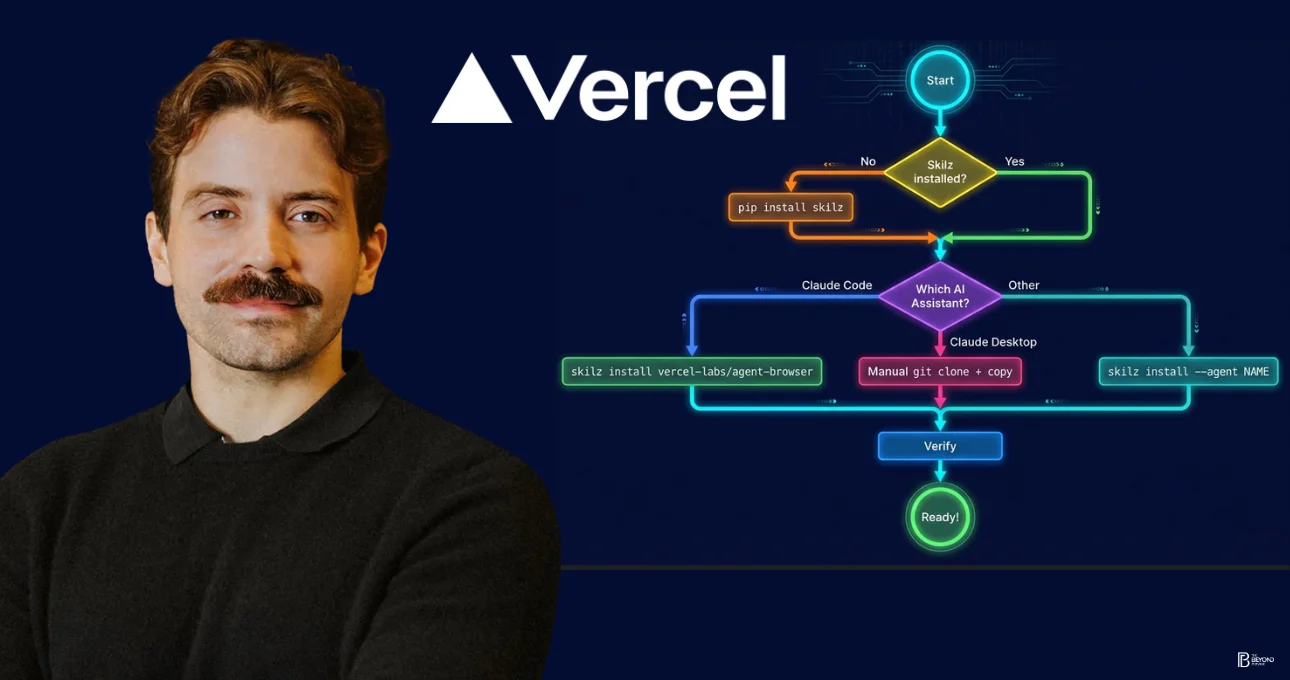
The new Rust-based version substantially boosts usability for engineers. Instead of intricate setups requiring numerous prerequisites, the utility can now be installed rapidly with a single command.
The simplified structure also mitigates system failures and boosts overall stability. Thanks to Rust’s built-in memory safety features, numerous problems often linked to Node.js environments have been eradicated.
Furthermore, the utility functions seamlessly across different operating systems, including macOS, Linux, and Windows, while drastically cutting down Docker image dimensions.
Broadening Influence Across the AI Landscape
Vercel’s update coincides with a period of intense AI innovation. The new agent-browser utility is established as essential groundwork for engineers constructing autonomous AI systems that interact with the web.
It integrates smoothly with emerging AI environments and products, facilitating cohesive workflows across research, development, and deployment stages. This makes it particularly advantageous for organizations building cutting-edge applications powered by intelligent agents.
Strategic Value for Engineers
For engineers, especially in rapidly expanding regions like India, these efficiency boosts translate into lower operational expenses and quicker release cycles. Lower memory needs and smaller executable files mean applications can operate on less powerful hardware without sacrificing performance.
The utility also unlocks new avenues for sectors such as agriculture, public services, and corporate software, where AI agents can automate routine web-based activities.
Reinforcing Vercel’s Stature in Developer Tooling
With this release, Vercel is branching out from its core services into the wider sphere of AI infrastructure and developer enablement tools. The company, recognized for frameworks like Next.js, is now positioning itself as a significant contributor to workflows driven by agents.
The open-source release has already garnered considerable attention among developers, mirroring the rising demand for tools that support AI-driven process automation.
The Trajectory of Web Automation
Vercel’s decision to rewrite in Rust underscores a larger trend in software creation—where performance, resourcefulness, and scalability are becoming paramount for AI-centric systems.
As AI entities continue to mature, utilities like agent-browser will be central in enabling machines to engage with the web more smartly and efficiently.
By eliminating performance roadblocks and simplifying deployment procedures, Vercel has repurposed the web from a constraint into a potent environment for autonomous AI constructs.