










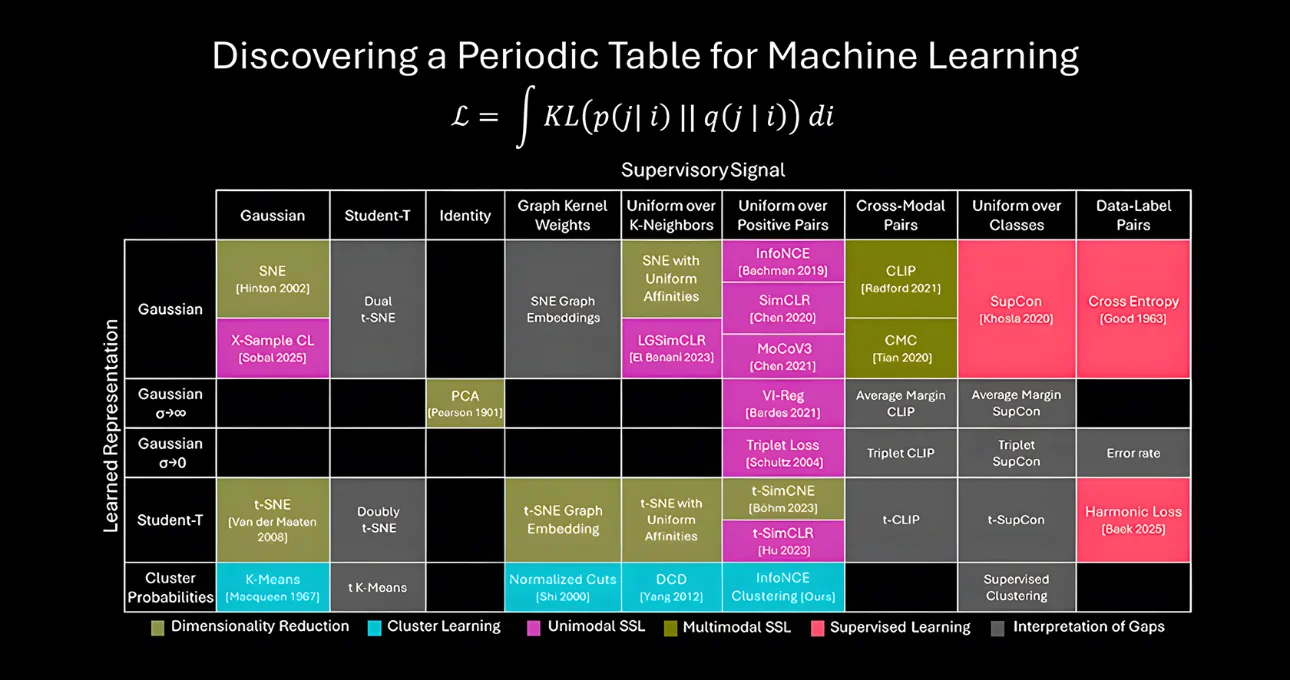
Choosing the right AI algorithm has long been a mix of expertise, experimentation, and educated guesswork. As machine learning systems grow more complex, even experienced practitioners can struggle to identify which methods are best suited for a specific problem. To address this challenge, scientists have introduced a novel concept: a “Periodic Table for AI”—a structured framework designed to organize algorithms in a way that makes selection more systematic, transparent, and efficient.
Inspired by the periodic table of chemical elements, this new approach seeks to bring order to the rapidly expanding universe of AI techniques.
The Problem With Algorithm Overload
Modern AI development offers an overwhelming number of choices. From classical regression models and decision trees to deep learning architectures and reinforcement learning systems, each algorithm comes with trade-offs in accuracy, interpretability, data requirements, and computational cost.
In practice, teams often rely on trial and error, benchmarks from unrelated tasks, or personal familiarity. This can lead to inefficient experimentation cycles, suboptimal performance, and wasted compute resources. As AI adoption spreads across industries, the need for clearer guidance in algorithm selection has become increasingly urgent.
The “Periodic Table for AI” directly tackles this issue by providing a structured mental model for understanding how algorithms relate to one another.
How the AI Periodic Table Works
Instead of listing elements like hydrogen or oxygen, the AI periodic table organizes algorithms based on shared properties and functional roles. Models are grouped according to criteria such as:
- Learning paradigm (supervised, unsupervised, reinforcement)
- Model complexity and interpretability
- Data type compatibility (structured, unstructured, time series)
- Computational requirements
- Optimization and learning dynamics
By mapping algorithms into a coherent structure, the framework helps practitioners quickly narrow down suitable options based on problem constraints rather than popularity or hype.
Just as chemists can predict reactions by understanding elemental relationships, AI practitioners can use this table to anticipate algorithm behavior and trade-offs before implementation.
A Tool for Both Experts and Beginners
One of the most compelling aspects of the AI periodic table is its accessibility. For newcomers, it provides a learning scaffold—making it easier to understand why certain algorithms are related and when to use them. For experts, it acts as a decision-support tool that reduces cognitive load and accelerates experimentation.
Educators may also benefit from this approach. Teaching AI through structured relationships rather than isolated techniques can help students build deeper conceptual understanding, rather than memorizing algorithms in isolation.
Reducing Bias and Improving Efficiency
Algorithm selection is not just a technical choice—it can influence fairness, transparency, and robustness. Over-reliance on a narrow set of familiar models can introduce bias or limit explainability.
By presenting a broader landscape of options, the AI periodic table encourages more thoughtful, context-aware decision-making. It also helps teams consider alternatives that may be more interpretable, energy-efficient, or suitable for constrained environments.
In an era where compute costs and sustainability matter, this structured approach could significantly reduce unnecessary experimentation and resource usage.
Implications for the Future of AI Development
As AI systems move from research labs into critical infrastructure, systematic methods for model selection become essential. The AI periodic table represents a step toward standardizing best practices in algorithm choice—similar to how engineering disciplines rely on established frameworks and design patterns.
Over time, such a system could evolve into interactive tools, automated advisors, or curriculum standards that guide AI development across industries.
Conclusion
The creation of a “Periodic Table for AI” reflects a maturing field that recognizes the need for structure, clarity, and discipline. By organizing algorithms into a coherent framework, scientists are helping practitioners move beyond guesswork toward more deliberate, efficient, and responsible AI design.
As AI continues to expand in scope and impact, tools that simplify complexity without sacrificing rigor may prove just as important as new algorithms themselves.