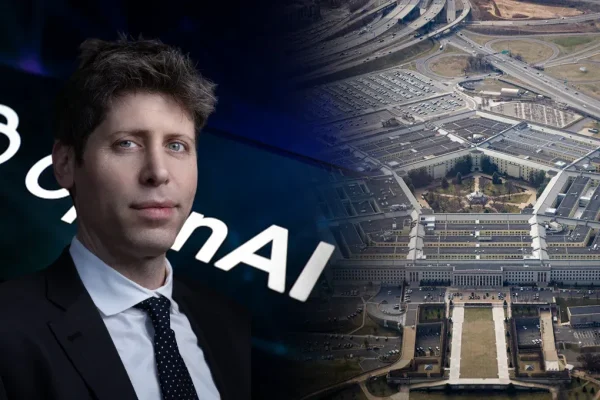










As artificial intelligence systems grow more powerful and widely deployed, OpenAI CEO Sam Altman has publicly acknowledged the rising risks that accompany rapid AI advancement. In a recent post on X, Altman announced that OpenAI is hiring a Head of Preparedness, describing it as a “critical role at an important time.” His remarks underscored growing concerns around AI’s impact on mental health, cybersecurity, and broader societal resilience.
Why OpenAI Is Creating a Preparedness Role
Altman’s hiring announcement reflects a shift in how leading AI companies are thinking about responsibility. While much of the public conversation focuses on AI’s productivity gains, OpenAI is signaling that it must also invest in anticipating and mitigating unintended consequences.
The Head of Preparedness role is expected to focus on identifying emerging risks from increasingly capable AI models, stress-testing systems before deployment, and developing safeguards that protect users and institutions. This includes preparing for misuse scenarios, model failures, and societal disruptions that could arise as AI tools become more autonomous and persuasive.
Mental Health in the Age of Advanced AI
One of the most notable aspects of Altman’s post was his acknowledgment of AI’s potential mental health implications. As conversational AI becomes more human-like and emotionally responsive, concerns are growing around dependency, over-reliance, and blurred boundaries between human interaction and machine assistance.
AI tools are already being used for emotional support, productivity coaching, and decision-making. While these use cases offer benefits, they also raise questions about psychological well-being, especially for vulnerable users. OpenAI’s preparedness efforts may involve setting usage guidelines, improving transparency, and researching how prolonged interaction with AI systems affects cognition, behavior, and emotional health.
Cybersecurity Risks Are Rising
Altman also highlighted cybersecurity as a major area of concern. Advanced AI models can be dual-use technologies—capable of helping defend systems while also being exploited to automate phishing, malware creation, and social engineering attacks.
As AI-generated content becomes harder to distinguish from human output, the risk of large-scale cyber deception increases. OpenAI’s preparedness strategy is likely to include red-teaming exercises, misuse monitoring, and partnerships with security researchers to stay ahead of emerging threats.
A Broader Shift Toward AI Governance
The creation of a Head of Preparedness role aligns with increasing regulatory and public pressure on AI companies to demonstrate accountability. Governments around the world are exploring AI safety frameworks, and enterprises are demanding clearer assurances around risk management before adopting AI at scale.
By formalizing preparedness as a leadership function, OpenAI is acknowledging that safety cannot be an afterthought. Instead, it must evolve alongside model capabilities, influencing product design, deployment decisions, and post-launch monitoring.
What This Means for the AI Industry
Altman’s announcement sends a strong signal across the AI ecosystem. As models become more capable, companies will need to invest not only in performance and innovation but also in risk anticipation and mitigation. Roles focused on preparedness, safety, and governance may soon become standard across leading AI labs.
For users and enterprises, this shift could build greater trust in AI systems—provided transparency and accountability follow. Preparedness will be measured not by intent alone, but by how effectively companies respond to real-world challenges.
Looking Ahead
As AI continues to reshape work, communication, and daily life, OpenAI’s move highlights a growing recognition that progress and responsibility must advance together. By prioritizing preparedness, the company is signaling that the future of AI isn’t just about what models can do—but how safely and thoughtfully they are deployed.