









In the present-day, digital-centric economy, identity transcends mere login credentials– it serves as the foundation for corporate security. At the forefront of this evolution is SailPoint Technologies, a firm that has converted Identity Governance and Administration (IGA) from a compliance necessity into a strategic asset.
Utilizing AI-powered solutions and a dedicated emphasis on oversight, SailPoint empowers entities to address a paramount cybersecurity query: Who possesses authorization for specific resources, and is that authorization warranted?
From its beginnings in Austin to its status as a relied-upon collaborator for over half of the Fortune 500, SailPoint’s trajectory reflects both visionary technology and diligent execution.
Company Inception and Founders
SailPoint was established in 2005 in Austin, Texas, by Mark McClain, Kevin Cunningham, and Jackie Gilbert, with Kevin Hyde sometimes cited as an early contributor. The initial objective was unambiguous: established identity management systems were struggling to accommodate the swift expansion of cloud computing and increasingly intricate corporate structures.
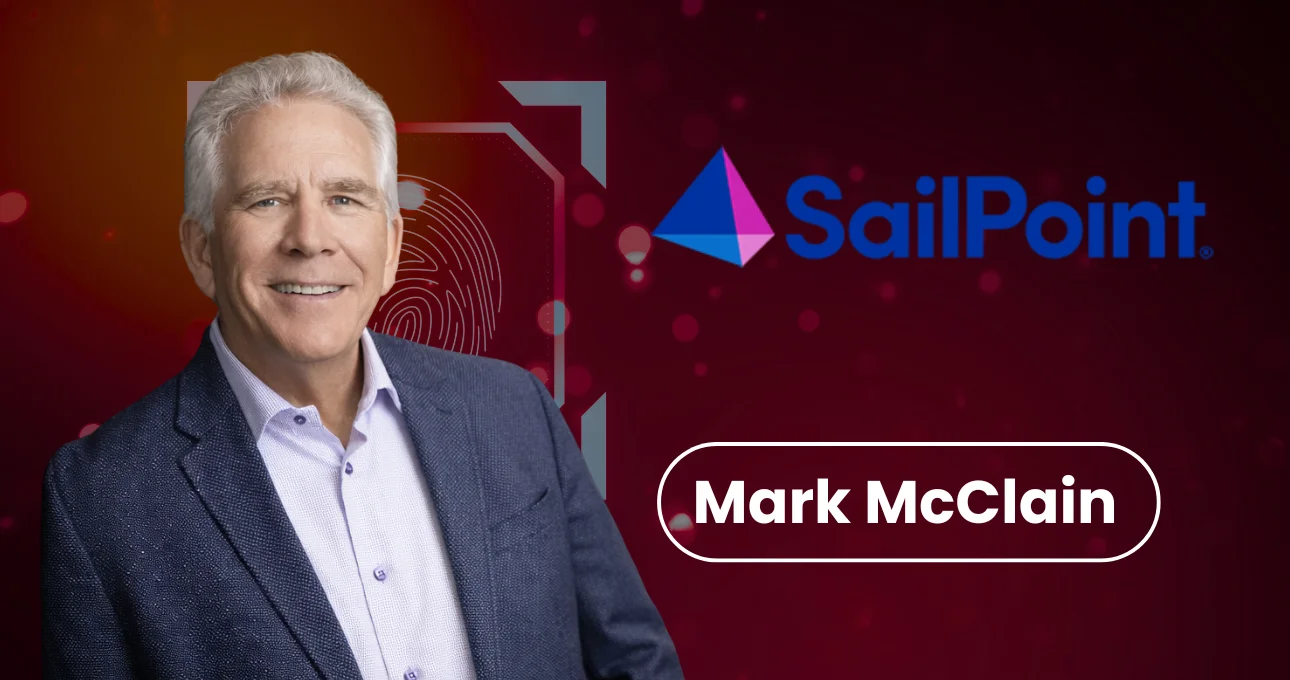
Mark McClain, the CEO and co-founder, brought considerable background from his prior endeavour, Waveset Technologies, which was acquired by Sun Microsystems in 2006. That experience provided him direct insight into the development–and shortcomings–of early IAM tools. At SailPoint, he aimed to build something fundamentally distinct: a governance-centric identity platform.
Kevin Cunningham, holding the role of Chief Strategy Officer, has been crucial in moulding SailPoint’s long-term path, ensuring the firm stays ahead of evolving market demands and technological shifts.
Key Milestones for SailPoint
SailPoint’s expansion narrative is characterized by astute market timing and persistent platform refinement.
2005: Launched in Austin to pioneer Identity Governance and Administration (IGA).
2011: Released IdentityIQ, a premier on-premises IGA solution widely embraced by major corporations.
2017: Completed its Initial Public Offering on the NYSE under the ticker SAIL, signalling a significant growth phase and heightened public exposure.
2020: Formed the SailPoint Gives Back Foundation, underscoring its dedication to societal contributions.
2021: Unveiled IdentityNow, a SaaS-based IGA solution incorporating AI features, aligning with cloud-first corporate strategies.
August 2022: Acquired by Thoma Bravo for $6.9 billion, returning to private ownership to quicken innovation.
2024–2025: Augmented AI capabilities with peer comparison analytics and automated governance processes.
2026: Continues to be a leader in AI-driven identity defence, supporting numerous enterprises worldwide.
These developments have cemented SailPoint’s leading status, with their solutions now serving thousands of clients—including a majority of Fortune 500 entities.
The Core: Identity Governance and Administration (IGA)
What distinguishes SailPoint is its pronounced orientation towards governance. Whereas many identity solutions prioritize mere access provision, SailPoint ensures that access is fitting, justified, and perpetually overseen.
Its principal SaaS offering, Identity Security Cloud (ISC), represents the progression of IGA into a dynamic, artificially intelligent discipline. The platform unifies identity oversight across:
- Cloud-based applications
- Local infrastructure
- Mixed IT environments
Fundamentally, SailPoint automates tasks that were traditionally manual, such as access validation, approval routing, and separation-of-duties (SoD) checks. This automation slashes manual review needs by up to 90%, substantially reducing operational burdens.
Primary Features
AI-Driven Peer Group Analysis: Identifies atypical access behaviours by benchmarking users in similar positions.
Role Identification: Determines optimal access groupings to eliminate superfluous permissions.
Broad Connectivity: Supports over 1,000 integrations, facilitating smooth deployment across corporate systems.
Automated Compliance: Streamlines adherence to mandates like GDPR, SOX, and HIPAA via real-time tracking and reporting.
In contrast to older systems heavily reliant on fixed protocols, SailPoint employs machine learning to constantly assess identity risk. This paradigm shift permits organizations to transition from responsive oversight to preemptive security measures.
In recent enhancements, the platform has introduced system health evaluations and suggested remedies, providing security teams with actionable intelligence rather than simple notifications.
Leadership Team Fostering Advancement
SailPoint’s executive team blends extensive subject matter proficiency with operational proficiency, enabling the firm to scale while sustaining innovation.
- CEO & Founder
Mark McClain
LinkedIn: Mark McClain | LinkedIn
McClain continues to steer SailPoint with a strong concentration on AI-guided identity security, particularly following the Thoma Bravo transaction.
- President
Matt Mills
LinkedIn: Matt Mills | LinkedIn
Manages worldwide operations and implementation strategy.
- Chief Financial Officer
Brian Carolan
Directs financial planning amid considerable expansion and change.
LinkedIn:Brian Carolan, MBA, CPA | LinkedIn
- Chief People Officer
Abby Payne
LinkedIn: https://www.linkedin.com/in/abbypayne
Oversees personnel management and organizational evolution.
- Chief Strategy Officer
Kevin Cunningham
Drives the long-range perspective and strategic undertakings.
- Field CTO
Phil McQuitty
LinkedIn: https://www.linkedin.com/in/philipmcquitty
- Senior Director, Engineering
Rémi Philippe
- Director, Product Management
Grady Slane
Collectively, this leadership cadre ensures SailPoint stays both technologically cutting-edge and operationally sound.
Technological Advantage and Market Influence
SailPoint’s distinguishing feature is its inherently AI-driven methodology. While conventional IGA tools depend on fixed mandates, SailPoint utilizes machine learning to deliver:
- Detection of Anomalies: Pinpoints unusual access activities instantly.
- Forecasting Risk Evaluation: Predicts potential security vulnerabilities before they occur.
- Automated Determination: Diminishes the necessity for human involvement in routine governance tasks.
The company provides adaptability through two main product suites:
IdentityIQ: Tailored for corporations needing local control and extensive personalization.
IdentityNow (ISC): A cloud-native offering providing flexibility, scalability, and straightforward customization features.
This dual-product approach allows SailPoint to serve diverse corporate requirements, ranging from established, legacy-heavy setups to agile, cloud-first operations.
Within the broader corporate framework, SailPoint is vital in facilitating secure AI integration. By supervising access to sensitive datasets and machine learning models, it guarantees that progress does not compromise security.
Enterprises employing SailPoint report quantifiable gains, including:
- Access reviews are completed 75% faster.
- A 60% drop in standing permissions
These outcomes illustrate the concrete business value derived from modern identity oversight.
Challenges and Future Prospects
Despite its leading market position, SailPoint competes in a dynamic sector. Primary rivals include Okta, Saviynt, and ForgeRock (now part of Ping Identity).
Nevertheless, SailPoint’s solid backing from Thoma Bravo affords distinct advantages, such as access to funding and complementary opportunities with other cybersecurity assets.
Moving forward, the firm is concentrating on:
- Deeper embedding of Generative AI into identity processes
- Advancements in forward-looking identity analytics
Exploration of cryptographic methods resistant to quantum computing
Concurrently, SailPoint maintains a commitment to ethical AI practices and data confidentiality—essential elements for preserving the trust of global corporations and regulated sectors.
Conclusion
SailPoint has elevated identity governance from a supporting administrative role to a vital component of enterprise security strategy. By merging AI-derived perception with robust governance structures, the company enables organizations to manage access with accuracy, certainty, and the capacity to scale.
With its founders still influential in steering its path, a solid executive corps, and ongoing investment in new developments, SailPoint is not just keeping pace with the future of identity defence – it is actively defining it.