










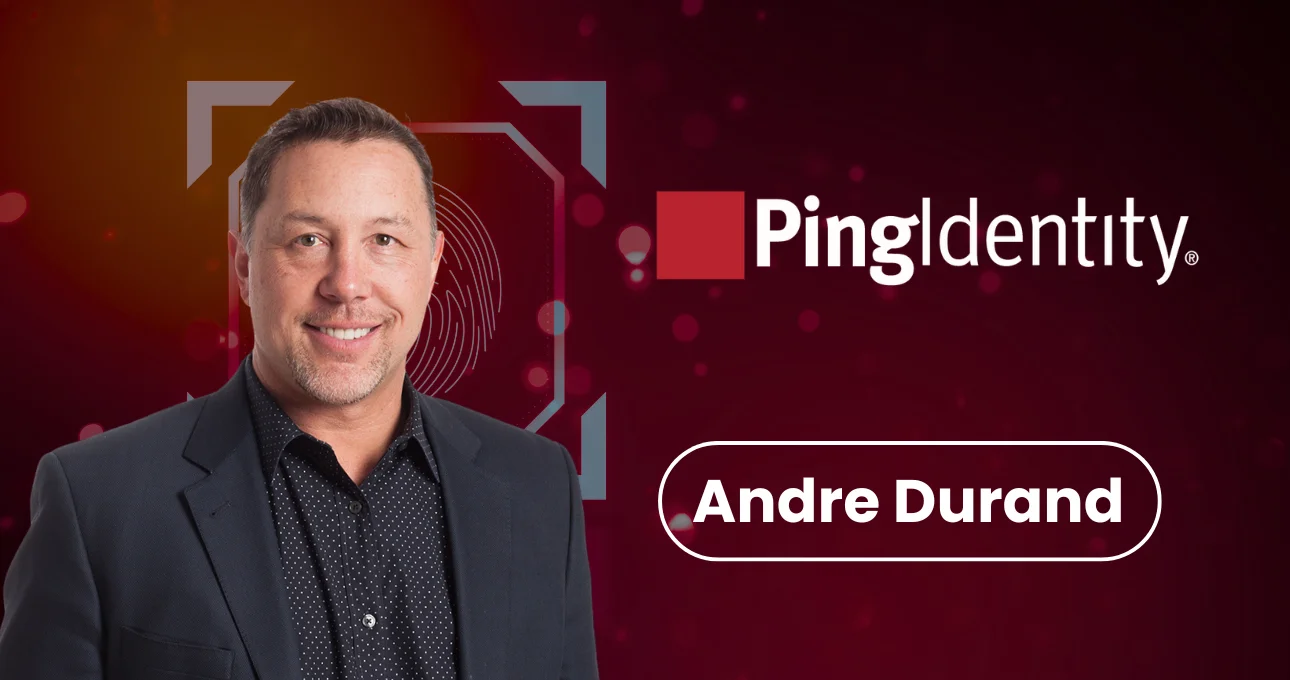
In a time when digital identity is the foremost security boundary, Ping Identity stands out as a key player in enterprise identity and access management (IAM). Through its core offering, PingOne, the firm empowers businesses to shift from older forms of verification toward smart, responsive, and risk-aware access control. Since its start in 2002, Ping Identity has grown into a major worldwide entity, securing countless digital identities for top global companies while influencing the direction of Zero Trust security.
Company Beginnings and Founders
Ping Identity was launched in 2002 in Denver, Colorado, by Andre Durand and Bryan Field-Elliot. The company was founded with a clear goal: to update identity management using open protocols and move away from relying solely on passwords.
Andre Durand, who remains Founder and CEO, brought considerable prior industry know-how to the endeavour. Before Ping Identity, he created Jabber, a trailblazer in instant messaging based on open specifications, which Cisco later bought in 2008. His extensive knowledge of identity standards and decentralized systems became fundamental to Ping’s design.
Bryan Field-Elliot co-founded the organization with Durand, playing a vital role in shaping its initial technical path and its standards-based approach to identity linking and single sign-on (SSO). Together, they established the foundation for a system that would become central to contemporary IAM setups.
Key Development Points
Ping Identity’s history is marked by significant events reflecting its steady ascent in the cybersecurity field.
2002: The firm was established in Denver by Durand and Field-Elliot.
2004–2014: Secured several funding rounds totalling around $125 million, funding initial expansion and product advancements.
2016: Acquired by Vista Equity Partners for $600 million. That same year, Ping bought UnboundID, boosting its directory and identity data capabilities.
2019: Launched as a public entity on the NYSE under the PING ticker, generating $188 million at $15 a share—a major step toward worldwide presence.
October 2020: Introduced PingOne Services, enhancing its cloud-based IAM features with sophisticated adaptive authentication tools.
2022: Acquired by Thoma Bravo for $2.8 billion, returning it to private status and speeding up its strategic plans.
2023: Integrated ForgeRock following its purchase, considerably broadening its identity platform features across worker and customer identity areas.
January 2026: Finalized the purchase of Keyless, bringing in Zero-Knowledge Biometrics to combat AI-driven identity threats.
These milestones have positioned Ping Identity as a scalable IAM provider serving over half of the Fortune 100, demonstrating both trust from major corporations and technological advancement.
PingOne for Responsive Access Control
Central to Ping Identity’s innovation is PingOne, a cloud-native IAM platform engineered to provide scalable, adaptive authentication. In contrast to rigid, traditional verification methods, PingOne dynamically assesses risk instantly, ensuring security measures align with user actions and situational context.
The system evaluates several elements, including:
- Device health status
- Geographic location
- IP trustworthiness
- Behavioral patterns
Using these data points, PingOne allows effortless, low-risk logins while initiating stronger multi-factor authentication (MFA) if unusual activity is noted. This method eases the process for genuine users while tightening protections against emerging dangers.
PingOne supports current identity protocols such as:
- SAML 2.0
- OpenID Connect (OIDC)
- OAuth 2.0
- FIDO2
These standards permit enterprises to deploy passwordless verification and integrate identity across mixed, multi-cloud setups.
A key module, PingOne Protect, improves adaptive authentication by incorporating advanced risk scoring and intelligence from external threat sources. It gathers signals from various origins, consistently learns how users normally act, and provides useful insights via central control panels.
The platform also conforms to major regulatory standards, like GDPR, HIPAA, and PCI DSS, making it suitable for heavily regulated sectors.
In 2021, Ping streamlined its platform under one administrative interface, simplifying identity management for both employee and customer needs. This unification considerably boosted operational effectiveness for businesses managing intricate identity landscapes.
Executive Team and Core Leaders
Ping Identity’s management group is crucial in driving forward innovation and expanding its worldwide operations. The company’s top executives bring varied backgrounds in cybersecurity, business software, and digital change.
- Founder & CEO
Andre Durand
LinkedIn: https://www.linkedin.com/in/andredurand
Durand continues to guide the company in its post-acquisition phase, emphasizing secure identity solutions within an environment increasingly defined by AI threats.
- Chief Revenue Officer
Adnan Chaudhry
Brought on in January 2026, Chaudhry has a background from Slack, where he managed efforts to increase revenue. At Ping, he oversees the expansion of global sales and marketing functions.
- Chief Financial Officer
Raj Dani
- Chief Product Officer
Peter Barker
- Chief Administrative Officer
Aaron LaPoint
LinkedIn: https://www.linkedin.com/in/aaronlapoint
- Chief Development Officer
Rakesh Thaker
- Chief Customer Officer
Michael Hubbard
- Chief Information Officer
John Cannava
This collective leadership ensures Ping Identity stays at the forefront of new developments while maintaining strong client relationships and operational excellence.
Wider Impact and Future Prospects
Ping Identity’s influence reaches beyond user verification into areas like securing APIs, validating identities, and establishing Zero Trust frameworks. Its solutions are designed to function smoothly across hybrid IT settings, supporting both older systems and modern, cloud-native applications.
The integration of ForgeRock further strengthens Ping’s standing by merging complementary strengths in customer identity and access management (CIAM). This allows the firm to offer a more versatile and complete IAM platform tailored to different business requirements.
The 2026 acquisition of Keyless marks a significant advance in biometric verification. By employing Zero-Knowledge Biometrics, Ping is addressing emerging issues from AI-powered identity attacks, such as deepfakes and fabricated identities. This breakthrough keeps biometric information private while still enabling secure authentication.
As businesses increasingly adopt AI systems and digital transformation speeds up, identity protection becomes ever more critical. PingOne’s responsive access controls are especially suitable for these situations, as they balance security with the user experience minimizing inconvenience while maximizing defence.
With backing from Thoma Bravo, Ping Identity is well-placed to grow its worldwide presence and keep investing in leading-edge technologies. Its dedication to open standards, compatibility, and innovation ensures it remains a trusted collaborator for organizations navigating complex modern cybersecurity challenges.
Final Thoughts
Ping Identity has secured its place as a leader in adaptive verification and identity protection through a blend of forward-thinking leadership, strategic purchases, and ongoing innovation. From its 2002 start to its current status as a major global IAM entity, the company has consistently adapted to the needs of an increasingly digital landscape.
With PingOne as its core product, Ping Identity is changing how organizations approach verification, moving from fixed login details to dynamic, intelligent identity systems. As cyber risks become more complex, the company’s commitment to secure, smooth, and scalable identity solutions will continue to be vital in shaping the future of enterprise protection.