









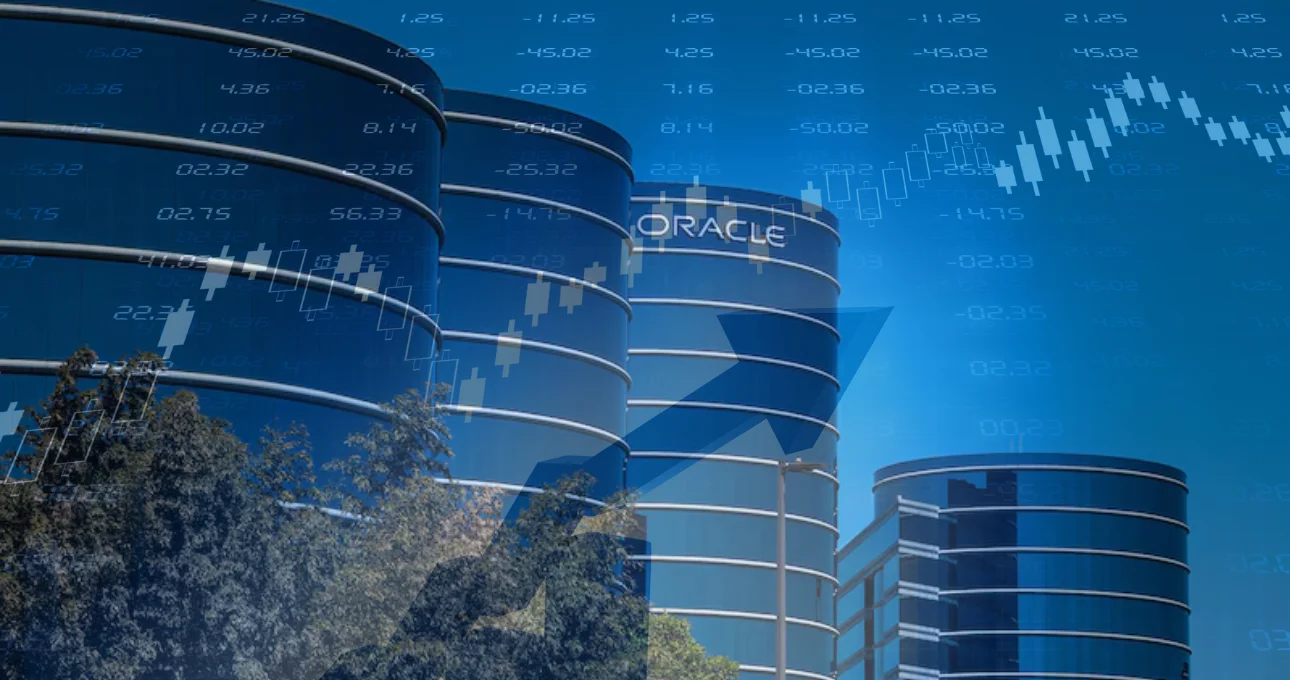
Oracle, one of the world’s largest enterprise software companies, has found itself at the center of investor anxiety after issuing a disappointing outlook that sent its stock tumbling. The company’s weaker-than-expected forecasts, combined with soaring investments in AI infrastructure, have intensified fears that the current AI boom may be overheating. As Wall Street questions whether massive spending can translate into proportional returns, Oracle’s results have triggered broader market questions about sustainability in the era of “AI at any cost.”
A Tough Quarter With Tougher Expectations
At the heart of Oracle’s slump is a guidance cut that dampened investor confidence. The company revealed that revenue growth—especially in cloud services and AI-ready infrastructure—may fall short of earlier projections. This was a surprise for the market, which had been expecting Oracle to ride the AI wave alongside rivals such as Microsoft, Amazon, and Google.
Despite strong demand for cloud databases and AI workloads, Oracle signaled that ramping up capacity and reaching profitability would take longer than expected. For investors who have been pouring into AI-centric stocks for months, the news landed like a cold splash of reality.
The Cost of Chasing the AI Future
Oracle isn’t alone—every major tech company has been racing to scale up infrastructure for AI models, AI agents, and next-generation cloud computing. But the cost is enormous. Oracle confirmed that its capital expenditure has spiked dramatically as it builds out data centers, expands GPU clusters, and partners with hyperscalers to process large-language-model workloads.
These costs are not short-term expenses—they’re multi-year bets on a future where AI workloads will dominate enterprise computing. But with revenue ramping slower than costs, the gap between investment and return is widening. For some analysts, this signals that the AI market might be heading toward the dangerous territory of speculation, with big spending not yet matched by tangible business outcomes.
A Warning Signal—or Just a Temporary Dip?
While the stock slump triggered fresh warnings about an “AI bubble,” others argue that Oracle is simply facing timing issues. Large-scale AI infrastructure isn’t built or monetized overnight. Companies like Nvidia, AWS, and Google have been warning of similar challenges: high upfront costs, long rollout cycles, and customers still in early deployment phases.
However, Oracle’s situation stands out because it has positioned itself aggressively as a key player in AI-ready cloud services. Investors expected hyper-fast adoption—but enterprise transformation rarely moves at startup speed.
If AI adoption continues accelerating, Oracle’s big spending could pay off in the long run. But if enterprises remain cautious—especially around deploying generative AI at scale—Oracle may face a prolonged period of heavy investment with slower revenue growth.
The Bigger Picture: Is the AI Hype Outpacing Reality?
Oracle’s slump comes at a time when valuations for AI companies have skyrocketed. Billions are flooding into AI chips, AI cloud services, AI agents, and foundation models—even as businesses are still working out practical use cases, governance frameworks, and ROI models.
The company’s outlook has therefore become a symbolic moment: a reminder that even the biggest players cannot rely solely on hype to justify massive investment cycles.
What Comes Next?
Oracle now faces the dual challenge of controlling costs while proving that its AI-first strategy will deliver sustainable growth. For the rest of the tech industry, the company’s stumble serves as a wake-up call: the AI gold rush is real, but so are the risks.
As the market watches closely, Oracle’s next few quarters will help determine whether this is a temporary misstep—or the first significant crack in the AI investment frenzy.