






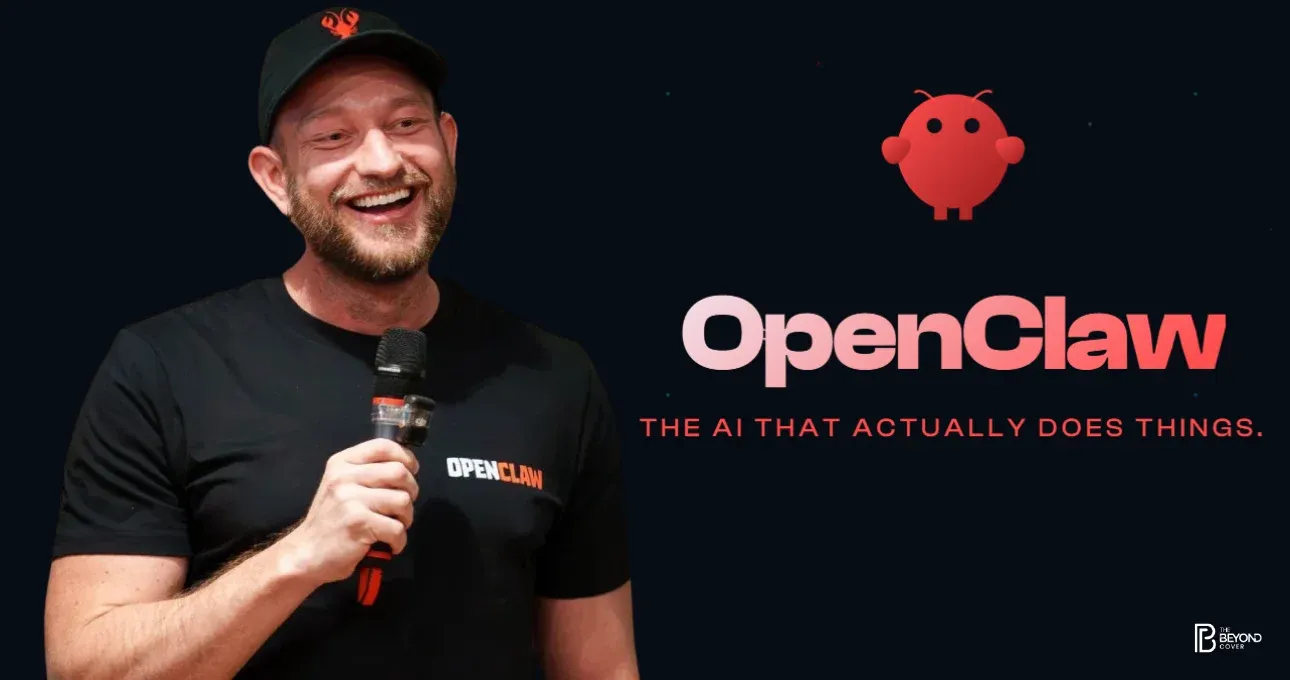
In a move that highlights the growing importance of open-source innovation in artificial intelligence, the founder of OpenClaw has officially joined OpenAI, with the OpenClaw bot now set to become a foundational part of future AI development.
The decision marks a significant moment for both the open-source AI community and OpenAI’s long-term strategy, signaling a deeper shift toward integrating community-built technologies into enterprise-grade AI systems.
Steinberger, the creator of the OpenClaw project, built the bot as an open-source AI agent designed to perform autonomous digital tasks. The tool quickly gained attention among developers for its flexibility, transparency, and ability to execute complex workflows without relying on expensive proprietary infrastructure.
With Steinberger now joining OpenAI, the company is expected to leverage OpenClaw’s architecture to strengthen its own AI agent capabilities.
From Open-Source Experiment to Industry Foundation
OpenClaw began as an independent open-source initiative aimed at creating an AI agent that could interact with software, automate processes, and assist users in real-world digital environments.
Unlike closed AI systems, OpenClaw allowed developers to inspect, modify, and improve the code. This openness helped it gain rapid traction among startups, researchers, and independent engineers looking for alternatives to proprietary AI tools.
Its success demonstrated the growing power of open-source AI in shaping the future of intelligent automation.
By bringing its founder onboard, OpenAI is not just hiring talent — it is adopting a proven framework that could accelerate its roadmap in AI agents.
Why This Move Matters for OpenAI
OpenAI has been aggressively expanding its capabilities beyond chatbots into autonomous AI agents that can perform tasks such as browsing, coding, and managing workflows.
OpenClaw’s technology aligns closely with this vision.
Industry experts believe the integration could help OpenAI:
- Build more capable AI assistants
- Accelerate automation features
- Improve transparency and flexibility
- Strengthen its developer ecosystem
This also reflects a broader trend where major AI companies are embracing open-source innovation rather than competing against it.
A Strategic Shift Toward AI Agents
The AI industry is rapidly moving beyond simple conversational models toward autonomous agents capable of taking action.
These next-generation AI systems are expected to handle business operations, personal productivity, and enterprise workflows.
OpenClaw’s design as an action-oriented AI bot makes it particularly valuable in this emerging category.
By incorporating this foundation, OpenAI could accelerate the development of AI systems that not only provide answers but also execute tasks.
Big Win for the Open-Source Community
The move is also being seen as a validation of open-source AI developers.
For years, independent builders have contributed innovations that rival those created by large corporations.
Steinberger’s transition to OpenAI shows that open-source contributions are increasingly influencing the direction of mainstream AI development.
It also highlights how major companies are recognizing the value of community-driven experimentation.
What Comes Next?
While OpenAI has not revealed full details of how OpenClaw will be integrated, expectations are high.
The technology could play a role in future versions of AI assistants, developer tools, and enterprise automation platforms.
As competition in artificial intelligence intensifies, talent and technology acquisitions like this are becoming critical.
One thing is clear: the line between open-source innovation and corporate AI is fading.
With OpenClaw’s founder now inside OpenAI, the future of autonomous AI agents may arrive faster than expected.