










That Lives in Your Ear?
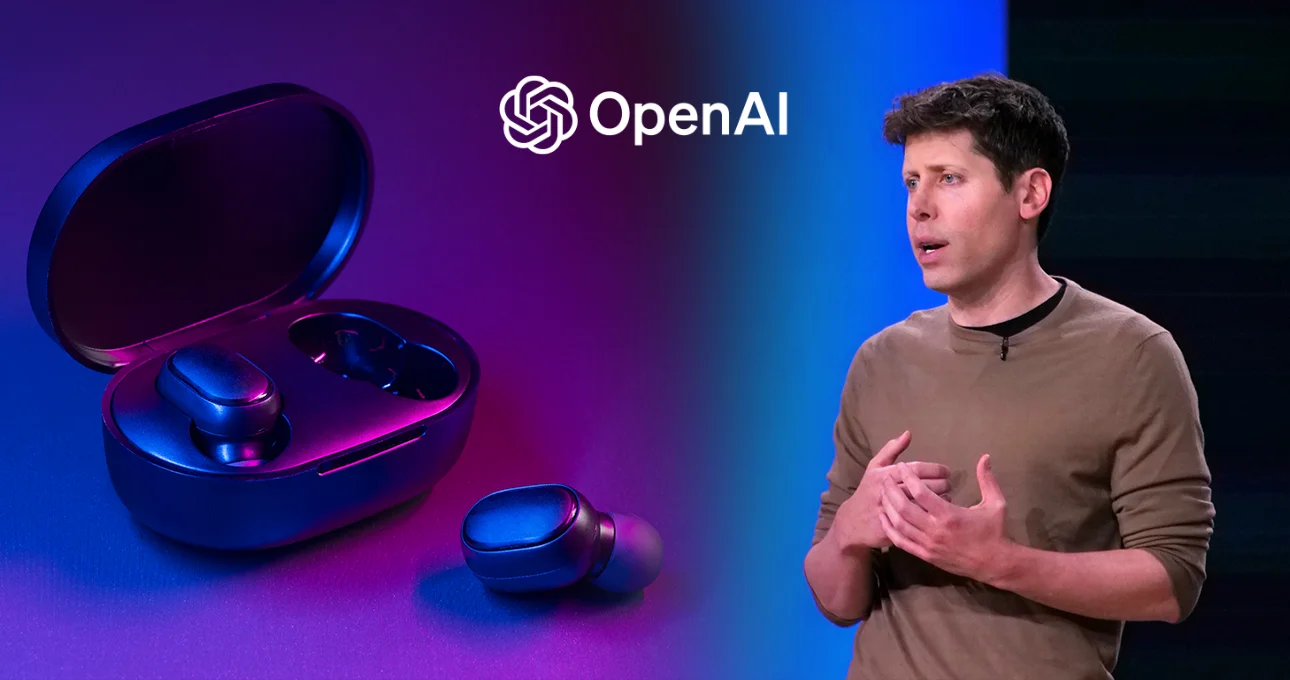
OpenAI may be preparing its most ambitious hardware experiment yet—one that could quietly challenge how people interact with computers. According to reports, the company is developing an AI-powered audio device codenamed “Sweetpea,” described as a computer in the shape of earphones. Expected to debut around 2026, the device could blur the line between wearables and personal computing, potentially putting it in direct competition with products like Apple AirPods—while aiming for something far more intelligent.
If the reports hold true, Sweetpea would represent a shift from screen-centric computing to always-on, voice-first AI interaction.
From Accessories to AI Computers
Wireless earbuds today are primarily accessories—tools for listening, calling, and basic voice commands. OpenAI’s rumored device aims to go much further. Sweetpea is said to be designed as a standalone AI computer, not merely an audio peripheral tethered to a smartphone.
Instead of relying on a phone for intelligence, the ear-worn device would process context, understand conversations, and respond intelligently in real time. This could enable users to interact with AI naturally throughout the day—asking questions, managing tasks, summarizing information, or receiving proactive insights without pulling out a screen.
The concept aligns with OpenAI’s broader vision of making AI more ambient and intuitive, embedding intelligence directly into everyday objects.
Challenging Apple AirPods in a New Way
At first glance, comparisons to Apple AirPods are inevitable. However, the competition may not be about audio quality or ecosystem lock-in alone. Apple’s earbuds are tightly integrated with iPhones and focus on convenience features like noise cancellation and spatial audio.
OpenAI’s approach appears to center on AI capability as the core product, not an add-on. If Sweetpea functions as a self-contained AI assistant, it could challenge the very idea that personal computing needs a phone or screen at all.
This positions the device as less of an audio accessory and more of a new interface for AI-native computing.
Why Audio-First AI Makes Sense
Audio is one of the most natural ways humans communicate. Voice-first AI devices remove friction, enabling interaction while walking, driving, or working. An ear-worn AI computer could deliver information discreetly, respond contextually, and adapt to a user’s environment in real time.
For OpenAI, this form factor also sidesteps some limitations of traditional hardware. Without a screen, the focus shifts to language understanding, reasoning, and personalization—areas where OpenAI’s models already excel.
If executed well, Sweetpea could become a personal AI companion that feels less like a gadget and more like an extension of the user.
The Bigger Push Into AI Hardware
Sweetpea fits into a larger industry trend: AI companies moving closer to hardware. As AI models become more capable, controlling the interface through which users access them becomes strategically important.
By designing its own device, OpenAI could tightly integrate software, models, and user experience. This approach mirrors strategies used by companies that shaped earlier computing eras—where control over hardware unlocked new interaction paradigms.
The rumored 2026 launch timeline suggests that OpenAI is taking a long-term approach, prioritizing usability, reliability, and real-world relevance over speed.
Privacy, Power, and Practical Challenges
An always-on AI device raises important questions. Privacy will be a major concern, particularly for an ear-worn product that may process ambient conversations. Battery life, on-device processing, and connectivity will also be critical challenges to solve.
Success will depend on how transparently OpenAI addresses these issues and how much control users have over data and behavior. Without strong trust signals, adoption could be slow despite technical innovation.
A Glimpse Into the Future of Personal AI
If Sweetpea becomes reality, it could signal a new era of post-smartphone computing, where AI assistants are worn, not carried. Instead of tapping screens, users would converse naturally with an intelligent system that understands context and intent.
While many details remain speculative, the idea of a computer in the shape of earphones captures where AI may be headed—toward invisible, always-available intelligence.
As 2026 approaches, all eyes will be on whether OpenAI can turn this ambitious concept into a device that truly redefines how humans interact with technology.