









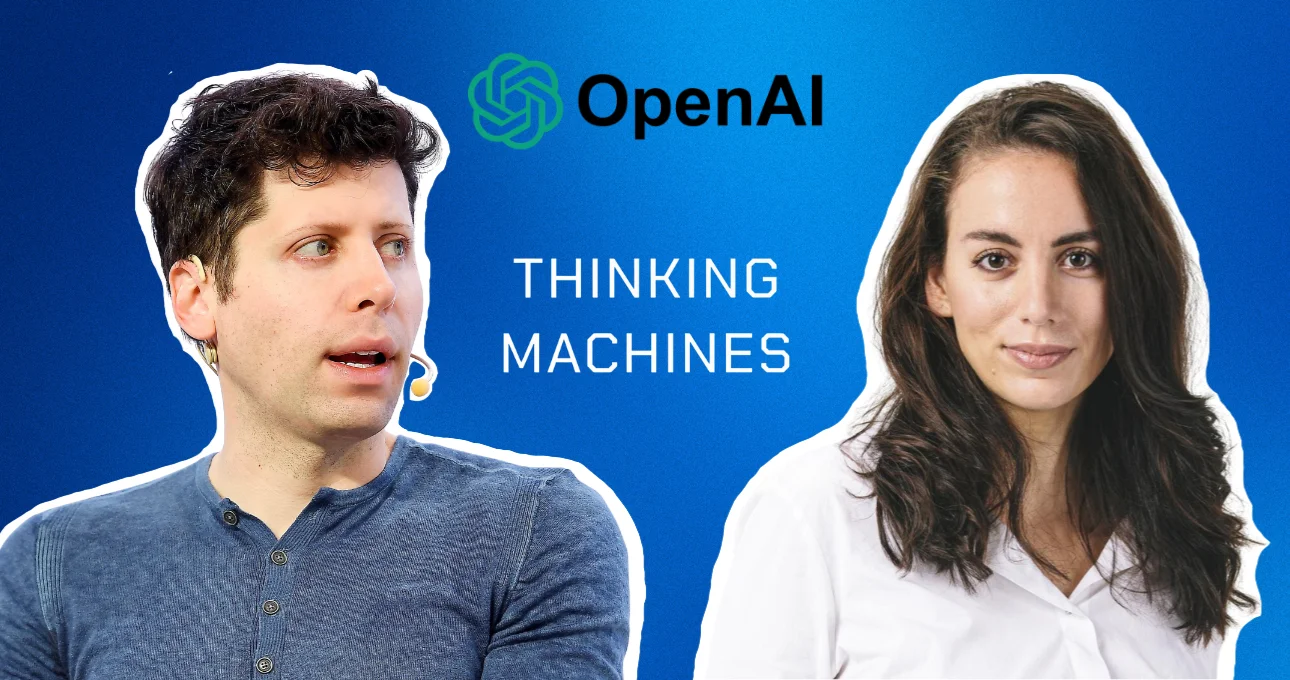
OpenAI has hired several founding members of Thinking Machines Lab, escalating the fierce global battle for elite artificial intelligence talent. The high-profile hires underscore how competition among leading AI labs is no longer limited to models and compute power, but increasingly defined by who can attract and retain the world’s best researchers and engineers.
The move comes amid rapid consolidation in the AI sector, as top firms race to build more capable systems and move closer to artificial general intelligence (AGI).
A Strategic Talent Grab
Thinking Machines Lab, a relatively young but influential AI research startup, was founded by former OpenAI researchers and has been focused on advancing next-generation AI architectures and safety-aligned systems. By recruiting its founding members, OpenAI is effectively reclaiming top-tier talent with deep institutional knowledge of frontier AI development.
While neither company disclosed detailed terms of the hires, industry observers say the move reflects OpenAI’s strategy to strengthen its core research teams at a time when competition from rivals such as Anthropic, Google DeepMind, Meta, and emerging startups is intensifying.
Why Talent Matters More Than Ever
As AI models become more complex, progress increasingly depends on specialized expertise in areas such as reasoning, alignment, multimodal systems, and scalable training methods. Founders and early researchers often bring a rare combination of technical depth, leadership experience, and long-term vision—making them especially valuable.
Experts note that the AI industry is facing a limited supply of researchers capable of pushing the boundaries of model performance and safety. This scarcity has driven aggressive recruitment, soaring compensation packages, and strategic poaching across the sector.
Impact on the AI Ecosystem
OpenAI’s latest hires highlight a broader trend: smaller AI labs and startups are becoming talent incubators for larger players with greater resources and compute access. While this can accelerate progress at major labs, it also raises concerns about reduced diversity in research approaches and increased concentration of power.
At the same time, the movement of researchers between organizations has historically fueled innovation in the tech sector. Analysts say the real impact will depend on how OpenAI integrates the new hires and whether it continues to collaborate with the broader research community.
OpenAI’s Position in the AI Arms Race
The talent acquisition comes as OpenAI continues to expand its product portfolio, including ChatGPT, enterprise AI tools, and partnerships with major technology companies. Strengthening its research bench could help the company maintain its leadership in areas such as advanced reasoning models, safety alignment, and scalable deployment.
OpenAI has repeatedly emphasized that achieving AGI will require not just bigger models, but fundamental breakthroughs—something experienced researchers are best positioned to deliver.
Challenges Ahead
While aggressive hiring can accelerate innovation, it also presents challenges. Integrating researchers from different cultures and research philosophies requires careful management. Additionally, concerns around burnout, ethical responsibility, and long-term governance remain central to discussions about AI development.
Regulators and policymakers are also watching closely, as concentration of talent and resources in a few organizations could influence how AI systems are governed and deployed globally.
What This Signals for the Industry
OpenAI’s recruitment of Thinking Machines Lab founders is a clear signal that the AI talent war is far from over. As generative AI adoption spreads across industries—from healthcare and finance to defense and education—the demand for elite AI researchers is only expected to grow.
For startups, the challenge will be balancing independence with the realities of competing against tech giants. For large labs, the race will be about more than hiring—it will be about creating environments where top talent can do meaningful, responsible work.
As the AI landscape continues to evolve, one thing is clear: in the race for the future of intelligence, people remain the most valuable asset.