









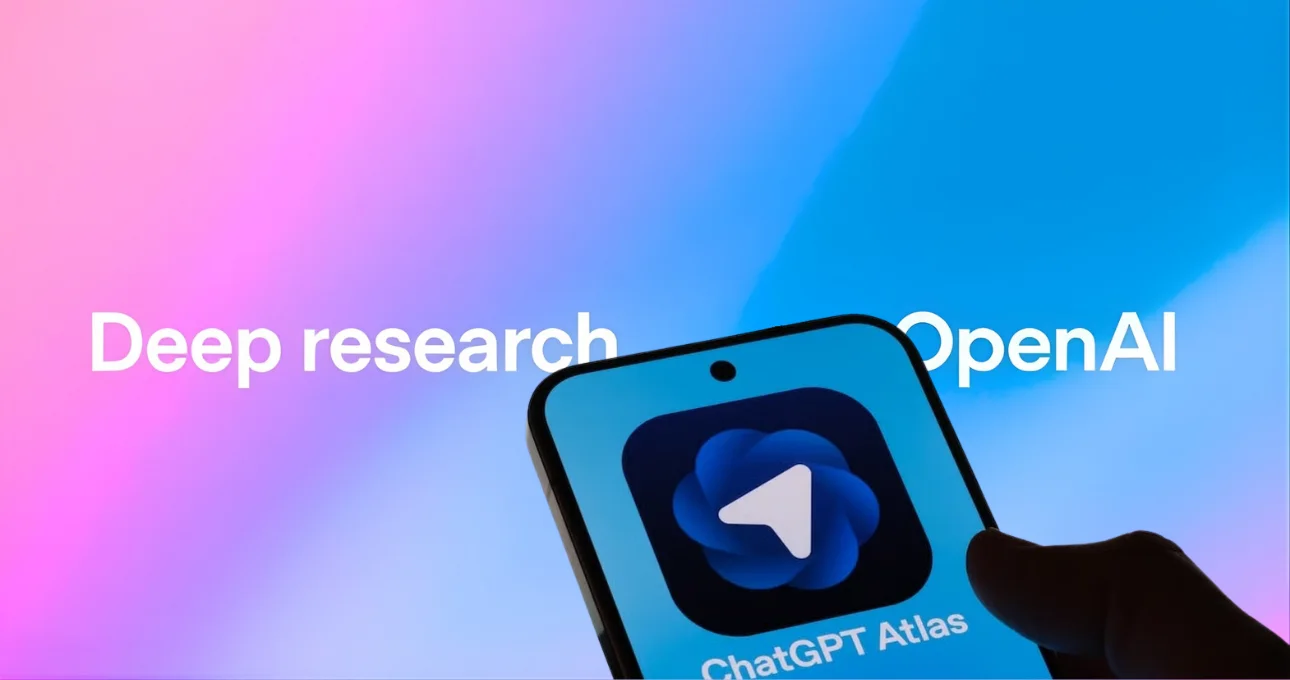
In a major move that signals the democratization of advanced AI capabilities, OpenAI has officially rolled out its high-accuracy “Deep Research” tool to all ChatGPT Free Tier users. Previously limited to paid subscribers and enterprise customers, this powerful feature is designed to deliver long-form, deeply reasoned, and context-rich responses—a capability users typically expect from top-tier AI models.
The update marks one of OpenAI’s biggest steps toward making sophisticated AI tools widely accessible, especially for students, researchers, creators, and early-stage startups that rely heavily on free AI resources.
What Exactly Is “Deep Research”?
OpenAI introduced the Deep Research tool as a specialized mode capable of generating multi-step reasoning, fact-checked insights, and structured long-form outputs. Unlike standard responses, Deep Research processes user prompts through multiple layers of evaluation to generate:
- Well-organized, long answers
- Data-driven reasoning
- Better factual consistency
- Structured outputs like lists, frameworks, or comparisons
- Step-by-step logic for complex topics
It is especially useful for detailed tasks such as market research, academic breakdowns, business analysis, strategic planning, and niche technical explanations.
Until now, these advanced outputs were usually locked behind paywalls on most AI platforms. By granting free access, OpenAI is positioning itself as the leader in broad, open AI adoption.
Why This Update Matters for Millions of Users
ChatGPT Free users were previously limited to shorter, simpler responses. With Deep Research activated, they now get capabilities closer to those offered by ChatGPT Plus.
Here’s what changes:
1. Higher-quality long-form content
Users working on essays, reports, blogs, and strategies will now get more structured and polished content without needing a subscription.
2. Better accuracy and fewer hallucinations
Deep Research is trained to cross-check information within the model’s knowledge boundaries, reducing factual errors.
3. A boost for students and researchers
From thesis writing to competitive exam prep, Deep Research provides clearer, deeper insights.
4. Democratization of AI
This update aligns with OpenAI’s broader goal of making powerful AI tools available to everyone—not just those who can afford premium plans.
A Competitive Response to AI Market Shift
OpenAI’s move comes at a time when competitors like Google, Anthropic, Meta, and Microsoft are racing to integrate similar deep reasoning tools into their platforms. Offering such a capability for free gives OpenAI a significant competitive edge.
While other companies continue to place advanced features behind subscription walls, OpenAI is betting big on ecosystem growth over short-term revenue, aiming to onboard more users and push the boundaries of what everyday users can create with AI.
What Users Can Expect Next
OpenAI hinted that more advanced features—including multi-agent workflows, memory tools, and new voice capabilities—might also reach free users over time. If the Deep Research rollout is any indication, OpenAI may be accelerating toward the vision of making AI an essential productivity tool for all.
Final Thoughts
The integration of Deep Research into the ChatGPT Free Tier is more than just an upgrade—it’s a milestone in making high-level reasoning AI universally accessible. As millions of users experiment with deeper, more intelligent workflows, the line between paid and free AI experiences is beginning to blur.