









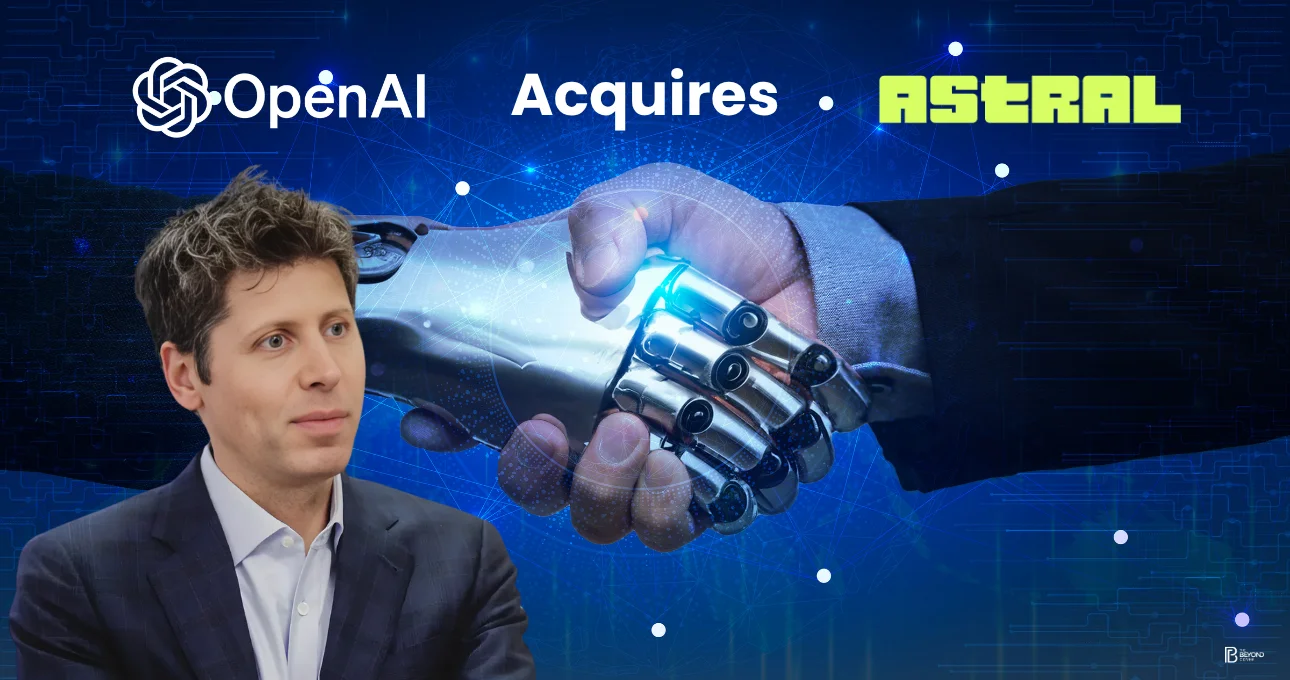
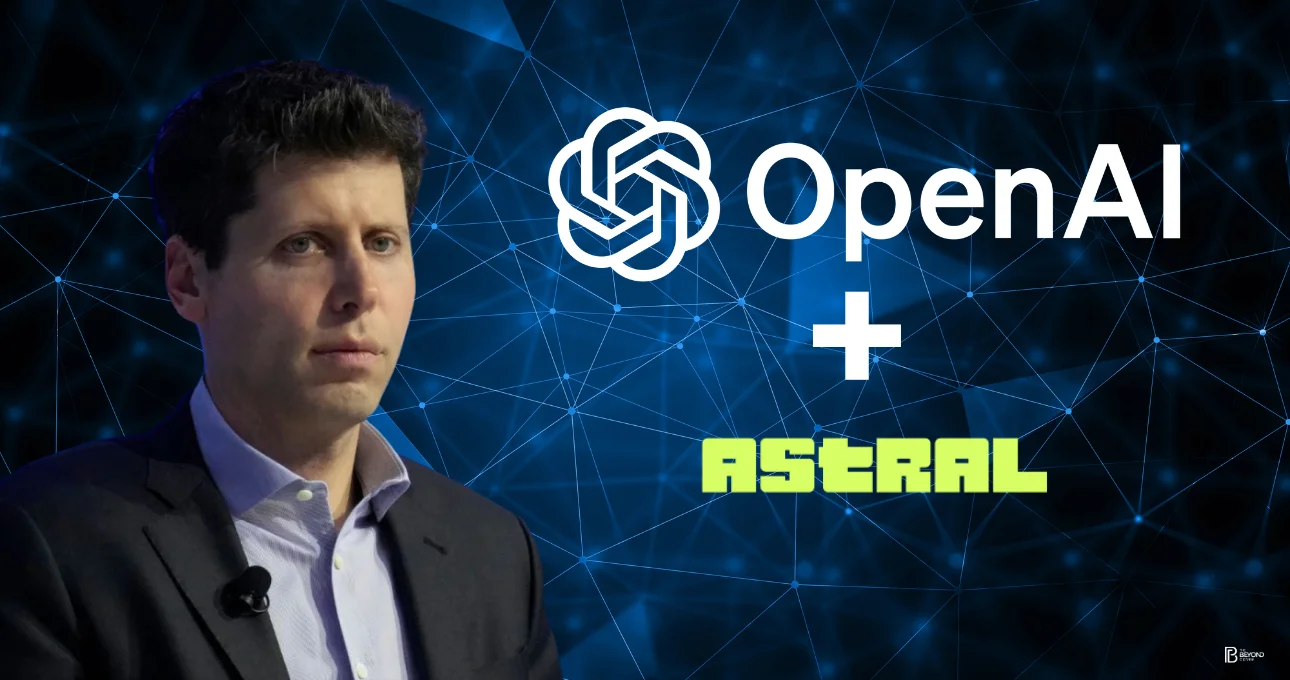
OpenAI has agreed to acquire Astral, a leading developer tools company known for building high-performance Python utilities. The move is aimed at enhancing OpenAI’s Codex platform and directly competing with Anthropic, whose Claude Code product has gained strong traction in the developer ecosystem. The deal, announced on March 19, is subject to regulatory approval.
Astral CEO Charlie Marsh confirmed the agreement, stating that Astral will join OpenAI as part of the Codex team. OpenAI highlighted that Astral’s tools power millions of developer workflows and form a core part of modern Python development. With this acquisition, OpenAI aims to transform Codex from a code-generation assistant into a full-stack development platform capable of managing the entire software lifecycle.
Astral’s Tools Powering Modern Python Development
Astral has built a strong reputation through its suite of open-source tools that significantly improve Python development efficiency. Its key offerings include UV, a fast dependency and environment manager; Ruff, a Rust-based linter and formatter; and ty, a modern type checker designed for speed and accuracy. These tools are widely adopted and collectively account for hundreds of millions of monthly downloads.
By integrating these tools into Codex, OpenAI gains direct control over critical parts of the developer workflow. This enables AI systems to not only generate code but also validate, optimize, and deploy it efficiently. The company has also committed to continuing support for Astral’s open-source ecosystem after the acquisition is finalized.
Strategic Move to Compete in AI Coding
The acquisition comes at a time when competition in AI-powered coding tools is intensifying. Anthropic’s Claude Code has reached a $2.5 billion run rate and continues to attract developers due to its deep workflow integration. While Codex already serves around 2 million weekly users, OpenAI is now focusing on owning the underlying toolchain to strengthen its competitive position.
With Astral’s tools, Codex can move beyond simple code suggestions. It will be able to plan changes, manage dependencies, run linters, perform type checks, and execute testing workflows autonomously. This shift marks a transition toward agentic software development, where AI systems can independently handle complex, multi-step programming tasks.
Expanding the Developer Ecosystem
Python remains the dominant language for artificial intelligence and machine learning, making Astral’s tools strategically valuable. A large percentage of new Python projects already rely on tools like Ruff and uv, positioning OpenAI to influence a significant portion of the developer ecosystem.
The acquisition also expands OpenAI’s presence in open-source development, following earlier initiatives and tool integrations. While some in the developer community have raised concerns about maintaining independence, OpenAI has reassured users that Astral’s tools will remain open and actively supported.
Technical and Market Implications
Integrating Astral into Codex introduces powerful automation capabilities. Developers will be able to run commands that trigger full workflows such as fixing errors, validating code, and deploying updates without manual intervention. The use of Rust-based tools also aligns with industry trends toward faster, more efficient development environments.
This move positions OpenAI strongly in the evolving AI developer tools market, where companies are racing to build end-to-end platforms. Competitors include Anthropic, as well as emerging AI coding platforms focused on automation and productivity.
Looking Ahead
Following the acquisition, OpenAI plans to deepen integration between Codex and Astral’s tools, potentially introducing new features such as package registries and enhanced development environments. Charlie Marsh is expected to join the Codex team, further strengthening OpenAI’s engineering capabilities.
As AI continues to reshape software development, OpenAI’s acquisition of Astral signals a clear strategy: control the tools, streamline workflows, and build a comprehensive platform for the next generation of AI-powered programming.