










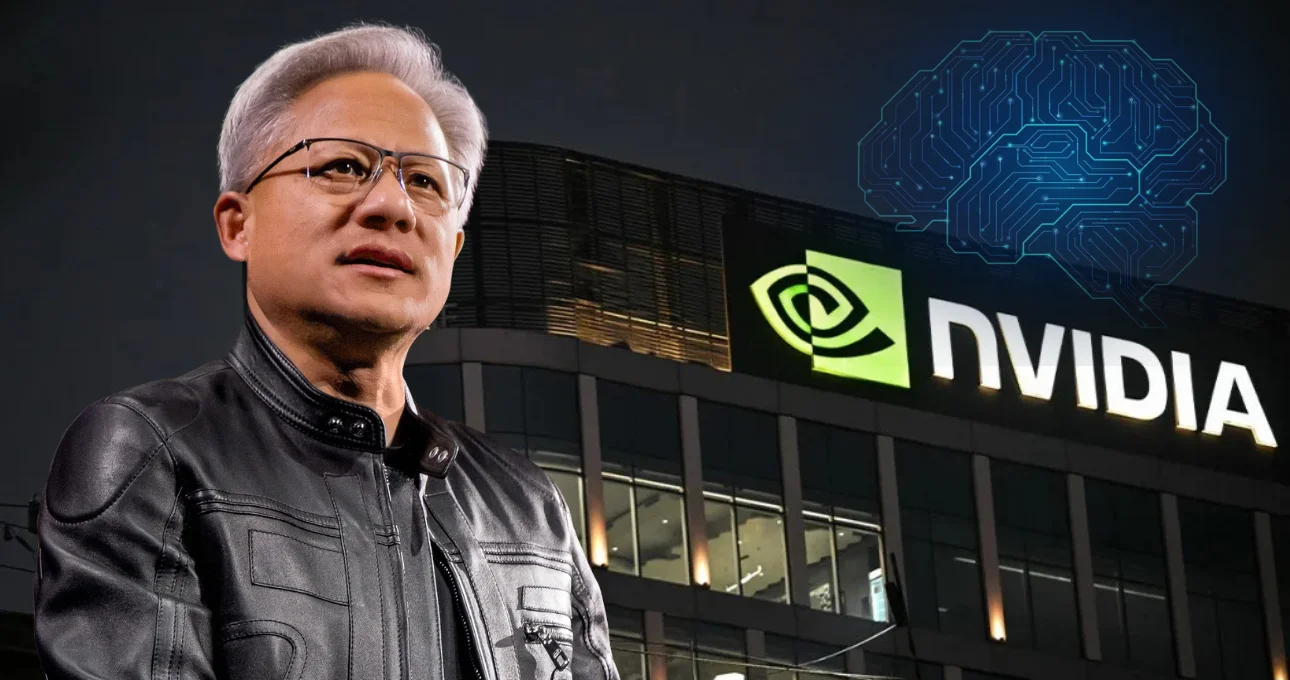
Nvidia, one of the world’s most influential artificial intelligence companies, is facing fresh legal scrutiny after a lawsuit alleged that the company approved the use of pirated books to train its AI models. The claims have reignited the global debate over copyright, data ethics, and AI training practices, particularly as generative AI systems become more powerful and commercially valuable.
Filed in a US court, the lawsuit accuses Nvidia of knowingly allowing copyrighted books sourced from so-called “shadow libraries” to be included in datasets used to train certain AI systems. The plaintiffs argue that this practice violated copyright law and deprived authors and publishers of compensation for their work.
What the Lawsuit Claims
According to the complaint, Nvidia employees allegedly discussed and approved the use of large datasets containing unlicensed copies of books, including materials scraped from online repositories that host pirated content. These datasets were reportedly used to train large language models and AI tools designed for code generation, natural language processing, and enterprise applications.
The lawsuit claims Nvidia was aware of the origins of the data but proceeded anyway, prioritizing rapid AI development over intellectual property protections. Plaintiffs argue that the scale of AI training amplifies the harm, as copyrighted works are effectively absorbed into models that can generate derivative outputs.
Nvidia has not publicly responded in detail to the allegations, and the claims have not yet been proven in court.
Part of a Broader AI Copyright Battle
The case is the latest in a growing wave of lawsuits targeting major AI developers over training data transparency. Companies including OpenAI, Meta, and Google have faced similar legal challenges from authors, artists, and media organizations who allege their copyrighted works were used without permission.
At the heart of the dispute is a legal gray area: whether training AI models on copyrighted material constitutes fair use, especially when the models do not reproduce content verbatim but learn patterns from it.
AI companies argue that training requires vast datasets and that models transform information rather than copy it. Critics counter that large-scale ingestion of pirated material crosses ethical and legal boundaries.
Why Nvidia Is Under the Spotlight
Unlike consumer-facing AI companies, Nvidia plays a critical role as an AI infrastructure provider, supplying GPUs, software frameworks, and pre-trained models used across the industry. Any legal ruling against Nvidia could have ripple effects across the broader AI ecosystem.
Analysts say the case highlights increasing scrutiny of how foundational AI technologies are built, not just how they are deployed. As AI becomes embedded in healthcare, finance, education, and government, pressure is mounting for clearer rules around data sourcing and consent.
Industry Push for Cleaner Data
In response to mounting legal risks, many AI companies are investing in licensed datasets, partnerships with publishers, and synthetic data generation. Some firms are also exploring opt-out mechanisms and compensation models for creators.
However, experts warn that cleaning training data retroactively is difficult, especially for models trained years ago on massive web-scale datasets.
What Comes Next
Legal experts say the Nvidia lawsuit could take years to resolve, but its implications are immediate. Enterprises and developers relying on AI models are increasingly demanding assurances around copyright compliance and data governance.
As regulators worldwide examine AI transparency, cases like this may accelerate calls for mandatory disclosure of training sources and stricter accountability.
For Nvidia—and the AI industry at large—the lawsuit underscores a growing reality: how AI is trained may soon matter as much as what it can do.