









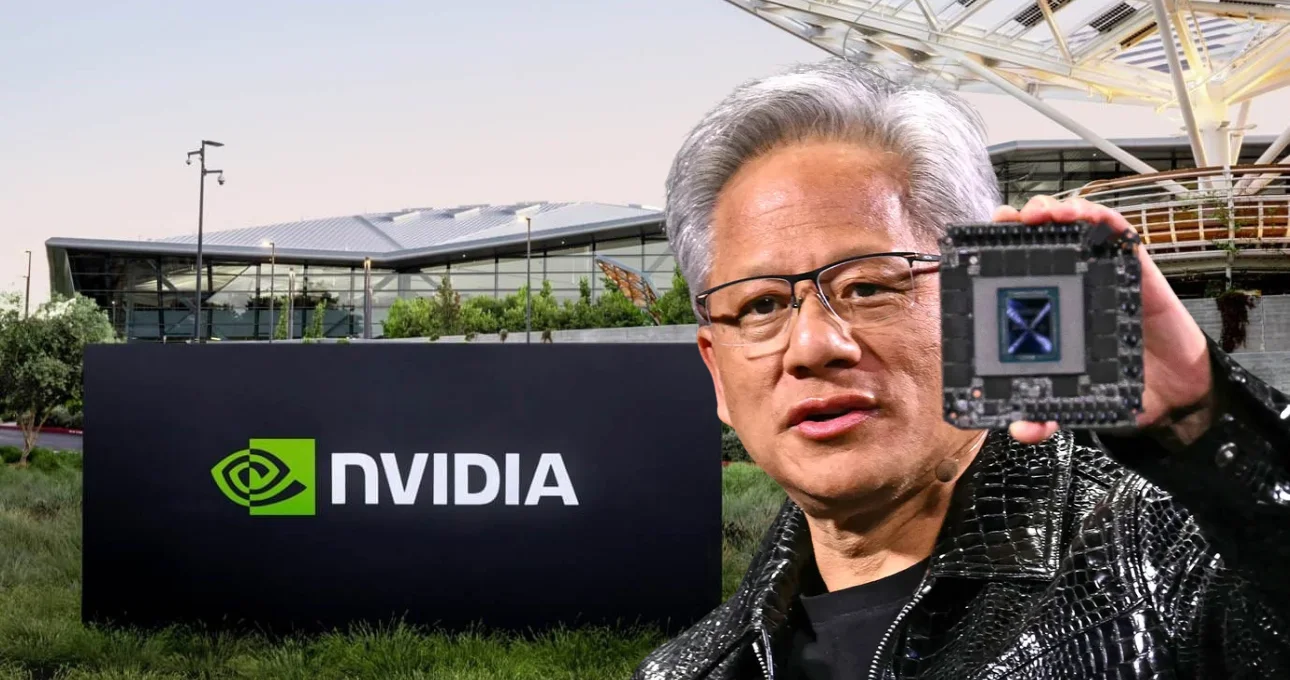
Nvidia has taken another strategic step toward owning more of the artificial intelligence infrastructure stack by acquiring SchedMD, the company behind Slurm, the world’s most widely used workload manager for high-performance computing (HPC) and AI clusters. While the deal may not grab mainstream attention like a new GPU launch, its implications for the future of AI computing are significant.
Slurm sits at the heart of many of the world’s largest supercomputers, research labs, and enterprise AI environments. It is responsible for scheduling jobs, allocating compute resources, managing queues, and ensuring that thousands of GPUs and CPUs are used efficiently. In an era where AI workloads are growing more complex, more distributed, and more expensive to run, the software that decides what runs where—and when—has become just as critical as the hardware itself.
By bringing SchedMD in-house, Nvidia gains direct influence over how AI workloads are orchestrated across massive GPU clusters. This move allows the company to optimize Slurm more tightly with Nvidia’s hardware, networking, and software platforms, including CUDA, NVLink, and high-speed interconnects. The result could be improved performance, better resource utilization, and smoother scaling for customers running large-scale AI training and inference jobs.
The acquisition reflects Nvidia’s broader strategy of vertical integration. Over the past several years, the company has expanded well beyond GPUs into networking, system design, AI frameworks, and cloud-ready platforms. Owning Slurm strengthens Nvidia’s position at the orchestration layer—where decisions about scheduling, prioritization, and workload efficiency directly impact cost and performance.
For enterprises and research institutions, Slurm has long been valued for its flexibility and open architecture. It supports diverse workloads, integrates with a wide range of hardware, and allows organizations to customize scheduling policies based on their needs. Nvidia has indicated that Slurm will continue to support heterogeneous environments, a critical assurance for customers running mixed clusters that include non-Nvidia hardware.
The timing of the acquisition is notable. AI compute resources are under immense pressure as demand for large language models, simulation, and scientific AI continues to surge. Organizations are increasingly focused on maximizing the return on every GPU hour. Advanced scheduling and resource management are no longer optional—they are essential to controlling costs and meeting performance targets.
By integrating Slurm more deeply into its AI ecosystem, Nvidia can help customers move toward automated, policy-driven compute environments. This could include smarter job placement, energy-aware scheduling, and tighter integration with AI development tools. For cloud providers and hyperscalers, these optimizations translate directly into operational efficiency and competitive advantage.
There are also broader industry implications. Nvidia’s move underscores how control over the AI stack is shifting from individual components to end-to-end systems. As AI workloads grow, companies that can deliver tightly integrated hardware, networking, and orchestration software will shape how AI is deployed at scale.
Critics may raise concerns about consolidation and ecosystem control, but Nvidia’s challenge will be to balance innovation with openness. Maintaining Slurm’s broad compatibility and community trust will be key to ensuring that the acquisition strengthens, rather than fragments, the HPC and AI landscape.
Ultimately, Nvidia’s acquisition of SchedMD is about more than software ownership. It is a strategic bet that the future of AI performance will be determined not just by faster chips, but by smarter coordination of compute resources. In the race to power the world’s most demanding AI workloads, orchestration is becoming a decisive battleground—and Nvidia has just secured a powerful advantage.