
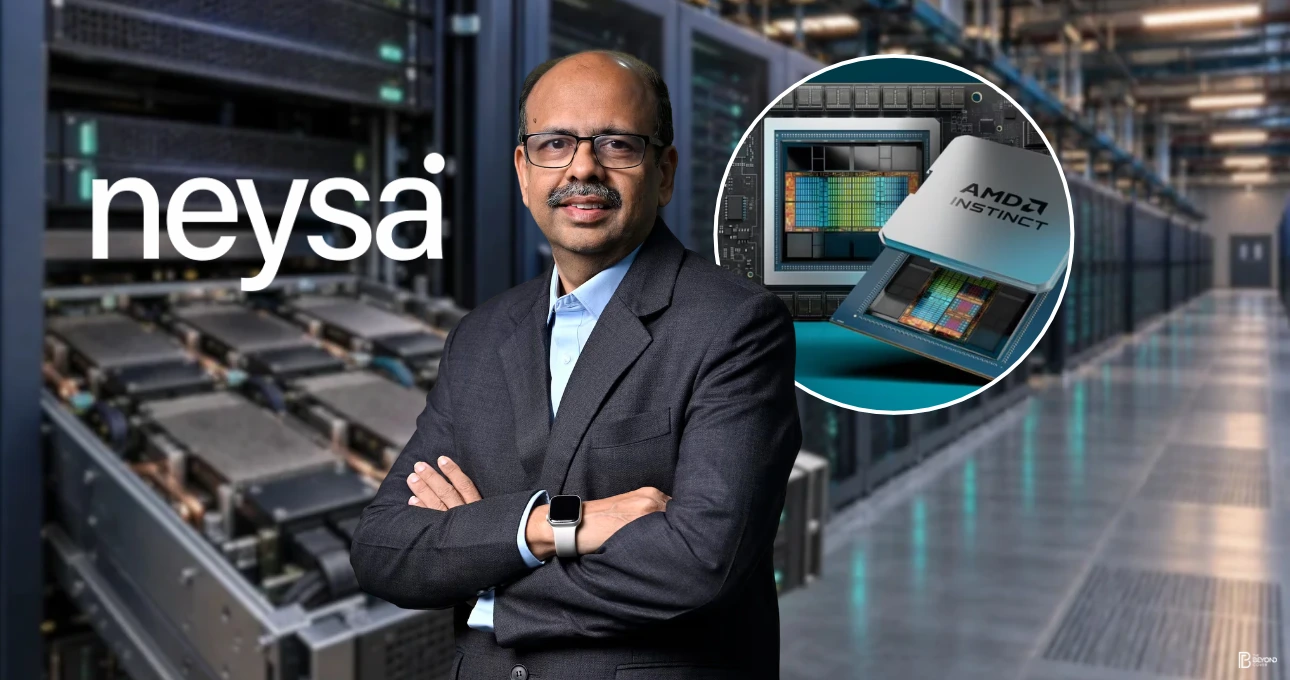
Neysa has deployed an 8,192 GPU cluster in Mumbai, based on the AMD Instinct MI350X GPUs, on its bare-metal AI infrastructure platform, Tytan.
With the rise of generative AI, large language models (LLMs), and high-performance computing, it’s becoming more important for businesses to access large-scale, reliable AI infrastructure. As such, AI cloud provider Neysa has deployed a cluster with 8,192 AMD Instinct MI350X GPUs in Mumbai, as part of its bare-metal AI infrastructure platform, Tytan.
The Mumbai-based cluster is now live and will support training and fine-tuning of LLMs, as well as generative AI and high-throughput inference for enterprises in India as well as global customers. It also adds a large pool of dedicated AI compute in India, further bolstering the country’s status as a growing hub for AI infrastructure.
Inside Neysa’s 8,192-GPU AI Infrastructure: What’s Powering It?
The deployment of the AI infrastructure in Mumbai is based on the AMD Instinct MI350X GPUs, along with AMD EPYC processors and the AMD ROCm open software ecosystem. The combination of these components gives Neysa’s AI infrastructure the computing power and flexibility to serve a wide range of AI workloads.
Neysa brought the cluster online in a single phase, and the Mumbai-based infrastructure is a dedicated, high-density deployment of bare-metal resources to cater to customers’ AI computing needs.
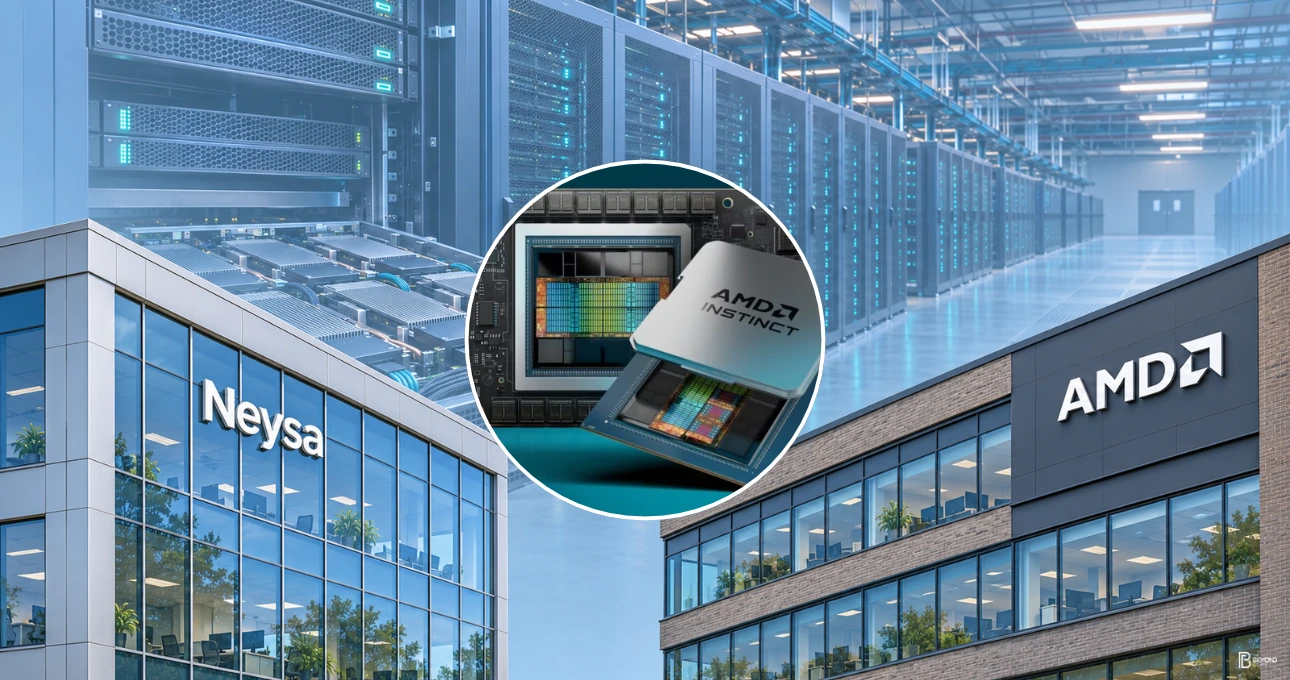
Neysa’s Tytan Platform: Dedicated AI Computing Without Shared Resources
The Mumbai-based cluster is running on Neysa’s Tytan platform, a dedicated, bare-metal AI infrastructure for AI offtakers.
In contrast to shared cloud resources, Neysa provides customers with dedicated access to physical servers with accelerators. They also have control over network architecture, storage, deployment models, and service level requirements.
Neysa’s customers have a choice between bare metal, bare metal with Slurm, or bare metal with Kubernetes. While Neysa takes care of deploying and operating the AI infrastructure, customers have control over the underlying infrastructure. This gives enterprises more flexibility to set up the AI infrastructure based on their needs.
Why Neysa Is Expanding Its Silicon-Agnostic AI Strategy
With the new cluster, Neysa is also expanding its silicon agnostic strategy. That means customers are not tied to a particular silicon or hardware ecosystem. Neysa allows them to choose their accelerator architectures and configurations based on their needs, and it takes care of deploying the infrastructure and operating it. This gives businesses the flexibility to select the right hardware for their AI applications instead of being tied to a single vendor.
Global Customers Turn to Neysa’s New Mumbai AI Infrastructure
Neysa’s new cluster in Mumbai has already seen contracts from global customers who will be deploying their AI infrastructure in India. This highlights the growing global demand for AI infrastructure in India.
Sharad Sanghi, Co-Founder and CEO of Neysa, said that large-scale AI deployments aren’t just about having access to GPUs. Businesses also need AI infrastructure that they can deploy at scale, operate, and customize for their workloads.
Beyond Mumbai: Neysa’s Expanding AI Infrastructure Plans
Apart from Neysa’s Tytan platform, the company also has Velocis, its managed AI cloud platform that brings GPU computing, orchestration, inference, observability, and cost management together.
In October, the company announced a partnership with STTGDC, with which it will be deploying up to 9,000 GPUs at STT Noida 2, with the first phase coming online in Q1 2027.
With the new deployment in Mumbai, Neysa is continuing to expand its dedicated AI computing capacity in India. This means that enterprises as well as global AI customers have more flexibility and choice in terms of hardware and computing resources as their needs grow. It also highlights India’s growing importance as a player in the global AI ecosystem, where access to high-performance computing will be crucial for the next generation of AI applications.
