
How the Adobe-Google Partnership Will Simplify Digital Workflows
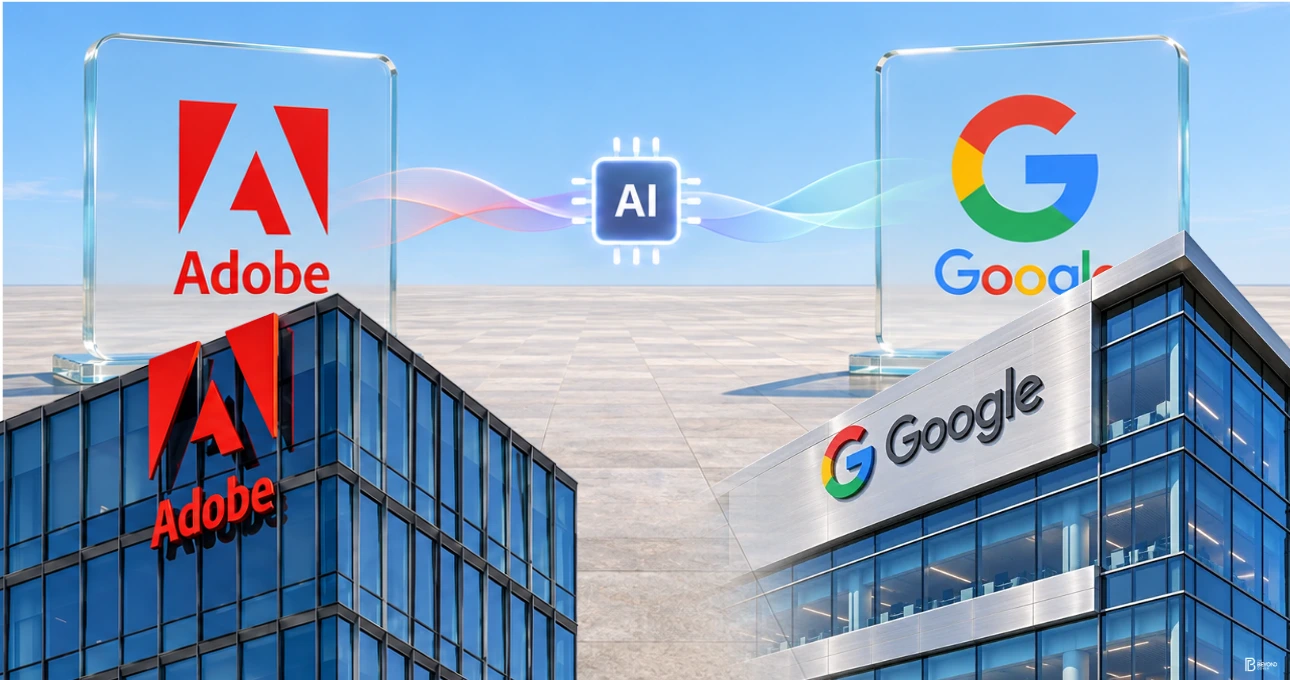
Navigating multiple apps to edit documents, create content, and manage marketing campaigns can hinder the most creative and productive teams. To solve this issue, Adobe and Google have announced an expanded strategic partnership to bring their tools and AI capabilities closer together at Adobe MAX 2026.
This partnership will bring together Adobe’s creative and productivity tools with Google Workspace and Gemini, Gemini Enterprise, and AI Mode in Google Search. At the same time, it will bring Google’s latest AI models into Adobe’s applications such as Firefly, Photoshop, Premiere, Acrobat, and Adobe Express.
In essence, this partnership should allow users to get simpler workflows, better access to creative tools, and more access to AI without it interfering in their workflows.
Adobe Acrobat Comes to Google Workspace: What Users Can Expect
Adobe Acrobat will now be available on Google Drive and Gmail. This will allow users to work with PDF files without much issue. Acrobat will be a suggested app, and users will get an ‘Edit with’ option on the preview of a file as well.
With Acrobat on Google Drive and Gmail, users should be able to access and edit PDFs with greater convenience. There will no longer be a need to switch between platforms.
Adobe Creative Tools Expand Across Gemini and Google Search
Adobe is also expanding its connectors in Gemini and Gemini Enterprise. Now, users can access Acrobat and more creative tools in both the chatbots. Furthermore, users will be able to access Adobe’s creative applications via AI Mode in Google Search.
For businesses, Adobe’s CX Enterprise Coworker agent will be available in Gemini Enterprise. This AI agent will help users create graphics, work with PDFs, and launch marketing campaigns without the need to switch between multiple apps.
Google’s AI Models Bring New Capabilities to Adobe Apps
With this partnership, Google’s latest AI models for images and video will also come to Adobe Firefly, Photoshop, Premiere, and Adobe Express. Additionally, Google’s Gemini models will be used to power new AI capabilities for Acrobat.
With these new capabilities, users will be able to interact with documents in a conversational manner. They will be able to extract important information from documents, and even create new content such as presentations, resumes, and reports directly from PDF files.
For professionals who work with a lot of documents, this partnership should allow them to find information and create content from documents much more easily.
Photoshop Could Get Faster, Prompt-Based AI Editing
Adobe and Google DeepMind will also be working together on new AI-powered editing capabilities for apps, starting with Photoshop.
The companies are looking to customise a Google image model for Photoshop, which could enable near-real-time image edits. With this, creative professionals will be able to use prompts to edit images and choose from different variations without interrupting their workflow.
What This Partnership Means for Businesses and Creators
Anil Chakravarthy, President and incoming CEO of Adobe, said this partnership will combine Google’s frontier AI capabilities with Adobe’s creative and productivity tools to deliver differentiated experiences to users around the world.
Thomas Kurian, the CEO of Google Cloud, also said that by bringing Adobe and Google together, the companies will give creators and enterprise teams an integrated environment for turning their ideas into high-impact content.
What the Adobe-Google Partnership Means for Businesses and Creators
This partnership demonstrates the growing shift towards AI for businesses and creative professionals. Instead of AI being its own tool, Adobe and Google are bringing AI to the very apps that are used for productivity and creative workflows. This means users will have to switch between fewer platforms, create content faster, and have a smoother document workflow. It will also give Adobe a wider reach in Google’s ecosystem, while Google gets to bring its AI to creative apps.
Neither company has shared a specific launch date for the integrations.
