









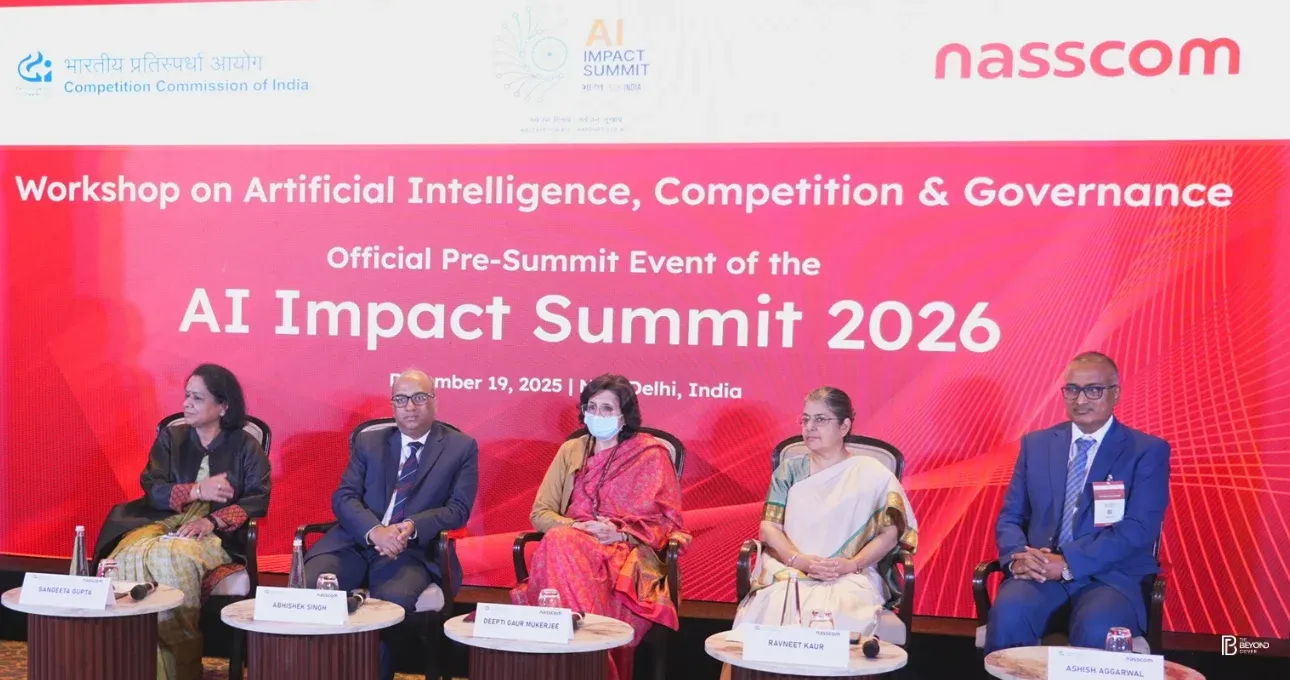
At the Nasscom Leadership Summit 2026, industry leaders delivered a strong message for India’s technology sector: legacy systems—particularly those built on Cobol—could become the next major growth engine for IT services, powered by AI tech. Rather than viewing decades-old infrastructure as a burden, speakers emphasised that the intelligent application of artificial intelligence can transform legacy technology debt into a large-scale business opportunity.
For years, Cobol-based systems have been at the heart of critical operations across global banking, insurance, government, and large enterprise environments. These systems continue to run mission-critical workloads but are often expensive to maintain, difficult to scale, and dependent on a shrinking pool of specialised talent. Traditional modernisation approaches have been slow, costly, and high-risk, leading many organisations to postpone transformation.
At the summit, Nasscom highlighted how AI-driven tools are changing this equation. By automating code analysis, documentation, testing, and migration workflows, companies can now modernise legacy platforms faster and with significantly lower risk. This shift allows enterprises to use AI to understand complex, decades-old codebases and convert them into modern, cloud-ready architectures.
Industry executives noted that this capability is particularly relevant for Indian IT services firms, which have long managed global enterprise technology operations. With AI accelerating the modernisation cycle, these companies are well positioned to deliver large-scale transformation programs. The result could be a new wave of services growth, driven not by new application development alone but by the intelligent reinvention of existing systems.
The scale of the opportunity is substantial. A significant portion of the world’s core financial and government infrastructure still runs on legacy technologies. Modernising these environments is no longer just a technology upgrade; it is a business imperative for organisations seeking agility, cybersecurity resilience, regulatory compliance, and digital customer experiences.
AI tools are also reducing one of the biggest barriers to legacy transformation: knowledge gaps. Much of the original documentation for Cobol-era systems is outdated or missing, and the developers who built them are nearing retirement. AI can analyse and interpret code logic, generate documentation, and identify dependencies, making it easier for new engineering teams to take over and execute modernisation projects.
From a cost perspective, leaders at the event stressed that AI-driven automation can dramatically lower the total investment required for migration. It can also minimise operational disruptions by enabling phased and intelligent transformation strategies instead of risky “rip-and-replace” approaches.
This emerging trend comes at a time when global enterprises are increasing their spending on digital transformation and cloud adoption. As organisations look for faster and safer ways to upgrade core systems, the ability to combine deep domain expertise with AI-powered tools is becoming a key differentiator for IT service providers.
The discussions at the summit also positioned this shift as a strategic moment for India. The country already has a strong reputation in global technology services, and the integration of AI into legacy modernisation could reinforce its leadership in the next phase of digital transformation. This is particularly significant as the global demand for AI-enabled services continues to grow.
Beyond business impact, the development reflects a broader narrative in AI news—that artificial intelligence is not only about building new applications but also about unlocking value from existing technology investments. By turning legacy systems into modern digital platforms, organisations can extend the life of critical infrastructure while enabling innovation.
As the Nasscom Leadership Summit concluded, the message for the industry was clear: the convergence of AI and legacy modernisation is creating a rare, large-scale opportunity. For India’s IT services sector, what was once seen as technical debt may soon become one of the most powerful drivers of future growth.