










Artificial Intelligence is no longer an experimental playground.
It is embedded in credit decisions, healthcare diagnostics, supply chain optimization, public governance, cybersecurity, and enterprise automation. The question for 2026 is not whether AI works. It is whether it can be trusted — at scale.
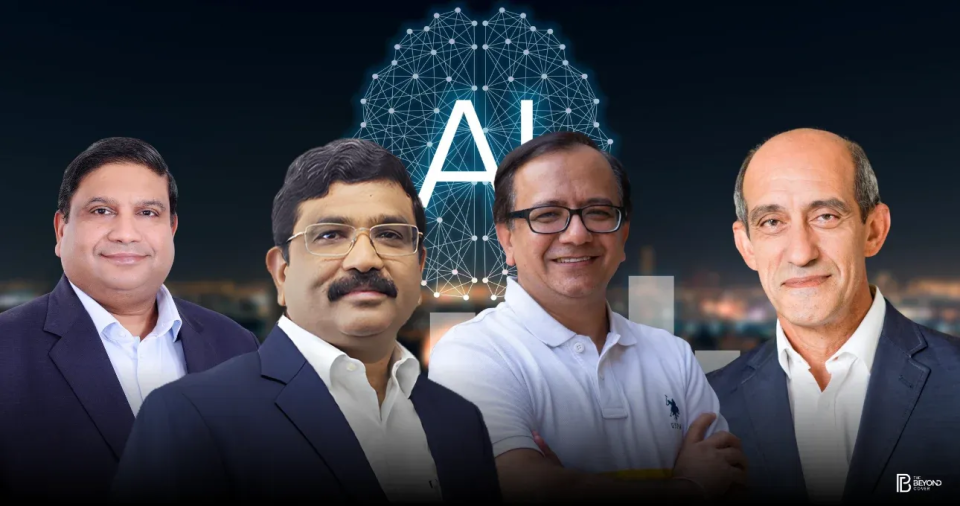
That was the defining signal emerging from the Official Pre-Summit Leadership Roundtable hosted by Sopra Steria India ahead of the AI Impact Summit 2026. The theme was both urgent and precise:
Industrialized & Responsible AI Systems — What Is at Stake?
The answer, according to the panel, is simple yet profound: everything.
From enterprise resilience to regulatory stability, from brand credibility to national competitiveness — the future of AI depends on engineered trust.
This is TBC’s deep dive into what that really means.
AI Is Moving from Pilots to Production
For the last three years, most enterprises have experimented with AI in controlled pilots. Generative copilots, predictive analytics, internal chatbots, workflow automation — all tested in limited domains.
2026 marks a structural shift.
AI is now transitioning into core enterprise infrastructure. It is influencing long-lived systems that operate autonomously and make consequential decisions.
When AI moves from “assistive” to “authoritative,” the stakes multiply.
This is where industrialization begins.
Industrialized AI is not about scaling compute alone. It is about scaling accountability.
Trust Is Not a Feature. It Is Architecture.
One of the most compelling ideas from the roundtable came from Mohammed Sijelmassi, who emphasized the principle of trust-by-design.
Trust, in this context, is not a compliance afterthought. It is embedded at the architectural level.
That includes:
- Transparent model behavior
- Traceable decision pathways
- Resilient system design
- Continuous validation loops
- Clear rollback mechanisms
Perhaps most notably, the responsibility to pause deployment when trust foundations are not fully met.
In a world obsessed with speed-to-market, this idea is radical.
But it may also be necessary.
If AI systems are to operate autonomously for years — learning, adapting, influencing outcomes — then engineering discipline must match ambition.
Industrial AI without trust engineering is not innovation. It is risk accumulation.
Governance as a Competitive Advantage
Another strong perspective came from Nicolas Rebierre, who addressed recurring trust failures, regulatory sandboxes, and governance maturity.
Across industries, early AI deployments have revealed patterns:
- Bias in automated decisions
- Lack of explainability
- Model drift over time
- Insufficient oversight mechanisms
Governance is often treated as a cost center. But in 2026, governance may become a differentiator.
Companies that build structured oversight — auditability, standardization, independent validation — will be more attractive to regulators, partners, and customers.
Trustworthy AI frameworks are emerging as brand assets.
In regulated sectors such as finance, healthcare, and public infrastructure, procurement decisions increasingly include explainability and traceability as formal requirements.
Governance, therefore, is no longer optional.
It is market infrastructure.
Leadership Accountability: The Human Layer
While engineering and governance dominated much of the conversation, the human dimension remained central.
Dr. Pawan Goyal highlighted organizational readiness and leadership responsibility.
AI adoption is not purely technical transformation. It is cultural transformation.
Leaders must decide:
- Where should AI be deployed?
- Where should it not?
- What degree of autonomy is acceptable?
- Who owns accountability when systems fail?
Without executive clarity, AI initiatives fragment across departments, creating inconsistent standards and shadow systems.
Responsible AI requires board-level alignment.
The panel emphasized that as AI systems become more autonomous and long-lived, human judgment remains indispensable.
Automation does not eliminate oversight. It intensifies the need for it.
Engineering Discipline in High-Stakes Environments
From a technical standpoint, Ganesh Sahai underscored the importance of explainability and traceability — particularly in agile and high-stakes environments.
Modern AI systems are often layered into complex enterprise architectures:
- Legacy systems
- Cloud-native services
- Real-time data streams
- External APIs
- Third-party integrations
Industrialization demands integration maturity.
This means:
- Robust data lineage
- Version-controlled models
- Monitoring for drift and degradation
- Clear fallback systems
- Stress-testing under edge cases
The more embedded AI becomes, the more it resembles traditional critical infrastructure.
And critical infrastructure requires engineering rigor.
The era of “deploy and iterate” may not be sufficient for systems influencing financial risk, legal decisions, or public safety.
The India Opportunity: Can Responsible AI Become a National Positioning?
India stands at an interesting intersection.
It is both a massive AI adoption market and a global engineering hub.
Events like the AI Impact Summit 2026 signal a growing intent to shape global AI narratives rather than merely consume them.
If India leans into Responsible AI as a core identity — emphasizing standards, transparency, and scalable governance — it could position itself as a trusted AI innovation center.
With increasing global regulation around AI ethics, countries and companies that demonstrate mature governance frameworks will attract enterprise partnerships.
Responsible AI is no longer a moral discussion alone.
It is economic strategy.
Why Industrialization Changes the Equation
There is a subtle but powerful difference between experimentation and industrialization.
Experimentation tolerates failure.
Industrial systems cannot.
When AI is used to recommend products internally, errors are inconvenient.
When AI is used to allocate loans, detect fraud, guide medical treatment, or manage energy grids, errors carry material consequences.
Industrial AI systems must be:
- Durable
- Auditable
- Upgradable
- Explainable over long-time horizons
The conversation at the roundtable reinforced a shared narrative:
To industrialize trustworthy AI, organizations must invest not just in model accuracy, but in lifecycle management.
AI systems must be designed for longevity.
Trust as Strategic Capital
Trust is often described as intangible.
But in the AI economy, it becomes measurable.
Customers will ask:
- Can this system explain its decisions?
- Can it be audited?
- Is bias monitored?
- Is there human override capability?
Enterprises that answer “yes” convincingly will command premium positioning.
Those that cannot face skepticism.
In the long term, engineered trust may matter more than raw model performance.
The Ethical Commitment Beyond Compliance
Sunil Goyal, Dy. CEO of Sopra Steria India, extended appreciation to the panel for fostering dialogue around Responsible, Trustworthy, and Ethical AI.
The broader leadership perspective emerging from the roundtable is clear:
Responsible AI is not merely a technical requirement.
It is a strategic and ethical commitment.
Ethics in AI cannot remain abstract. It must translate into:
- Design principles
- Deployment guardrails
- Continuous oversight
- Measurable accountability
Without this translation, “ethical AI” risks becoming marketing language.
The TBC Perspective: 2026 as the Governance Inflection Point
At The Beyond Cover, we view this moment as an inflection point.
The AI race is no longer defined solely by model size or computational power.
It is defined by institutional maturity.
By 2027, we expect:
- AI governance to become a board-level KPI
- Trust metrics to enter enterprise reporting
- Explainability standards to influence vendor selection
- Regulatory sandboxes to expand globally
The companies that engineer trust will outlast those that only engineer speed.
The countries that align innovation with governance will shape global norms.
Final Thought
AI is moving from experimentation to embedded infrastructure.
Infrastructure demands reliability.
Reliability demands governance.
Governance demands leadership.
The Official Pre-Summit Leadership Roundtable ahead of the AI Impact Summit 2026 did more than set the tone for an event. It signaled a broader shift in how serious enterprises are approaching AI’s next chapter.
Industrialized AI without responsible design is fragile.
Responsible AI without industrial capability is symbolic.
The future belongs to those who build both.
And in 2026, trust is no longer optional.
It is the architecture of AI itself.