









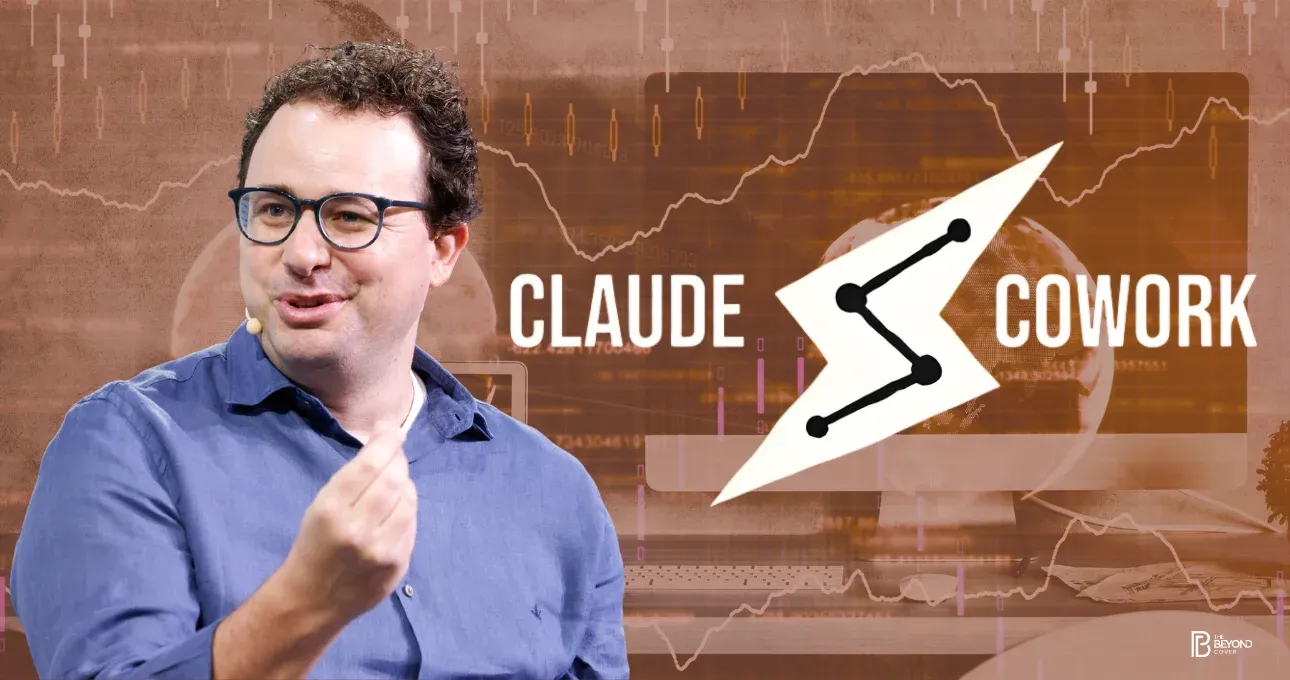
The rapid evolution of artificial intelligence continues to reshape not only industries but also financial markets. The recent buzz around “Claude Cowork,” a reportedly advanced AI coworker feature being developed by Anthropic, has sparked intense reactions among investors. In both India and the United States, software and IT stocks experienced volatility as market participants reassessed the long-term impact of AI-driven automation on traditional technology services.
This article explains how expectations around Claude Cowork contributed to a software and IT stock sell-off, and what it reveals about the changing dynamics of the global tech sector.
What Is Claude Cowork and Why Markets Reacted
Claude is the flagship AI assistant developed by Anthropic, a U.S.-based artificial intelligence company known for building large language models focused on safety and enterprise use cases. Reports suggesting the development of a “Claude Cowork” feature — designed to function as a proactive AI assistant capable of handling complex workplace tasks — triggered investor concern across global markets.
The concept of an AI coworker goes beyond chat-based interactions. It implies AI systems that can:
- Draft and review code
- Analyze enterprise data
- Automate documentation
- Assist in software development workflows
- Support business process automation
For investors, this signals a structural shift. If AI tools can automate high-value tasks traditionally performed by software engineers, IT consultants, and back-office professionals, it could pressure revenue models of established software services companies.
Why Indian IT Stocks Felt the Pressure
India’s IT services industry is heavily dependent on outsourcing contracts, software development services, and enterprise support solutions for global clients, particularly from the U.S. and Europe. Companies such as Tata Consultancy Services, Infosys, and Wipro generate significant revenue from providing skilled human capital for coding, maintenance, and IT consulting.
The emergence of advanced AI coworker tools raised concerns about:
- Reduced demand for traditional coding services
- Faster automation of software testing and documentation
- Lower billing hours for routine IT tasks
- Margin compression in outsourcing-heavy business models
Investors reacted swiftly, leading to a sell-off in Indian IT stocks. While no immediate earnings impact was confirmed, the fear was centered on long-term structural disruption rather than short-term financial performance.
US Software Stocks Also Experienced Volatility
In the United States, enterprise software firms and IT consulting companies also faced investor scrutiny. Companies involved in enterprise SaaS, cloud services, and development platforms saw share price fluctuations as analysts debated the implications of AI-powered workplace automation.
The concern is not necessarily that AI will eliminate software companies. Rather, markets fear that AI could compress pricing power and reduce dependency on large engineering teams.
As AI models become capable of generating high-quality code and assisting with debugging, documentation, and system integration, productivity gains may reduce the need for extensive service contracts. This could reshape revenue expectations for IT consulting firms and managed service providers.
Market Psychology: Fear of Disruption vs. Opportunity
Stock markets are highly sensitive to disruption narratives. The introduction of AI-driven coworker tools like Claude Cowork reinforces a broader theme: generative AI is moving from experimental to operational.
This creates two competing market narratives:
- Disruption Risk – Traditional IT services and software maintenance businesses could face margin pressure as AI tools reduce human workload requirements.
- Productivity Boom – Companies that adopt AI effectively may expand profit margins through efficiency gains and new service offerings.
The sell-off reflected uncertainty rather than confirmed decline. Investors often react quickly to perceived structural threats, especially in industries already undergoing digital transformation.
Automation, AI Agents, and Enterprise IT Transformation
Claude Cowork represents a new wave of AI agents designed to operate autonomously within enterprise environments. Unlike earlier chatbots, these tools are positioned as integrated collaborators capable of executing tasks.
This shift intensifies debates around:
- AI-driven automation in software development
- Impact on global IT employment
- Enterprise AI adoption rates
- Long-term revenue models in tech services
Indian IT firms, in particular, are already investing heavily in AI upskilling and automation platforms. Many have launched internal AI accelerators and partnerships to stay competitive. However, market participants remain cautious about the speed at which AI coworker tools could alter demand patterns.
Is the Sell-Off Justified?
While AI advancements are undeniable, most industry experts argue that full-scale automation of complex enterprise IT functions remains gradual rather than immediate. AI tools still require human oversight, strategic design, and domain expertise.
Moreover, AI implementation often creates new categories of work, including AI governance, cybersecurity, integration services, and compliance management.
In this context, the stock market reaction may reflect transitional uncertainty rather than definitive industry decline.
The Bigger Picture: AI and Capital Markets
The Claude Cowork-driven volatility highlights a critical reality: AI innovation is no longer confined to product announcements — it directly influences financial markets.
Investors are now evaluating companies based on:
- AI readiness
- Automation strategy
- Workforce adaptability
- Innovation speed
As AI continues to evolve, stock markets may experience periodic waves of optimism and anxiety.
Conclusion: A Structural Shift in Motion
The software and IT stock sell-off in India and the U.S. following reports of Claude Cowork illustrates how deeply artificial intelligence is reshaping investor sentiment. Whether AI coworker tools become a disruption threat or a productivity catalyst remains to be seen.
What is clear, however, is that AI is redefining the competitive landscape. Companies that adapt quickly — by integrating AI into their core offerings — may emerge stronger. Those that resist transformation could face long-term challenges.
For now, the market reaction serves as a reminder: in the age of AI, innovation headlines can move billions in market capitalization overnight.