









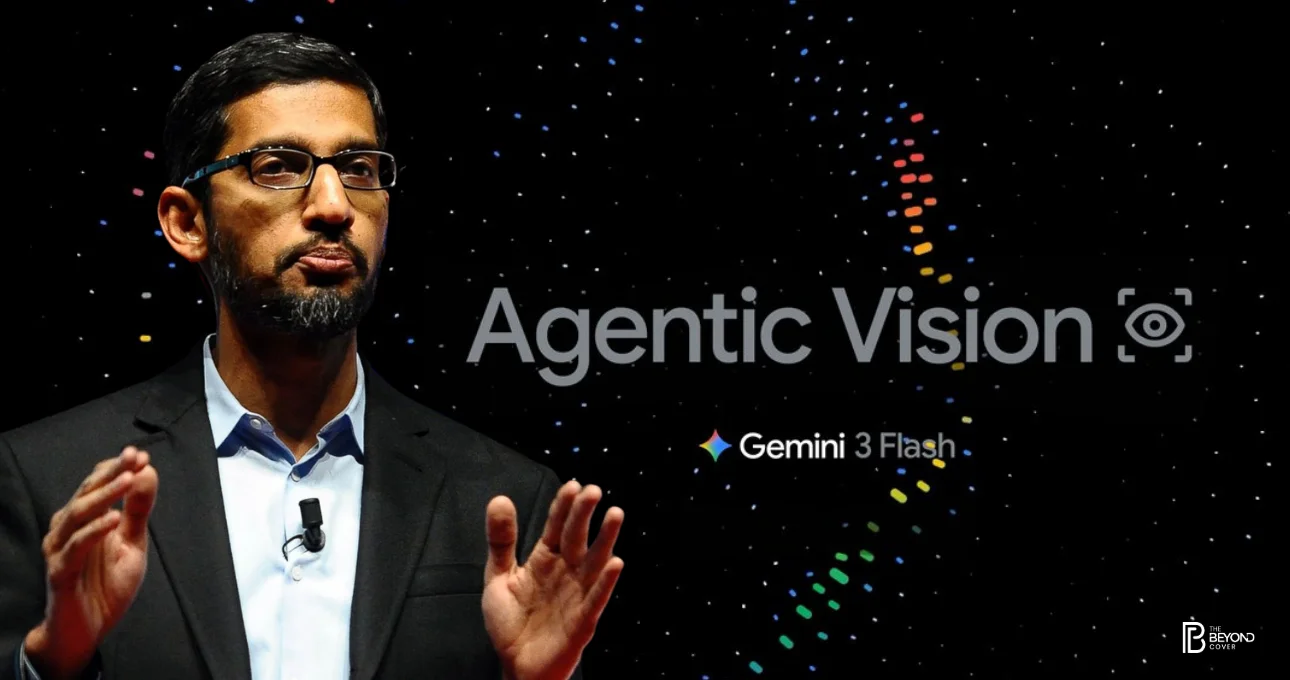
Google has introduced Agentic Vision in Gemini 3 Flash, marking a significant step forward in how artificial intelligence systems interpret and act on visual information. The new capability allows Gemini to not only see and understand images, but also reason, plan, and take goal-driven actions based on what it observes—bringing AI closer to autonomous visual intelligence.
The announcement strengthens Google’s position in the fast-evolving multimodal AI race, where models are expected to process text, images, video, and real-world context seamlessly and in real time.
What Is Agentic Vision?
Agentic Vision refers to an AI system’s ability to combine visual perception with decision-making and task execution. Unlike traditional computer vision models that stop at object detection or image classification, Gemini 3 Flash can now analyze visual scenes, infer intent, and decide what to do next.
For example, Gemini can look at a screenshot, understand a user’s goal, identify actionable elements, and carry out steps such as navigating interfaces or suggesting next actions. This makes the model particularly useful for automation, productivity tools, and real-time assistance.
Google says Agentic Vision allows Gemini to operate as a visual agent, capable of interacting with digital environments rather than just describing them.
Why Gemini 3 Flash Matters
Gemini 3 Flash is designed for speed and efficiency, optimized for low-latency use cases such as mobile apps, browsers, and enterprise workflows. By adding Agentic Vision, Google is expanding the model’s usefulness in scenarios where fast visual understanding and action are critical.
The upgrade enables applications such as:
- Automated UI navigation and task completion
- Real-time visual troubleshooting and support
- Smarter document and screen analysis
- AI agents that can observe, reason, and act in software environments
These capabilities could significantly reduce manual effort in workflows that rely heavily on visual interfaces.
Competing in the Agentic AI Race
The launch comes as tech giants race to build agentic AI systems that go beyond chat-based interactions. Companies including OpenAI, Anthropic, and Microsoft are exploring AI agents that can plan tasks, use tools, and operate autonomously across applications.
Google’s approach emphasizes tight integration between vision, reasoning, and action, leveraging its strengths in computer vision, Android, Chrome, and Workspace ecosystems.
Analysts say Agentic Vision could be a foundational feature for future AI assistants that help users complete complex tasks end-to-end, rather than offering isolated suggestions.
Enterprise and Developer Impact
For developers, Gemini 3 Flash with Agentic Vision opens up new possibilities for building AI-powered tools that understand screens, dashboards, and visual data. Google is expected to make these capabilities accessible through its AI APIs, allowing enterprises to embed visual agents into customer support, IT operations, and internal automation systems.
From an enterprise perspective, Agentic Vision could accelerate AI-driven productivity, especially in roles that depend on navigating multiple software tools and visual information.
Looking Ahead
Agentic Vision represents a shift from AI as a passive observer to AI as an active participant in digital workflows. As models like Gemini 3 Flash continue to evolve, the line between perception and action is blurring.
Google’s latest update suggests the future of AI lies not just in understanding the world—but in acting within it intelligently and responsibly.