










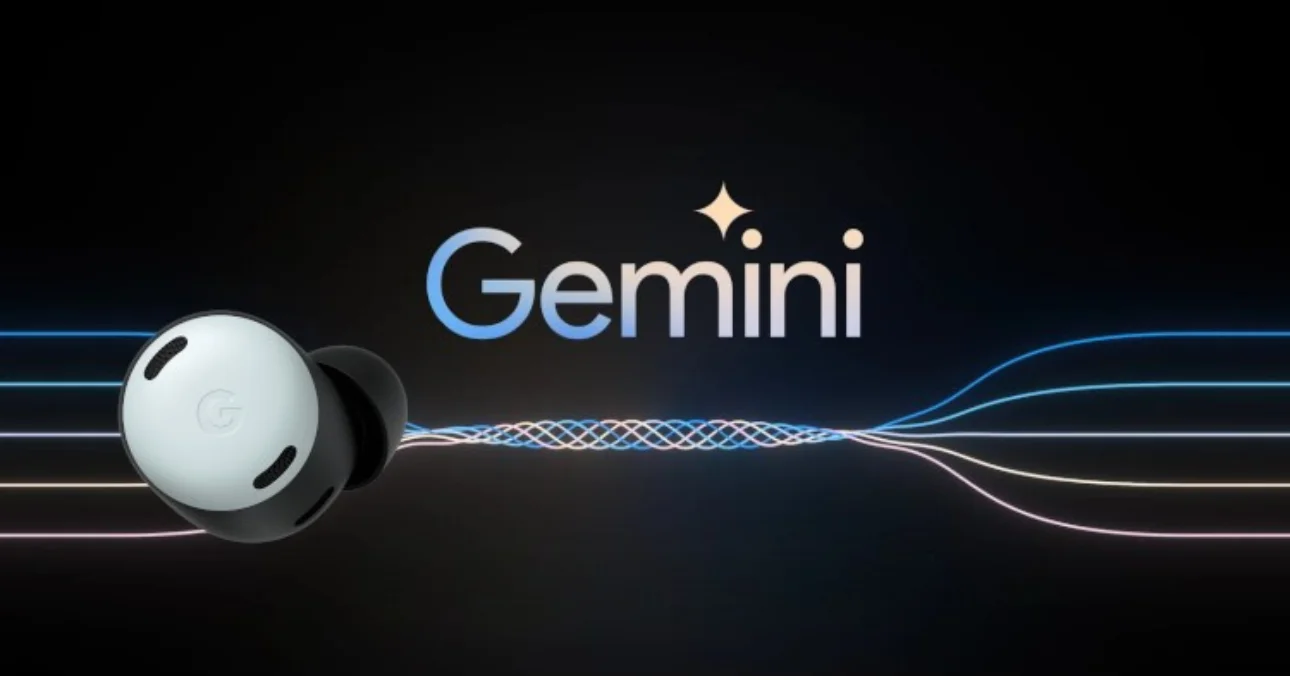
Google is pushing artificial intelligence out of the screen and into everyday life by transforming ordinary headphones into real-time translation devices using Gemini AI. The latest update significantly expands the practical utility of language models, moving them beyond text generation and into seamless, real-world communication across languages.
Unlike earlier translation tools that required dedicated hardware or constant phone interaction, Google’s new Gemini-powered experience works with standard Bluetooth headphones. Users can hear live translations spoken directly into their ears while continuing a natural conversation. The system processes speech, translates it in real time, and delivers the output with minimal delay—making multilingual communication feel fluid rather than forced.
This shift marks an important milestone in AI adoption. Language models are no longer confined to keyboards and chat windows; they are becoming ambient assistants that operate quietly in the background. For travelers, professionals, students, and global teams, this means conversations can happen naturally without pausing to type, read, or pass phones back and forth.
At the core of the experience is Gemini’s improved speech understanding and contextual awareness. Traditional translation tools often struggle with accents, slang, interruptions, or informal phrasing. Gemini AI addresses these challenges by interpreting meaning rather than simply converting words. This allows it to preserve tone, intent, and conversational flow—crucial elements for real-world interactions.
Google has also focused heavily on latency. Real-time translation only works if responses arrive fast enough to keep conversations moving. Gemini’s on-device and cloud-assisted processing ensures translations are delivered quickly, reducing the awkward pauses that plagued earlier systems. The result is a more human experience that encourages adoption beyond novelty use.
Importantly, this feature does not require specialized earbuds or premium hardware. By enabling translation through existing headphones, Google removes a major barrier to entry. Users don’t need to invest in new devices; they simply unlock new capabilities through software. This approach reflects Google’s broader strategy of using AI to enhance everyday tools rather than replacing them.
The implications extend far beyond travel. In workplaces with distributed teams, real-time translation can reduce friction in meetings and collaborations. In education, students can engage with content and instructors across languages without relying on subtitles or interpreters. In healthcare and public services, the technology could improve communication in multilingual environments where clarity is critical.
Privacy and control remain central concerns, and Google emphasizes that users maintain control over when translation is active. Conversations are not automatically translated unless the feature is enabled, helping address fears of constant listening or unintended data capture. This balance between convenience and consent will be essential as AI-driven audio features become more widespread.
The move also highlights how competition in AI is shifting. Instead of focusing solely on model size or benchmark performance, companies are racing to deliver useful, everyday applications that people rely on daily. Real-time translation through headphones is a clear example of AI solving a long-standing problem in a practical, accessible way.
By turning any pair of headphones into a live translator, Google is redefining how language models integrate into daily life. Gemini AI is no longer just answering questions—it’s helping people understand each other, in real time, across borders and cultures.
As AI continues to mature, features like this signal what the next phase looks like: invisible, helpful, and deeply woven into the fabric of human communication.