









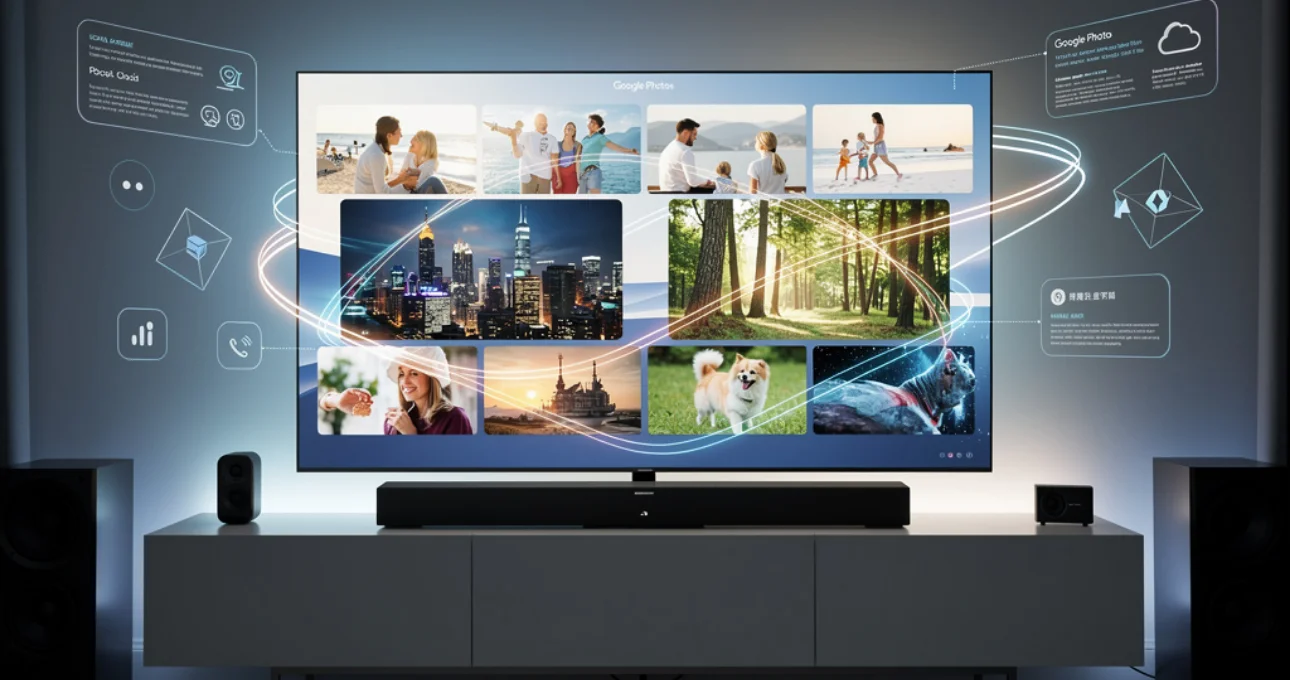
Samsung is set to bring Google Photos support to its AI-enabled smart TVs in 2026, marking a significant step in how personal digital memories are experienced on large screens. The move reflects a broader industry shift toward deeper cloud and AI integration in home entertainment, turning televisions into intelligent hubs rather than passive display devices.
From Personal Screens to the Living Room
Google Photos has long been optimized for smartphones, tablets, and laptops, offering AI-powered organization, facial recognition, and smart search across billions of images. By extending this experience to Samsung’s AI TVs, users will soon be able to view, curate, and relive their photo libraries directly from the living room—without needing to cast from another device.
This integration is designed to be seamless. Once signed in, users can access their cloud-stored photos and videos on demand, transforming TVs into dynamic digital photo frames or immersive memory displays for family gatherings, celebrations, and everyday moments.
AI Makes Photo Viewing Smarter
What sets this update apart is the role of artificial intelligence. Instead of static slideshows, AI-enabled TVs will use contextual intelligence to surface relevant photos automatically. For example, TVs could highlight seasonal memories, recent trips, or anniversaries, making content discovery more intuitive and emotionally engaging.
AI-powered categorization and search will also play a role. Users may be able to find photos using natural language prompts—such as “show last year’s vacation” or “display family photos”—without manually browsing albums. This aligns with Samsung’s broader push toward voice-enabled, context-aware smart home experiences.
Why This Matters for Smart TV Evolution
The addition of Google Photos reinforces a larger trend: smart TVs are becoming central computing devices within the home. With AI processors, cloud connectivity, and personalized content, TVs are no longer limited to streaming entertainment. They are evolving into lifestyle platforms that blend productivity, communication, and personal media.
For Samsung, partnering more closely with Google strengthens its ecosystem strategy. It also adds value to AI TVs by offering everyday use cases beyond movies and gaming—encouraging users to interact with their TVs throughout the day.
Privacy and Control in the Spotlight
As cloud-based personal content moves onto shared household screens, privacy considerations become critical. Samsung and Google are expected to implement granular controls, allowing users to decide who can view certain albums or memories. Features like profile-based access and authentication will likely play a role in ensuring sensitive content remains protected.
This balance between convenience and privacy will be key to user adoption, especially in multi-user households.
The Bigger Picture: AI-Powered Multimedia Experiences
Google Photos on AI TVs is part of a broader movement toward AI-driven multimedia experiences. Across devices, AI is enabling smarter recommendations, automated curation, and personalized interfaces that adapt to user behavior. Large screens, with their visual impact and shared nature, represent the next frontier for these capabilities.
For consumers, this means richer, more meaningful interactions with personal content. For the industry, it signals growing convergence between cloud services, AI platforms, and consumer electronics.
Looking Ahead to 2026
When Google Photos support rolls out on Samsung AI TVs in 2026, it won’t just be a feature update—it will reflect how AI is redefining the role of screens in everyday life. TVs will no longer be limited to what’s trending globally, but will also showcase what matters most personally.
As AI and cloud ecosystems continue to merge, the living room is poised to become a more personalized, intelligent, and emotionally connected digital space.