









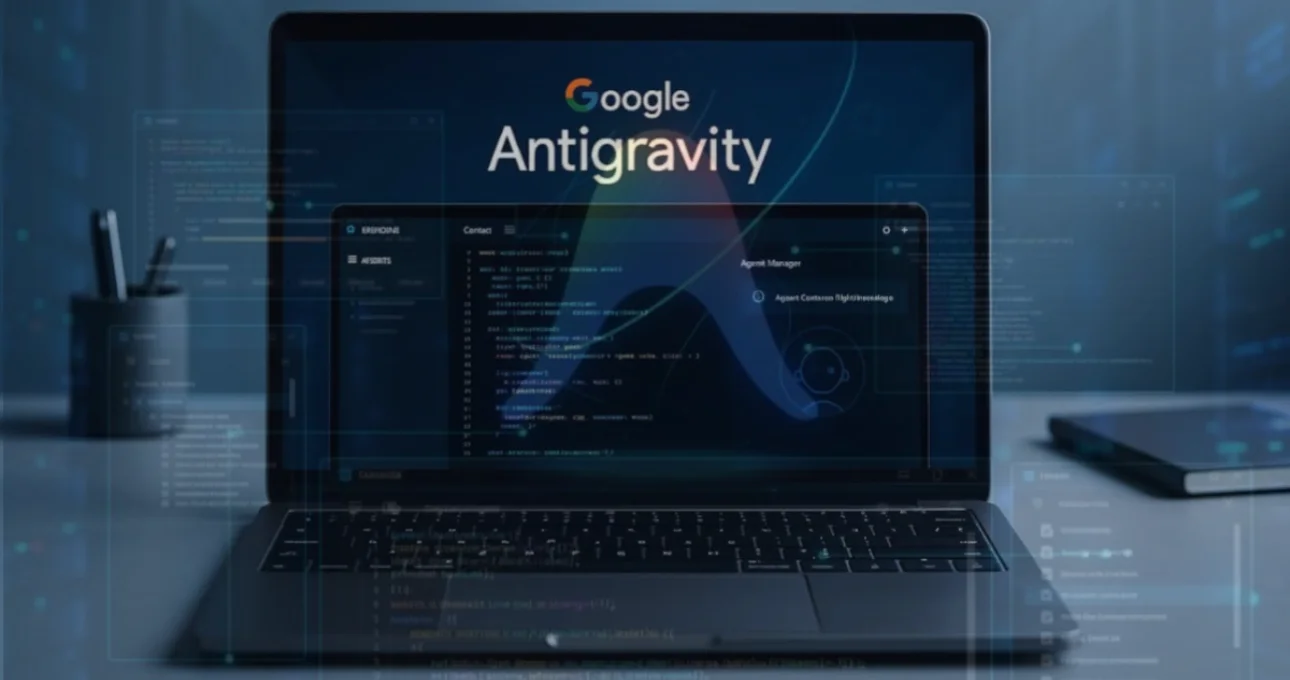
Google has unveiled Antigravity, a groundbreaking development platform that reimagines how AI agents write software. More than just another coding assistant, Antigravity enables AI to function as a fully independent developer—capable of writing, testing, debugging, and verifying code across real tools like editors, terminals, and web browsers. Powered by Gemini 3 Pro, the platform pushes AI beyond mere suggestion and into hands-on software creation.
This marks one of Google’s boldest steps toward autonomous engineering, promising to transform development workflows, accelerate shipping cycles, and expand what small teams can build.
AI Agents Move From Assistants to True Builders
Traditional AI coding tools can generate snippets or explain logic, but they remain passive. Antigravity eliminates this limitation by giving AI agents direct control over the actual development environment—from opening files in editors to executing commands in terminals and running tests in browsers.
This means an AI agent can:
- Create a project from scratch
- Write and organize files
- Run test suites and fix failing cases
- Debug runtime errors
- Validate output and adjust code
- Deploy or package builds
- Continuously learn from previous attempts
These capabilities turn AI into a self-sufficient software engineer, not just a helper waiting for instructions.
Powered by Gemini 3 Pro: Smarter, Faster, More Reliable
Antigravity runs on Gemini 3 Pro, Google’s latest multimodal model designed with advanced reasoning and tool-use skills. The model’s ability to interpret code, understand system behavior, and adapt its approach makes it ideal for autonomous development.
Key improvements include:
- Better long-context understanding for large codebases
- Stronger debugging intelligence
- Faster iterative refinement
- Enhanced test reasoning and verification
- Full-stack development competency across languages and frameworks
This lets Antigravity agents operate with near-senior-level autonomy, especially in repetitive or infrastructure-heavy tasks.
How Developers Can Use Antigravity
Google has positioned Antigravity as a platform where human developers collaborate with autonomous agents. Developers can assign tasks like:
- “Build a login module with OAuth.”
- “Refactor this service into microservices.”
- “Convert this class component to functional components with hooks.”
- “Run all tests and fix failures.”
Once initiated, the AI agent takes control of the workspace, performing tasks through actual actions—not simulated ones.
Developers still maintain oversight, but the manual workload drops significantly. This allows teams to focus on architecture, review, and creativity while the AI handles heavy lifting.
What Antigravity Means for the Future of Software Engineering
Antigravity represents a shift toward agentic development ecosystems, where AI manages most of the execution while humans provide strategy and oversight. Its impact will likely include:
- Faster development cycles and prototype delivery
- Reduced repetitive coding work
- Easier onboarding for new developers
- Higher productivity for small teams
- Democratization of complex software creation
For enterprises, Antigravity could become a force multiplier—expanding engineering throughput without proportionally growing headcount.
A New Frontier in AI Engineering
Google’s Antigravity is not just another coding tool—it’s a vision for the future of software creation. By combining direct environment control with the intelligence of Gemini 3 Pro, AI agents can now build, test, and verify code just like human developers.
As this technology evolves, the line between human-written and AI-built software will blur, opening a new era where creative ideas, not coding hours, become the real currency of innovation.