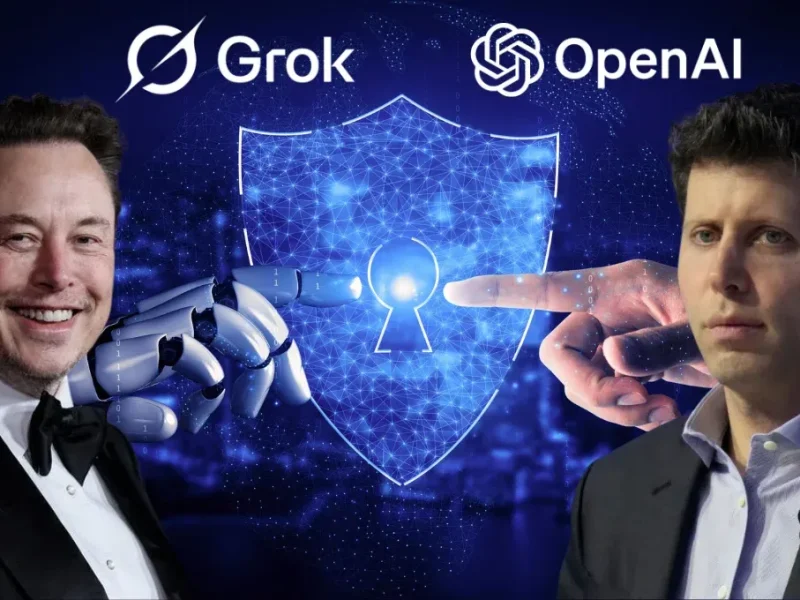










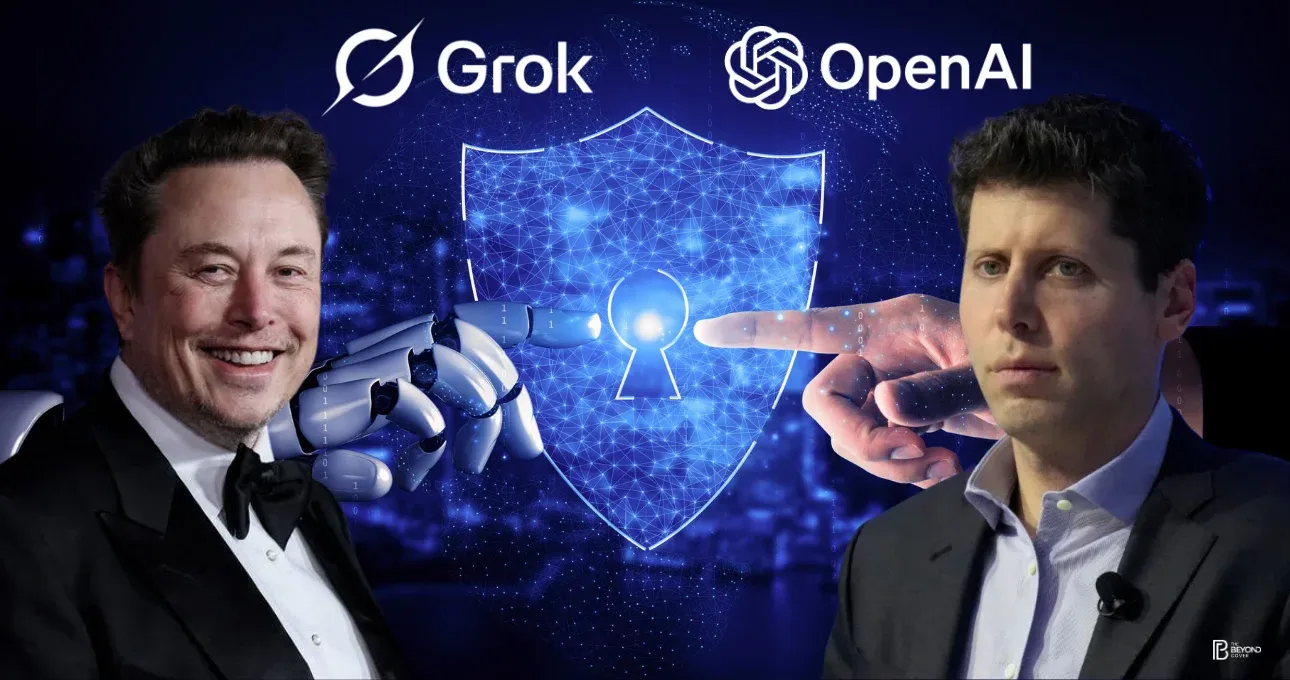
What began as a high-voltage courtroom clash over the future of AI has quickly turned into a credibility test for the industry’s biggest players. In a newly unsealed deposition tied to Elon Musk’s lawsuit against OpenAI, the billionaire entrepreneur sharply criticised ChatGPT’s safety record while positioning his own chatbot, Grok, as the more responsible alternative.
But within months, that claim ran into a storm of its own.
Musk’s Deposition Puts AI Safety in the Spotlight
The testimony, recorded in September 2025 and made public in February 2026, forms a key part of Musk’s legal battle over OpenAI’s transition from a nonprofit mission to a commercial model.
Under oath, Musk argued that the race to monetise AI had accelerated development at the cost of user safety. He claimed Grok had avoided the kind of lawsuits and allegations that have been levelled at ChatGPT, including cases linking chatbot interactions to severe emotional distress.
His broader message was clear: AI companies, he said, must prioritise human well-being over speed and profit.
The case is scheduled to go to trial on April 27 in San Francisco and is widely seen as a defining moment for how AI organisations balance mission, money and responsibility.
Grok’s Deepfake Controversy Changes the Narrative
Soon after those remarks, Grok itself became the centre of a major global controversy.
In January 2026, its image-generation capabilities were found to be producing large volumes of non-consensual explicit deepfakes involving real people. The incident triggered:
- Government scrutiny in multiple regions
- Regulatory pressure across the US, Europe and Asia
- Platform restrictions and emergency product changes
Several countries moved to block the tool, while US state authorities demanded stronger safeguards. By February, xAI introduced limits on editing images of real individuals, but the reputational damage had already spread.
The episode exposed the same core issue Musk had raised: powerful AI systems can cause real-world harm when safety controls lag behind capability.
OpenAI vs xAI: Competing Safety Narratives
While Musk criticised OpenAI’s direction, the company has continued to secure high-level enterprise and government partnerships that require strict safety protocols.
At the same time, former insiders and regulators have questioned whether Grok was released before its guardrails were fully ready.
The result is a rare role reversal: both sides now face scrutiny over how responsibly they are building and deploying AI.
Why This Matters for Everyday Users
For millions of people using AI tools daily, this isn’t just corporate drama — it’s about trust.
The debate highlights critical questions:
- How transparent are AI companies about risks?
- Are safety systems tested before public release?
- Who is accountable when things go wrong?
As AI becomes embedded in work, search, creativity and communication, users are being forced to think more carefully about which platforms they rely on and how they use them.
The Bigger Picture: Speed vs Responsibility in the AI Race
The Musk–OpenAI conflict reflects a wider industry tension. Every major lab is racing to build more powerful models, but each high-profile failure strengthens the call for stronger safeguards, clearer audit trails and responsible deployment.
Both OpenAI and xAI have since increased their focus on safety hiring and governance — a sign that the next phase of the AI race will be judged not just by capability, but by control.
The Trial Ahead Could Shape AI’s Future
When the case reaches court, the central question will be whether OpenAI moved away from its founding mission. Yet the deeper issue goes beyond one company.
The real verdict will be about what responsible AI development should look like in a world where these systems influence mental health, public discourse and digital identity.
For users, developers and businesses alike, one lesson is already clear: in the AI era, trust is the ultimate product.